Thailand's Historic Election: A Pivotal Moment for Democracy
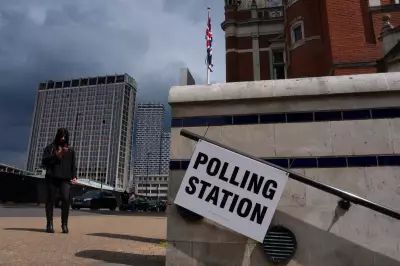
Thailand goes to the polls on Sunday, 8 February 2026, in a landmark election that could define the nation's future after years of political turmoil. This vote marks the country's fourth leadership change in three years, occurring against a backdrop of ongoing border tensions with Cambodia and deep-seated democratic challenges.
Breaking the Cycle of Instability
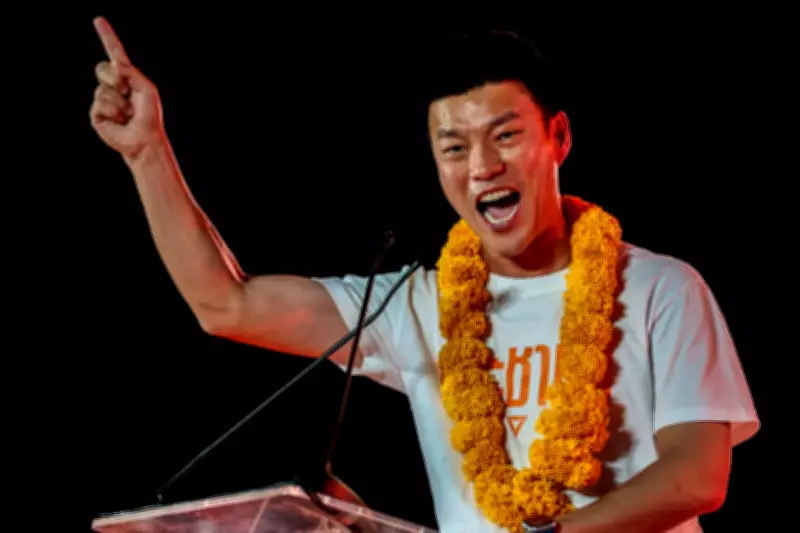
The election represents a critical test for Thailand's ability to overcome a decade-long cycle of political instability, characterised by short-lived governments frequently toppled by military interventions and judicial rulings. Recent opinion polls indicate a significant shift, with the opposition People's Party leading and its prime ministerial candidate, Natthaphong Ruengpanyawut, emerging as the top choice among voters nationwide. At just 38 years old, Ruengpanyawut's youth is cited as a key factor in his rising popularity, posing a formidable challenge to caretaker Prime Minister Anutin Charnvirakul.
Thailand's democratic credentials remain under intense scrutiny. The Southeast Asian nation has experienced 12 successful coups since 1932, and since the transition from military rule in 2019, it has already held two elections. In the 2025 Democracy Report by V-Dem, Thailand was categorised as an electoral autocracy, a assessment echoed by Freedom House, which rated the country "Not Free" due to democratic reversals like the dissolution of the Move Forward Party and the removal of Pheu Thai Prime Minister Srettha Thavisin in August 2024.

Why This Election Matters
The snap election was called after Charnvirakul dissolved the lower house of parliament on 12 December 2025 to preempt a potential no-confidence vote against his Bhumjaithai Party's minority government. Charnvirakul, 59, became Thailand's third prime minister since 2023, taking office in September after Paetongtarn Shinawatra was removed by the courts over a scandal involving a leaked phone call with a Cambodian leader. Shinawatra had served as prime minister for only about a year.
This election is widely seen as a three-way contest between the royalist-military establishment represented by the Bhumjaithai Party, the progressive opposition led by the People's Party, and the populist Pheu Thai Party, which is linked to the influential Shinawatra clan.
The Election Process and Historic Changes
More than 53 million eligible voters in Thailand will decide the composition of the 500-seat House of Representatives. Under the electoral system, 400 seats are filled through constituency races using a first-past-the-post method, while the remaining 100 are allocated to parties based on proportional representation. Each party can submit up to three prime ministerial candidates.
Once elected, lawmakers will vote to select the next prime minister, requiring a simple majority to win, though approximately 270 votes are needed to form a stable government. Notably, the Senate, dominated by pro-establishment conservative lawmakers, will have no role in choosing the prime minister. This marks a significant departure from the 2023 election, when a military-appointed Senate could vote alongside elected lawmakers, blocking the reformist Move Forward Party from forming a government despite its electoral victory.
After the 2014 coup, the military introduced an appointed Senate through constitutional changes, allowing it to handpick lawmakers who ensured junta leader Prayuth Chan-ocha became prime minister after parliamentary elections resumed in 2019. This veto power expired in 2024, paving the way for a more democratic process.
Nationwide Constitutional Referendum
In addition to electing a new leader, Thai voters will participate in a referendum on Sunday to decide whether a new constitution should replace the 2017 charter, which was drafted under military rule. This referendum stems from a decades-long struggle between the pro-military royalist establishment and the popular democratic movement.

The ballot will ask, "Do you approve that there should be a new constitution?" with options for "Yes," "No," or "No opinion." A majority "Yes" vote would grant parliament the public mandate to begin drafting a new national charter, while a "No" vote would retain the current constitution, implemented in 2017 after being drafted by a military-appointed panel following the 2014 coup. Previous referendums in 2007 and 2016 differed, as they sought approval for drafts written after military coups.
Key Contenders in the Race
Anutin Charnvirakul of the Bhumjaithai Party is backed by the royalist-military establishment. He secured the caretaker prime minister role last year by outmanoeuvring the Pheu Thai Party shortly after a court dismissed Shinawatra. Historically a kingmaker, Bhumjaithai has recently positioned itself as Thailand's dominant conservative force, aligning more closely with the military and adopting a nationalist stance amid resurgent border tensions with Cambodia. The party campaigns on promises of economic stimulus, decentralisation, and increased public spending on infrastructure and health.
Natthaphong Ruengpanyawut leads the People's Party, the latest iteration of the progressive movement that began with the Future Forward Party and later the Move Forward Party. Formed after Move Forward was dissolved in August 2024, the party advocates for constitutional reform to reduce military and judicial influence, overhaul the bureaucracy, expand social welfare, and curb the power of large conglomerates. With strong support from younger and urban voters, it relies on digital campaigning and grassroots mobilisation. Ruengpanyawut, a former businessman and software engineer, is Thailand's youngest opposition leader.
Yodchanan Wongsawat, 46, represents the Pheu Thai Party. As the son of former Prime Minister Somchai Wongsawat and nephew of Thaksin Shinawatra, he is part of the billionaire Shinawatra clan, which has dominated Thai politics for 25 years. Pheu Thai, a populist party with a strong rural base, was relegated to opposition after Paetongtarn Shinawatra was removed as prime minister for ethical violations. The party is known for its cash-transfer schemes, though their fiscal sustainability has been questioned. Wongsawat, a political novice and biomedical engineering professor, describes himself as "a very small guy on the shoulders of a giant," referencing his uncle Thaksin, who is currently imprisoned.
Former Prime Minister Abhisit Vejjajiva has revitalised the Democrat Party, potentially altering the three-way contest. Thailand's oldest political party, once dominant in the south and Bangkok, declined after the 2014 coup. Despite renewed energy, recent surveys suggest Abhisit is unlikely to secure enough support to become prime minister.
Polling Insights and Public Sentiment
A nationwide survey by Suan Dusit Poll at Suan Dusit University, conducted from 16 to 28 January and released on Friday, shows the People's Party leading in both party-list and constituency support. The poll indicates 36% of voters favour the People's Party, 22% support Pheu Thai, and 18% back Bhumjaithai, highlighting the progressive movement's momentum as Thailand approaches this historic election.