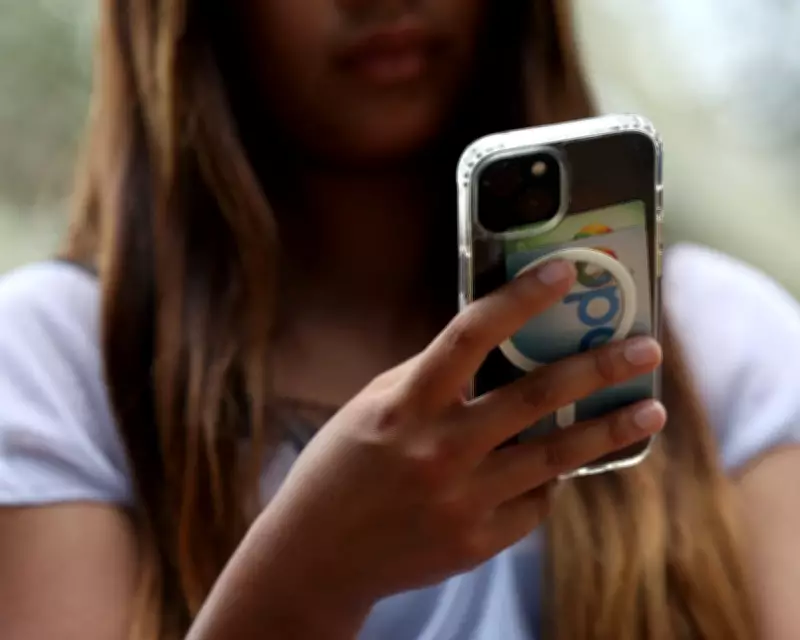
Australia's social media ban is preventing teenagers from accessing news, according to new research. Half of the teens who have been blocked from platforms say they are seeing less news than before the ban took effect in December.
Study Findings on News Consumption
The study, conducted by researchers from Western Sydney University, Queensland University of Technology, and the University of Canberra, surveyed 1,027 Australians aged 10 to 17 in February 2026. It found that just over a quarter (26%) of this cohort had been significantly impacted by the ban, and just over half of those (51%) were seeing less news than prior to the ban.
In comparison, 12% were moderately affected, with 34% of those seeing less news, and 61% reported not being affected, with 22% seeing less news.

Social Media as a News Source
Social media was the second most popular method for teenagers to get news at 39%, behind family at 52%. The study found that teens use social media for news more as they age, with 72% of 16 and 17-year-olds using social media for news, compared to 37% of 10 to 12-year-olds.
Of those who were seeing much less news as a result of the ban, 47% reported losing access to world news and events, 45% said they had lost the opportunity to share views, and 42% said they had lost access to local news.
Impact on News Habits
The ban does not necessarily mean teens are seeking news from other sources. 39% of surveyed teens said they do not use any other news sources. Furthermore, 75% said news organisations have 'no idea what their lives are actually like' while 71% find it difficult to source news relevant to people their age.
Lead researcher Professor Tanya Notley from Western Sydney University noted, 'It's potentially quite ironic that news organisations advocated for [the social media ban]. One of the unintended consequences is that young people are getting less news – I think there is perhaps a belief that young people will go back to traditional news sources.'
Long-Term Concerns
Notley emphasised that research dating back to 2017 shows young people increasingly rely on social media for news over traditional sources. 'It is a real worry that this might just have a longer term consequence of young people no longer being in the habit or the practice of getting news.' She suggested the government should fund and support news organisations catering to young people, such as Squiz Kids, and that news literacy should be taught in classrooms.
Mixed Reactions to the Ban
Among surveyed teens, 46% of 16 to 17-year-olds, 45% of 13 to 15-year-olds, and 34% of 10 to 12-year-olds had mixed feelings about the ban. Those aged 13-15 were the most likely to oppose the ban at 29%.
Government Enforcement
The federal government announced in March that the eSafety commissioner is investigating Instagram, Facebook, Snapchat, TikTok, and YouTube over compliance with the ban. This could lead to fines of up to $49.5 million per breach. Two high court challenges to the ban have yet to be heard.
The Albanese government claims that 4.7 million under-16 social media accounts have been deactivated, removed, or restricted since 10 December. However, Communications Minister Anika Wells refused a request from independent Senator Fatima Payman for documents outlining the verification process, stating that releasing related documents could prejudice the eSafety commissioner's compliance and enforcement activities.