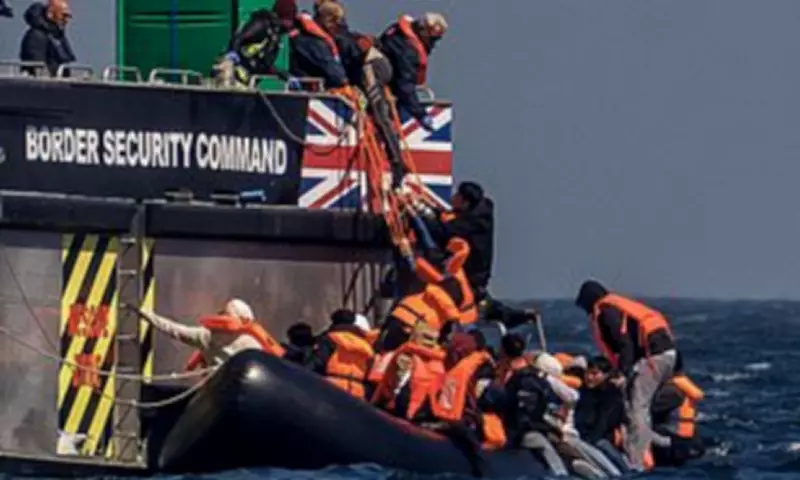
More than 100 migrants were rescued by the French coastguard after their dinghy broke down in the English Channel, in an incident that unfolded just days after the UK agreed to provide hundreds of millions of pounds to France to curb such crossings.
Rescue Operation Details
The maritime authority reported that several people encountered difficulties while attempting to board the boat, including a woman who lost consciousness and had to be airlifted to safety by helicopter. The vessel, described as a 'taxi boat', was observed travelling east along the coast towards Wimereux in the early hours of Sunday morning to collect migrants.
The 'taxi boat' tactic, employed by people-smugglers to evade police detection, involves dinghies travelling along the coast with only a driver to pre-designated beaches, where migrants wade into the water to climb aboard. However, during its attempt to cross the Channel, the dinghy suffered a breakdown. The 106 individuals on board were subsequently transferred to a rescue vessel and taken to Calais, according to French authorities.

UK-France Funding Agreement
This incident follows the recent signing of a three-year agreement by Home Secretary Shabana Mahmood, committing £662 million to France to support beach patrols and reduce the number of arrivals. The Home Office stated that the arrangement would enable officers to 'target and detain' migrants on the French coast, aiming to remove hundreds from beaches annually.
The Labour government will provide £501 million to cover five police units and enforcement activities on French beaches, with an additional £160 million contingent on the success of new tactics to curb Channel crossings. If these efforts fail, the extra funding will cease after one year. However, ministers have refrained from setting specific targets to measure the agreement's success.
It has also been confirmed that the French authorities' new initiative to stop boats at sea will only apply to dinghies carrying fewer than 20 migrants. Under the new agreement, the £53 million annual extra payments will partly depend on the number of boats intercepted at sea.
Allocation of British Funds
The British funding will finance a new specialist vessel for French interceptions, along with 20 additional trained maritime officers. It will also cover the cost of two new helicopters for surveillance operations along the French coastline. Furthermore, the funds will support a new 50-strong police riot squad specifically trained in dispersing large groups of people.
Overall, the deal will facilitate a 40% increase in the number of French police, intelligence operatives, and military reservists involved in counter-migrant patrols, from approximately 750 to 1,100. A specialist intelligence unit targeting traffickers will be expanded to 30 staff, and there will be additional surveillance drones and a new system of security cameras.
Limitations and Concerns
The limit on interceptions has been imposed amid French concerns that intercepting more crowded vessels could lead to loss of life. More than 6,000 migrants have arrived in Britain via Channel crossings so far this year, a 36% decrease compared to the same period last year, according to government data analysis. Since Sir Keir Starmer took office, over 70,000 small-boat migrants have arrived.
On Saturday, a group of more than a dozen people, including women and children, were seen being brought into the Border Security Command compound in Dover after crossing the Channel during a spell of warm weather. This marked the first small boat arrivals since the new UK-France agreement was signed.

Cost of Deportations
Earlier this month, reports indicated that taxpayers could be paying over £48,000 for every migrant deported from the UK under Labour's 'one-in-one-out' deal with France. Analysis by the Migration Observatory at the University of Oxford found that the cost of removing migrants had risen sharply from around £15,000 a decade ago. The average price of each forcible return carried out by the Home Office in the 2024/25 financial year is estimated at £48,800, compared to £4,300 for a voluntary return. Based on these figures, a single flight from Stansted to Paris on January 20, carrying 32 migrants alongside 73 escorts and two paramedics, could have cost £1.52 million, including air fares, case work, and financial support provided to migrants after leaving the UK.