Third Brit Feared Infected with Hantavirus on Remote Island

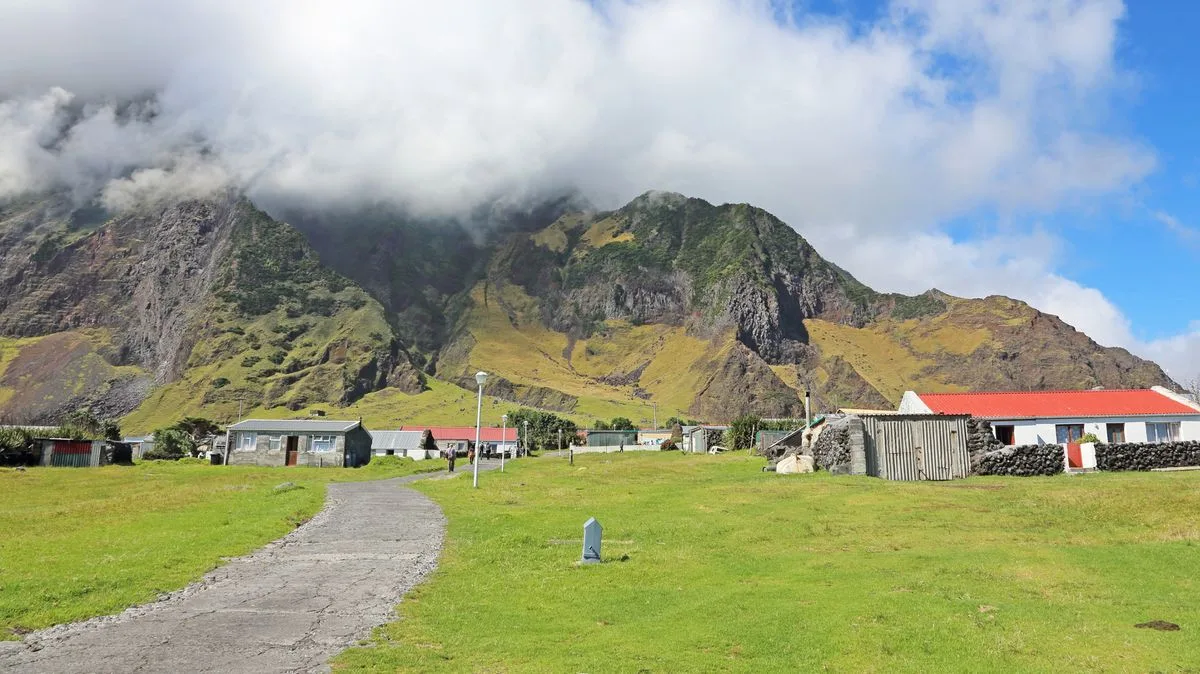
A third British national is feared to be infected with hantavirus on Tristan da Cunha, the world's most remote inhabited island, home to just over 200 residents. The UK Health Security Agency (UKHSA) confirmed on Friday that two British nationals have contracted the virus, with an additional suspected case on the island.

Details of the Outbreak

Seven British nationals disembarked the MV Hondius on the neighbouring island of St Helena on April 24. However, the UKHSA told The Sun that the suspected case on Tristan da Cunha is not among those seven individuals. Two other British men with confirmed cases linked to the cruise ship outbreak are currently receiving treatment.

Following an evacuation on Wednesday, Martin Anstee, a 56-year-old expedition guide, is in stable condition in the Netherlands. Another patient, flown to South Africa last month, remains in intensive care.

Wide Pickt banner — collaborative shopping lists app for Telegram, phone mockup with grocery list

Tristan da Cunha: A Remote Territory

Tristan da Cunha, a British Overseas Territory with around 250 inhabitants, one pub, and no airport, is considered the world's most remote inhabited island. Invasive black rats on the island are major agricultural pests and have devastated seabird and landbird populations. Due to this ecological impact, the island has a tradition known as 'ratting day,' where the community unites to hunt the invasive species.

Global Response

A KLM flight attendant who showed mild symptoms of hantavirus and was admitted to a hospital in Amsterdam has tested negative for the virus, the World Health Organization (WHO) confirmed on Friday. 'We have received notification through our IHR focal point that she tested negative,' a WHO spokeswoman said. The flight attendant had reportedly come into contact with a sickened Dutch cruise boat passenger who was taken off a KLM plane and later died of the virus in South Africa.

The fate of the MV Hondius sparked international alarm after three people travelling on it died. Health officials have downplayed fears of a wider global outbreak from the rat-borne virus, which is less contagious than COVID-19. Another sick passenger from the ship landed in Europe yesterday, as the vessel headed to the Spanish Canary Islands and health officials scrambled to trace the outbreak of the potentially deadly human-to-human strain.

Origin of the Outbreak

Argentine health authorities said Thursday they had not yet been able to establish where the outbreak began. 'With the information provided so far by the countries involved and participating national agencies, it is not possible to confirm the origin of the infection,' the health ministry said after a meeting with authorities from all 24 Argentine provinces. The Argentine government's leading hypothesis is that a Dutch couple, the first fatalities, contracted hantavirus during a bird-watching outing at a garbage dump in Ushuaia, Argentina, where the MV Hondius departed from on April 1.

WHO chief Tedros Adhanom Ghebreyesus told journalists in Geneva that five confirmed and three suspected cases had been reported overall, including the three deaths. 'Given the incubation period of the Andes virus, which can be up to six weeks, it's possible that more cases may be reported,' he said, referring to the rare strain detected aboard the Hondius, which can be transmitted between humans. However, the WHO's emergency alert and response director Abdi Rahman Mahamud said he believed it would be 'a limited outbreak' if 'public health measures are implemented and solidarity shown across all countries.'

Current Status

People thought or known to have contracted the virus are being treated or isolating in Britain, Germany, the Netherlands, Switzerland, and South Africa. Hantavirus is a rare respiratory disease usually spread from infected rodents, causing respiratory and cardiac distress as well as haemorrhagic fevers. There are no vaccines and no known cure.

Officials in Argentina said they planned to test rodents in the coastal city of Ushuaia. The company operating the Hondius said there were no symptomatic individuals on board as the ship sails toward the Spanish island of Tenerife, where it is scheduled to arrive on Sunday.

Pickt after-article banner — collaborative shopping lists app with family illustration

YouTuber Kasem Ibn Hattuta, a passenger aboard the Hondius, posted a video recounting how he learned of the first death around 12 days after the start of the trip. 'Most people on board are reacting very calmly to the situation, unlike what is being reported in the media,' Hattuta said. 'Today was supposed to be the last day of our 35-day voyage across the Atlantic Ocean. But it is clear that our journey will not end here,' he added, referring to Cape Verde's refusal to allow the Hondius to dock.

Tedros said the WHO had informed 12 countries that their nationals disembarked from the cruise ship on Saint Helena. The Saint Helena government said 'more than 95 percent' of the population had no close contact with the ship's passengers or crew, or boarded the vessel, and are currently 'at an extremely low risk of infection'.

The ship is due to dock in Tenerife in the Canary Islands this weekend, where residents are afraid of a 'Covid 2.0'. The island's president, Fernando Clavijo, fiercely opposed the Spanish government's decision to allow the Dutch MV Hondius vessel to dock on the archipelago, insisting it wasn't safe for the local population. Clavijo also criticised the Spanish government for its 'institutional disloyalty' and lack of professionalism for failing to keep him informed. At a meeting on Thursday afternoon, Clavijo told local media that 'under no circumstances will passengers leave the ship until the aircraft is at the airport,' and their transfer will be carried out 'with all necessary safeguards' and personal protective equipment.

Donald Trump expressed worry yesterday as he told reporters he hopes a deadly hantavirus does not spread. Trump said Thursday he had been briefed on the situation. 'It's very much, we hope, under control,' Trump told reporters. 'It was the ship - and I think we're going to make a full report about it tomorrow. We have a lot of great people studying it... It should be fine, we hope.' When asked by one journalist if Americans should be concerned the virus will spread, Trump replied: 'I hope not.'