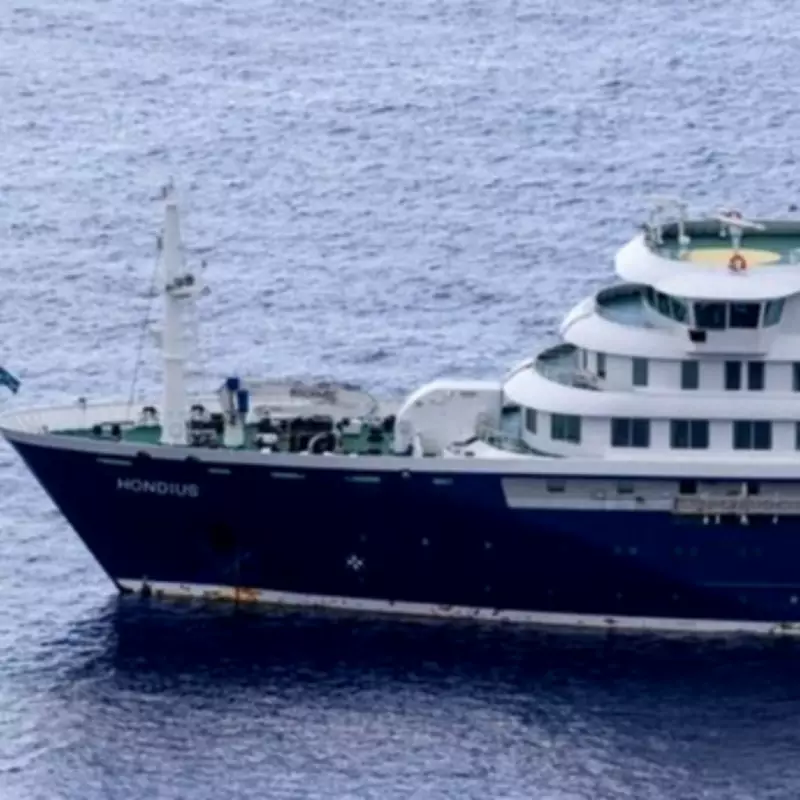
A plane chartered by the UK Government to repatriate British nationals from the MV Hondius cruise ship will be equipped with testing kits and oxygen in case any passengers fall ill, it has been revealed. Twenty-two Britons remain on the ship, which has been struck by an outbreak of hantavirus, with two already evacuated.
Of the seven passengers who disembarked at St Helena in the South Atlantic, two are in the UK self-isolating, four are doing the same in St Helena, and the seventh has been traced to another undisclosed country where they are also self-isolating. Upon returning to the UK, all passengers will be required to self-isolate, either at home or in alternative accommodation depending on their circumstances.
Government Response and Ongoing Support
A government spokesperson said: “Through our consular teams we are in touch with all 22 of the passengers who remain. We're messaging daily with information about the journey and what will happen to them when they reach the Canary Islands.” The ship is heading to the Canary Islands and is expected to arrive early on Sunday, where it will be held in a “completely isolated, cordoned off area,” according to Virginia Barcones, Spain's head of emergency services. She assured: “The people of the Canary Islands can rest assured that there will be absolutely no possibility of contact at any time.”

Third Suspected Case and Global Response
A third British national has suspected hantavirus linked to the outbreak, having stayed on Tristan da Cunha, a remote Atlantic island where the ship stopped in mid-April. The ship is currently carrying around 140 passengers and crew. Around 24 British passengers will return home on a UK Government-chartered plane, while the US is also sending a plane to bring home 17 US citizens on board. Two other British men have confirmed cases.
The World Health Organization (WHO) stressed that the risk to the wider public is low. Christian Lindmeier, a WHO spokesman, said on Friday that a KLM flight attendant who tested negative after being exposed to an infected passenger should prevent panic. “The risk remains absolutely low. This is not a new Covid,” he said. Five cases of hantavirus have been confirmed, including one of the three cruise passengers who died.
Passenger Health and Tracking
None of the remaining Britons are currently displaying symptoms, but they will be asked to isolate upon returning home. The two Irish passengers on board are also “safe and well,” according to the Irish Foreign Minister. British national Martin Anstee, 56, a retired police officer and expedition guide, was evacuated to the Netherlands alongside a 41-year-old Dutch crew member and a 65-year-old German. Martin told the BBC he was “fine.” Two other Brits are already self-isolating at home for 45 days after potential exposure, voluntarily and without symptoms.
According to operator Oceanwide Expeditions, a group of 29 guests from a dozen nations—including seven Britons—left the ship at St Helena on 24 April. Health authorities across four continents are tracking passengers who disembarked before the outbreak was detected. It is believed the infection came from rats in Argentina when a group went bird watching during a stop there in April.
Transmission and Symptoms
Hantavirus is usually spread by inhaling contaminated rodent droppings and is not easily transmitted between people. However, the Andes virus implicated in this outbreak may spread between people in rare cases. Symptoms typically appear between one and eight weeks after exposure. No one still aboard the ship is showing symptoms of infection.
On April 24, nearly two weeks after the first passenger died on board, more than two dozen people from at least 12 countries left the ship. It wasn't until May 2 that health authorities first confirmed hantavirus in a ship passenger, according to the WHO. The KLM flight attendant who tested negative had worked a flight from Johannesburg to Amsterdam on April 25 and later fell ill but tested negative. The cruise passenger briefly aboard that flight—a Dutch woman whose husband died on the ship—was too ill to stay on the flight and was taken off in Johannesburg, where she died. The Dutch public health service is contact tracing passengers from that flight who had contact with the ill woman.