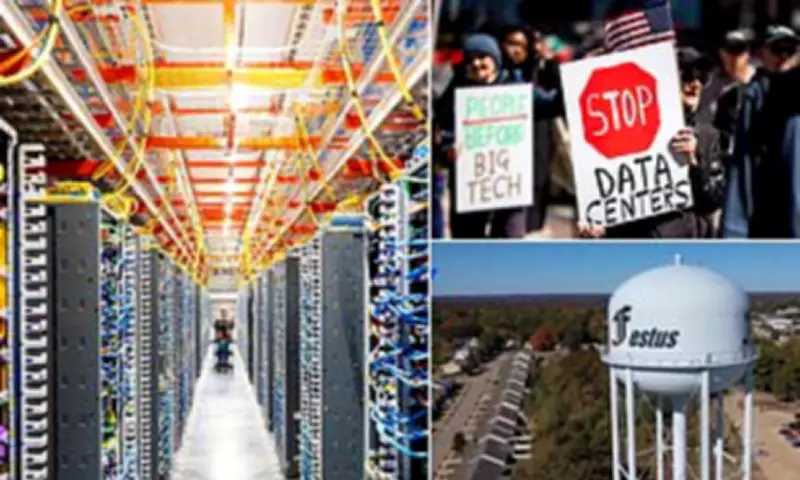
In the quiet Midwestern town of Festus, Missouri, a fierce backlash against artificial intelligence data centers has erupted, with voters making their anger clear at the ballot box. This community of 14,000 people near St. Louis has ousted four city council members who supported plans for a massive AI data center, replacing them with candidates who openly opposed the project.
Political Upheaval in Festus
The political upheaval extended beyond the election. At a packed City Hall meeting following the vote, newly sworn-in officials were greeted with cheers, while the city's mayor, Sam Richards, who still supports the development, was met with boos and jeers from the crowd. One resident shouted, 'You're next!' underscoring the intensity of the fight.
The Proposed Data Center
At the center of the dispute is a proposed $6 billion data center spanning roughly 360 acres, designed to support the growing demands of artificial intelligence. Supporters argue the project could transform the local economy, generating an estimated $32 million a year in tax revenue for decades, funding schools, roads, and public services.

However, many locals remain unconvinced. Opponents fear the development could strain the electrical grid, push up utility bills, and disrupt daily life with years of construction. Environmental concerns also loom large, including pollution from backup generators and wastewater systems, shaped by the region's industrial past.
Community Resistance
In a bid to scrap the development, residents launched a website and a Facebook group titled No Data Center in Festus, which has attracted more than 3,000 members. The backlash quickly spilled into local politics, resulting in a landslide election where all four incumbents who supported the data center were voted out. 'It was an annihilation,' said one local campaigner.
Since the election, over 4,000 residents have signed petitions seeking to recall the mayor and other officials still backing the plan. The controversy has also triggered a lawsuit, with residents accusing city officials and the developer of holding closed-door meetings and failing to fully inform the public. Both the city and developer deny the claims.
National Trend
Festus is far from alone in its municipal battle against AI data centers. Across the United States, more than 90 local governments are either restricting or considering limits on new data centers, reflecting growing unease about the rapid expansion of AI infrastructure.
In Maine, lawmakers considered a first-in-the-nation temporary ban on data center construction, though it was ultimately vetoed by the governor. In St. Charles, Missouri, residents pushed back against a similar proposal from the same developer, forcing plans to be withdrawn. Communities in parts of Virginia, home to the world's largest concentration of data centers, have raised concerns about energy use, land consumption, and environmental impact.
In Archbald, Pennsylvania, locals have rallied through social media and packed community meetings to oppose plans to transform the area into a hub for as many as 51 data warehouses. A Facebook group titled 'Stop Archbald Data Centers' has swelled to nearly 10,000 members, more than the town's population of around 7,000. Across the town, hundreds of homeowners have planted signs reading 'no data centers' in their yards.
Broader Implications
These conflicts highlight the growing tension between the nationwide push for AI growth and the local impact of the infrastructure required to support the technology. Data centers are massive, energy-hungry facilities essential for powering everything from chatbots to cloud computing. But for communities, the trade-offs are becoming harder to ignore. Some residents worry about property values; others question what happens if the AI boom slows, leaving behind vast industrial sites and uncertain economic promises.
'I know it's the future,' one longtime Festus resident said. 'But I wish they'd build it somewhere nobody lives.'

With elections looming and public concern rising, opposition to data centers is quickly becoming a political issue nationwide. Polls suggest many Americans, across party lines, would oppose having such facilities in their own communities, citing electricity demand and water usage as top concerns. Back in Festus, the message from voters is already loud and clear: When it comes to AI infrastructure, local communities want a say, and they are willing to use their votes to get it.