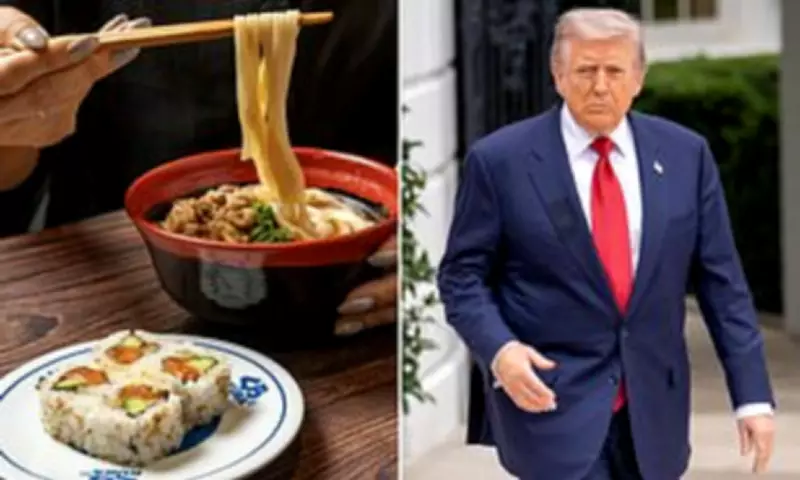
President Donald Trump has executed thousands of stock trades this year, but one specific investment has left both Wall Street and social media users perplexed. According to newly released financial disclosures, Trump purchased between $1 million and $5 million worth of shares in Kura Sushi USA on February 2, making the conveyor-belt sushi chain one of the largest restaurant-related bets in his extensive portfolio.
The disclosure immediately sent the company's shares soaring. Kura Sushi USA stock jumped more than 5 percent after the information became public, while the parent company's shares in Tokyo climbed as much as 5.4 percent, marking their biggest intraday rise since mid-2025.
Why the Investment Is Raising Eyebrows
The investment is attracting attention for several reasons, chief among them being that Trump is not exactly known as a sushi enthusiast. Over the years, the president has cultivated a famously meat-and-potatoes public image, regularly praising fast food, well-done steaks, burgers, and Diet Coke while showing little enthusiasm for more adventurous cuisine. Trump has previously admitted he dislikes raw fish, one of sushi's signature ingredients, making the Kura Sushi purchase seem especially unexpected.

That disconnect quickly sparked jokes and speculation online, particularly in Japan, where users on X questioned whether Trump had ever actually eaten sushi at all. Some online commentators even floated theories that the purchase may have been accidental or confused with another similarly named company, such as Kura Oncology or Japanese manufacturer Fujikura.
Trump's Ties to Japan
Trump does, however, have longstanding ties to Japan, both politically and personally. During his first presidency, he developed a notably close relationship with late Japanese Prime Minister Shinzo Abe, with the pair meeting frequently for golf outings, state dinners, and high-profile diplomatic visits. Abe was also one of the first world leaders to meet Trump after his 2016 election victory.
Trump visited Japan at least four times during his first term, including a 2019 state visit where he became the first foreign leader to meet Emperor Naruhito following his accession to the throne. His visits often focused on trade, security alliances, and strengthening U.S.-Japan economic ties, making his investment in Japanese-founded sushi chain Kura Sushi USA particularly intriguing to some observers.
A Massive Portfolio of Trades
Others pointed out that Trump's disclosures show more than 3,700 trades conducted during the first quarter alone, with investments spanning nearly every sector imaginable, from tech giants like Apple, Amazon, and Nvidia to restaurant operators including The Cheesecake Factory and Dave & Buster's. Still, Kura Sushi stands out because of the sheer size of the investment. Among the thousands of transactions disclosed, only a relatively small number were in the million-dollar range.
A spokesperson for the Trump Organization has insisted the president is not directly managing the trades himself. According to the company, Trump's assets are handled independently by third-party financial institutions using automated investment systems, with neither Trump nor his family involved in day-to-day trading decisions. Vice President JD Vance also defended the arrangement this week, dismissing suggestions that Trump personally sits in the Oval Office trading stocks.
Conflict-of-Interest Concerns
But the disclosures have once again reignited conflict-of-interest concerns because Trump did not place his holdings into a blind trust after returning to office, a step traditionally taken by many modern presidents to avoid scrutiny over investments that could potentially overlap with policy decisions.
About Kura Sushi
As for Kura Sushi itself, the chain has quietly become one of the fastest-growing restaurant concepts in America. Founded in Osaka in 1977, Kura pioneered the 'kaiten sushi' model, better known to Americans as conveyor-belt sushi, where diners grab plates of sushi as they glide past on moving belts. The company expanded into the US in 2009 with its first American restaurant in Irvine, California, and now operates more than 90 US locations, particularly concentrated in California, Texas, and New Jersey.

Part of the chain's appeal comes from its quirky, arcade-like atmosphere. Customers receive prizes through the company's 'Bikkura Pon' system, which dispenses collectible toys after diners finish 15 sushi plates. Recent promotional tie-ins have included characters from Kirby and Hello Kitty. The strategy appears to be working. In April, Kura Sushi reported same-store sales growth of 8.6 percent and stronger-than-expected customer traffic, prompting executives to raise their full-year outlook.
Trump's purchase came just days after the company launched its Hello Kitty promotion, timing that some market watchers noted likely helped fuel excitement around the stock. Analysts in Japan said the disclosure may also trigger a 'Trump bump' among retail investors who view presidential attention as an endorsement of the brand, even if indirect.
A Curious Investment
For consumers, the story highlights just how unusual modern investing and celebrity-driven stock movements have become. A sushi chain known for cartoon prizes and robotic conveyor belts is suddenly at the center of political headlines, not because of a menu launch or restaurant expansion, but because one of the world's most recognizable fast-food-loving presidents quietly bought a multimillion-dollar stake in it. And perhaps the strangest part of all? Trump may now own a sizable piece of a sushi empire built around raw fish he reportedly has no interest in eating.