The West End's woeful High Noon demonstrated the difficulty of bringing a western to the stage. Now, another rugged American genre—the film noir—faces a similar challenge in this theatrical adaptation of James M Cain's cynical 1936 novella. The story was brilliantly sharpened for the 1944 movie by director Billy Wilder and co-writer Raymond Chandler. However, this version, previously seen in a 2016 Melbourne Theatre Company production, unwisely reinstates much of what the film trimmed or tightened.
Script and Pacing Issues
Tom Holloway's script covers the same ground but with diluted dialogue, and Oscar Toeman's production suffers from fatal pacing problems. Cain's LA insurance salesman Walter Huff (Ciarán Owens) amiably addresses the audience in a prologue, a technique overused throughout that adds layers of exposition about a country still reeling from the Great Depression. A recurring joke about others forgetting Huff's name underscores that Cain's characters, as crime novelist James Lee Burke noted, are ordinary people like ourselves.
Design and Atmosphere
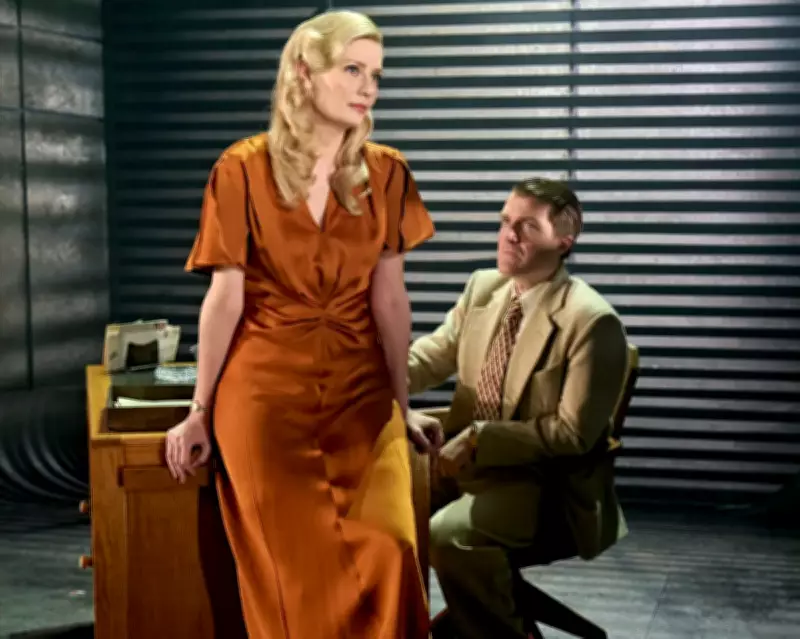
Lighting designer Josh Gadsby stylishly casts multiple shadows against Ti Green's striking set design, which suggests a towering house of cards atop a bunker-like tunnel leading into darkness. This captures the precarious, doomed scheme cooked up by Huff and Phyllis Nirdlinger (Mischa Barton, in her UK stage debut) to murder her husband and collect on a double indemnity clause in his insurance policy. The ending is never in doubt: Huff will end up like every other sucker beguiled by a femme fatale. Yet there is no electricity between the pair, and their lines lack the playful panache of the screenplay. The dialogue seldom bubbles, and even overlapping scenes fail to provide the necessary momentum.

Performances
Barton is detached rather than calculating as Nirdlinger, who is too often absent from the stage and repeatedly calls out society's sexism in this script. Owens' narration isn't sufficiently jaundiced, and there is no sense of a curdling romance after the killing, although Owens conveys an escalating edginess. Holloway accentuates the notion that murder doesn't finish with the act. The stark design doesn't allow much scope for nuanced locations, with furniture wheeled on and off and set pieces involving a car and a train rendered in pedestrian manner.
Supporting Characters
The secondary relationships are thin: Phyllis's husband (Oliver Ryan) is flatly irascible, and the bond between her stepdaughter Lola (Sophia Roberts) and Huff—a weak point in both book and film—remains unconvincing. Gillian Saker is given the role of Huff's sparky secretary but denied any decent quips. Martin Marquez comes out best as gravel-voiced colleague Keyes, here sharing a father-son dynamic rather than the film's bromance. Keyes, the claims investigator played on screen by Edward G. Robinson, is so sensitive to phoney activity that it gives him indigestion; he'd need a peppermint tea by the interval.
At Churchill theatre, Bromley, until 25 April, then touring until 9 May.