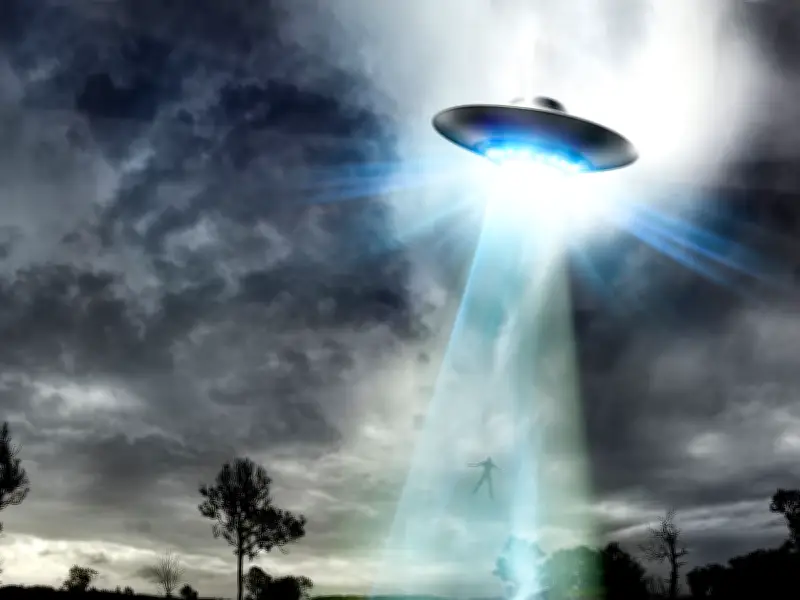
The Pentagon has repeatedly denied claims of a cover-up regarding alien technology or extraterrestrial beings, but public belief in UFOs has persisted, especially since the end of World War Two in 1945. The first widely reported UFO sighting in the US occurred on June 24, 1947, when private pilot Kenneth A. Arnold claimed to have seen nine objects flying near Mount Rainier in Washington. This triggered a wave of other sightings, including the discovery of unidentified debris on a prairie near Roswell, New Mexico, on July 2, 1947. Authorities initially said the material was from a flying disc but later insisted it was a weather balloon.
Official Investigations and Continued Sightings
In 1948, the US Air Force launched Project Sign, renamed Project Blue Book in 1953, which investigated more than 12,600 reported sightings between 1948 and 1969. The Air Force concluded in 1969 that no evidence of extraterrestrial UFOs or threats to national security had been found, terminating the project. Despite this, public interest grew. In July 1952, up to a dozen unexplained objects were spotted over Washington D.C. by pilots and radar operators. In 1957, residents of Levelland, Texas, reported strange lights that interfered with vehicles. In 1997, a UFO was reported near Phoenix, Arizona. In 2015, an unidentified 'blob' labelled 'Gofast' was tracked off the US east coast.
Area 51 and the Roswell Incident
The construction of Area 51 in Nevada began in 1951, and it became associated with government conspiracy theories about aliens. The US government officially acknowledged the site in 2013, releasing a CIA document that linked test flights of the U-2 spy plane in the 1950s to many UFO sightings. The 'Roswell UFO incident' involved claims that alien bodies were recovered from a crash site in 1947. The first news report said a 'flying object landed on a ranch,' but the US military quickly said it was a crashed weather balloon. In 1978, intelligence officer Jesse Marcel claimed the weather balloon explanation was a cover story, and witnesses reported seeing human-shaped bodies at the site. The US Air Force debunked this in 1997, saying the bodies were dummies used in parachute tests. Colonel John Haynes stated, 'This will be the final word on the Roswell incident. Whether you accept that as the explanation is up to you, but we do.' Retired Air Force Colonel Richard Weaver added, 'We have a hard time keeping a secret, let alone putting together a decent conspiracy.'

Political and Cultural Impact
Hollywood films like Steven Spielberg's Close Encounters of the Third Kind (1977) and E.T. the Extra-Terrestrial (1982), along with TV shows such as Star Trek (1966) and The X-Files (1993), fueled public fascination. The Pentagon's All-domain Anomaly Resolution Office, established to investigate hundreds of reported close encounters, blamed Hollywood in a 2024 report for strengthening belief in aliens, stating that the 'proliferation' of TV shows, books, movies, and internet content 'most likely has influenced the public conversation on this topic, and reinforced these beliefs within some sections of the population.'
Congressional Hearings and Expert Opinions
The first major congressional hearings on UFOs took place in 1966, convened by Republican congressman and future president Gerald Ford after a sighting in Michigan observed by more than 40 people, including a dozen policemen. Air Force officials attributed the incident to 'swamp gas,' a description Ford called 'flippant.' Luis Elizondo, former head of the Pentagon's Advanced Aerospace Threat Identification Program, argued that keeping such technology secret would be almost impossible, saying, 'We live in an incredible universe. There's all sorts of hypotheses that suggest that the three dimensional universe which we live in isn't quite so easy to explain.' However, science writer Michael Shermer pointed to the lack of clear images despite widespread smartphones, stating, 'Show me the body, show me the spacecraft, or show me the really high quality videos and photographs. And I'll believe.'