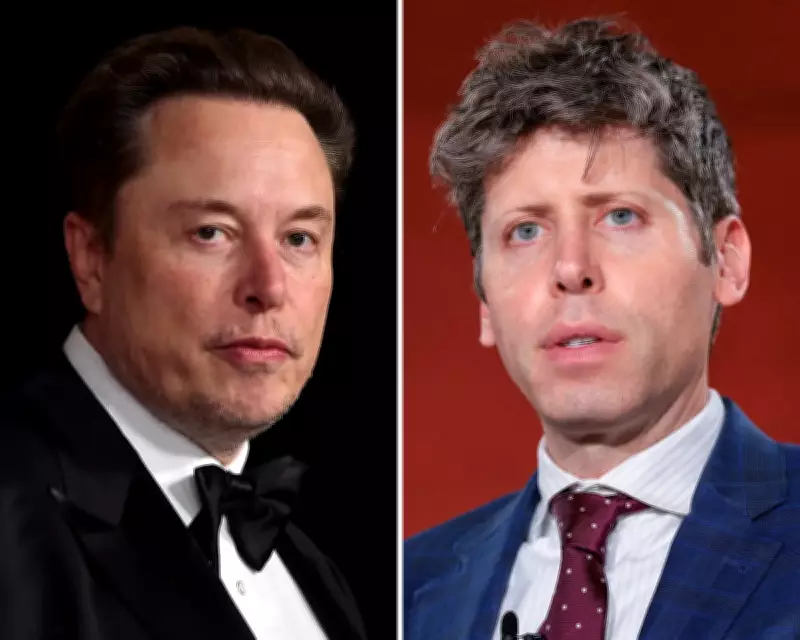
The trial between two of Silicon Valley's most prominent billionaires commenced on Monday in California, marking the culmination of a long-standing and bitter feud. Elon Musk has formally accused Sam Altman of violating the original founding agreement of OpenAI, the non-profit they co-founded, by transforming it into a for-profit enterprise.
Jury Selection Underway
Jury selection began at a federal courthouse in Oakland, presided over by Judge Yvonne Gonzalez Rogers. Addressing the prospective jurors, the judge assured them that the case would not be overly technical despite its focus on artificial intelligence. "This is just a case about promises and breaches of promises, it won't get technical at all," she stated.
Sam Altman and Greg Brockman, president of OpenAI, were present during jury selection on Monday. Elon Musk was not in attendance.

Core Allegations
The central claim of Musk's lawsuit is that Altman defrauded him by promising that OpenAI would remain a non-profit dedicated to safety and open access to AI. Once Altman and OpenAI secured Musk's financial backing and advanced their technology, the suit alleges that the company "flipped the narrative and proceeded to cash in" through lucrative deals with Microsoft and the establishment of a for-profit affiliate.
Musk accuses Altman, Brockman, and Microsoft of breach of charitable trust and unjust enrichment. Although Musk previously included fraud claims, he voluntarily dropped them on Friday.
OpenAI's Defense
OpenAI has strongly denied Musk's allegations, asserting that Musk agreed in 2017 that creating a for-profit entity was a necessary step for the company. The company claims Musk is "motivated by jealousy" and "regret for walking away." OpenAI also contests that Musk's funding was an investment, describing it instead as a tax-deductible donation that does not grant him ownership rights.
Juror Opinions on Musk
During jury selection, prospective jurors completed questionnaires about their opinions on Musk and AI. Many expressed negative views of Musk, with one calling him a "jerk" and another stating they "disagree with a lot of things he's done." A self-proclaimed news junkie referenced Musk's role in Donald Trump's "department of government efficiency," saying: "Elon doesn't care about people ... He probably cares more about money."
Some jurors voiced concerns about AI, while others said they use OpenAI's ChatGPT regularly. However, most assured the court they could remain impartial, with one juror noting: "While I do not like him, I can definitely separate my feelings about him from the facts in the case."
Stakes of the Case
The trial carries significant implications for OpenAI, which is expected to go public later this year with a valuation of approximately $1 trillion. Musk is seeking remedies including the removal of Altman and Brockman from OpenAI, over $134 billion in damages to be redistributed to OpenAI's non-profit arm, and a reversal of the company's restructuring as a for-profit entity.
OpenAI was founded in 2015 as a non-profit by Altman, Musk, and others, with Musk contributing about $38 million. The relationship soured around 2017 when Musk grew impatient with progress and unsuccessfully attempted to gain more control. He left the board in 2018 and ceased funding.
After Musk's departure, OpenAI launched ChatGPT, raised billions from Microsoft, and became one of the world's most valuable private companies. In 2025, regulators approved its restructuring into a for-profit corporation, still technically overseen by the original non-profit.
Trial Duration and Witnesses
The trial is expected to last about three weeks, with opening statements beginning on Tuesday. Key witnesses include Musk, Altman, and Microsoft CEO Satya Nadella, along with internal communications from Musk and OpenAI executives.