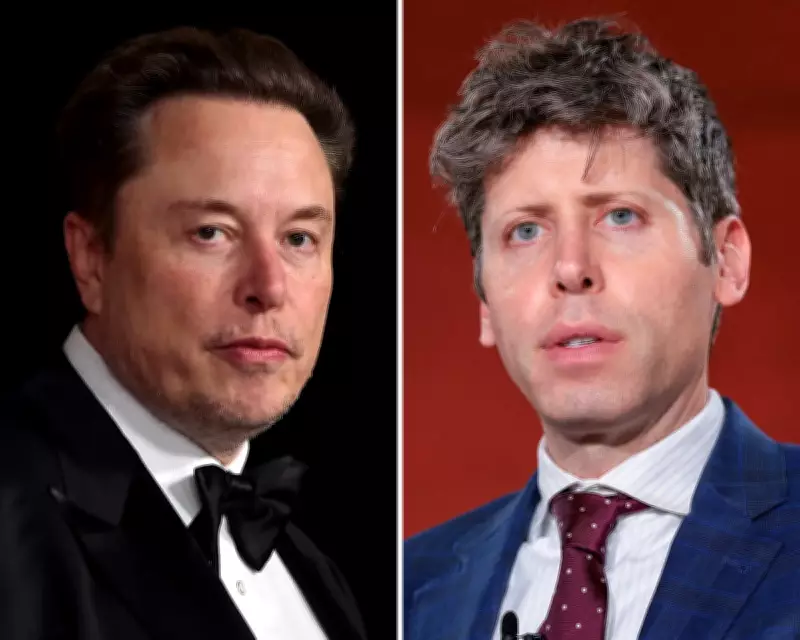
Elon Musk took the stand on Tuesday in a dramatic courtroom showdown with Sam Altman, accusing his former co-founder of betraying OpenAI's founding mission and endangering humanity through corporate deception. The trial, which began with opening arguments, pits two of the tech world's most powerful figures against each other in a bitter legal battle over the future of artificial intelligence.
Musk's Allegations
Musk's lawsuit argues that Altman, OpenAI, and its president Greg Brockman violated a foundational agreement to benefit humanity when the non-profit organization shifted to a for-profit structure. In his opening statement, Musk's attorney claimed that Altman and Brockman "stole a charity." Musk, who co-founded OpenAI in 2015 with Altman and Brockman but left in 2018, also alleges that his co-founders unjustly enriched themselves as the company raised billions of dollars and became an AI giant.
OpenAI's Defense
OpenAI rejects all of Musk's claims, stating that his case is "motivated by jealousy" and characterizing him as an embittered co-founder seeking revenge after failing to gain total control. OpenAI's lawyers pointed out that Musk started his own rival AI company, xAI, casting the lawsuit as a vengeful attack by a competitor. They also claimed that Musk was well aware of the plans to restructure the business.

Musk's Testimony
After being sworn in, Musk was asked by his lead attorney, Steven Molo, why he brought the lawsuit. "They're going to make this lawsuit very complicated, but it's actually quite simple," Musk said. "It's not okay to steal a charity. That's my view." During his testimony, Musk detailed his career, from growing up in South Africa to founding SpaceX, Tesla, Neuralink, and the Boring Company. He said he typically works 80 to 100 hours a week and does not own vacation homes or yachts.
When asked about artificial intelligence, Musk described it as software that gets "smarter and smarter" and said artificial general intelligence (AGI) could be achieved as soon as next year. He expressed concerns about AI, recounting a conversation with Google co-founder Larry Page, who reportedly said it would be fine if AI wiped out all humans as long as it survived.
Role in OpenAI's Founding
Musk testified that he played a direct role in launching OpenAI, including drafting the initial press release and recruiting top AI engineers. He also connected OpenAI to influential tech figures, including Microsoft CEO Satya Nadella and Nvidia co-founder Jensen Huang. Musk said he was not opposed to a for-profit arm as a "small adjunct" to the non-profit, as long as it did not become the dominant force.
OpenAI's Opening Statement
William Savitt, the lead attorney for Altman and Brockman, flipped Musk's narrative, claiming that Musk wanted OpenAI to be a for-profit company from the start. Savitt said evidence will show that Musk promised $1 billion in investments but failed to deliver because he did not get "full control" of the company. "Musk never cared about whether OpenAI was a non-profit ... what he cared about was Elon Musk being on top," Savitt said. He added that Musk became furious when Altman and Brockman succeeded with ChatGPT after he left.
Microsoft's Role
Microsoft's counsel, Howard Ullman, stated in opening arguments that the company has been a responsible partner to OpenAI and that Musk's claim that it aided in a breach of charitable trust is false.
Background and Stakes
The trial is the culmination of a years-long feud between Musk and Altman that has become increasingly vicious. Musk has posted insults against Altman on X, calling him "Scam Altman." The outcome of the case carries enormous stakes for OpenAI, which is seeking to go public later this year at a valuation of about $1 trillion. Musk is seeking to undo its corporate restructuring, remove Altman and Brockman from their positions, and obtain about $134 billion in damages to be redistributed to OpenAI's non-profit.
Nine jurors were seated after a day-long selection process. Judge Yvonne Gonzalez Rogers assured the court that the case would not focus on technical details, stating, "This is just a case about promises and breaches of promises." The trial is expected to last about three weeks, with potential testimony from other tech industry figures such as Nadella and Neuralink executive Shivon Zilis.