Nigel Farage's Conduct with Female Journalists Ignites Controversy Over Reform UK's Gender Stance
Nigel Farage, the leader of Reform UK, has come under intense scrutiny following a series of incidents where he appeared to patronise female journalists during press interactions. This behaviour has sparked a broader debate about whether his party has a significant problem with women, particularly in light of recent policy hires and electoral strategies.
Incidents with Journalists Draw Widespread Criticism
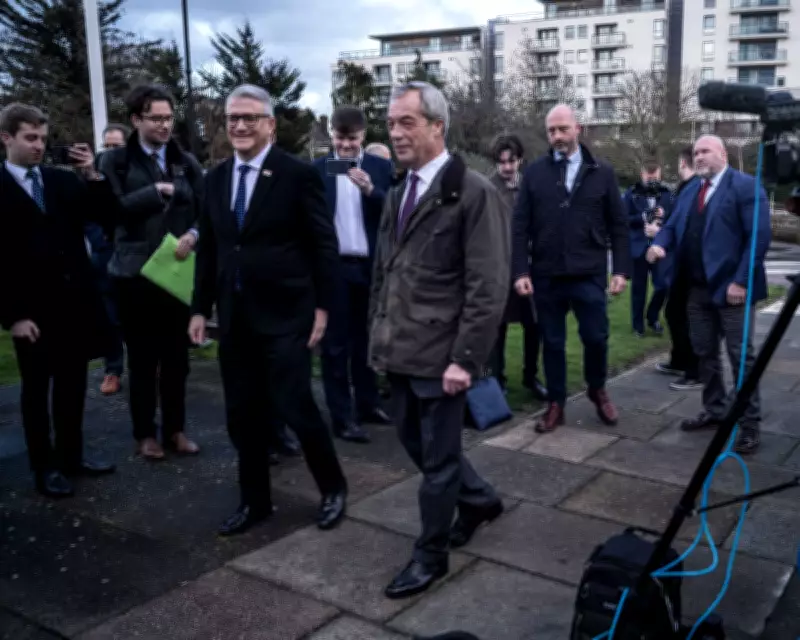
During a recent event in Romford, where Farage was accompanied by Reform MP Andrew Rosindell, he told a Financial Times journalist, Anna Gross, to "write some silly story ... and we won't bother to read it." This remark was met with laughter and applause from Reform supporters but provoked outrage among political reporters across the spectrum. When questioned by a Guardian reporter about his rudeness, Farage simply responded, "Good."
This is not an isolated case. In October, when Mishal Husain of BBC Radio 4's Today programme asked about the consequences of shooting down Russian planes, Farage retorted, "Listen love, you're trying ever so hard." A month later, he accused Telegraph journalist Camilla Tominey of playing a "silly little game" when she inquired about his potential chancellor. Critics argue these exchanges reflect a dismissive and misogynistic attitude.

Policy Hires and Electoral Implications
The controversy deepened when Farage hired James Orr, a rightwing theologian who opposes abortion even in cases of rape or health risks, as his head of policy. Orr, a Cambridge University professor and head of the Centre for a Better Britain thinktank, is influential in Donald Trump's administration and admired by Vice-President JD Vance. Reproductive rights campaigners, such as Kerry Abel of Abortion Rights, condemned the move as "an alarming moment for Britain" and accused Farage of importing American culture war tactics.
Additionally, Reform UK candidate Matt Goodwin faced backlash after unearthed footage revealed he had called for "young girls and women" to receive a "biological reality" check, with critics describing it as advocating a "Handmaid's Tale future." These developments have led to questions about the party's commitment to gender equality, especially as Farage has pledged to repeal the Equality Act on his first day in government.
Political and Public Reactions
Labour leader Keir Starmer labelled plans to repeal the Equality Act as "shocking" and unBritish, arguing it would send women back to the "old days." Stella Creasy, Labour MP for Walthamstow, criticised the move as "calculating, playbook, rage-bait politics" and detrimental to economic growth. Paul Nowak, general secretary of the Trades Union Congress, called for a united front against the "nasty thread of misogyny" within Reform UK.
Jane Martinson, former chair of Women in Journalism, suggested Farage's behaviour mirrors Donald Trump's tactics, stating, "Nigel Farage is really offering a sort of Trump-lite for the British people, patronising a respected journalist and newspaper because he disagrees with its scrutiny." Heejung Chung of King's Global Institute for Women's Leadership warned that such rhetoric delegitimises discussions on gender inequality, calling it a "consistent and deliberate tactic" to shift public discourse.
Polling Data and Voter Sentiment
Polling from More In Common indicates a shift in Reform UK's voter demographics. In the last election, 61% of Reform voters were men, but current voting intentions for 2026 show this figure has dropped to 55%. Luke Tryl, executive director of More In Common, described a "Reform seesaw" among women, who express both interest in radical change and concerns about the risks of supporting Farage.
Notably, 25% of women cite Farage's support for Trump as a top reason not to vote Reform, compared to 21% of men. Tryl emphasised that repeated rudeness could further alienate female voters, stating, "Rudeness is a sort of thing that people do notice ... it's all weighing down the side which says 'this is too much of a risk.'"

Reform UK's Response
When approached for comment, a Reform UK spokesperson defended Farage, saying, "Nigel Farage treats all journalists equally. Scrutiny is a two-way street." However, this stance has done little to quell the growing criticism from political opponents and advocacy groups.
As the local elections approach, Farage's treatment of female journalists and his party's policies on women's issues remain focal points of debate, potentially impacting Reform UK's electoral prospects and public perception.