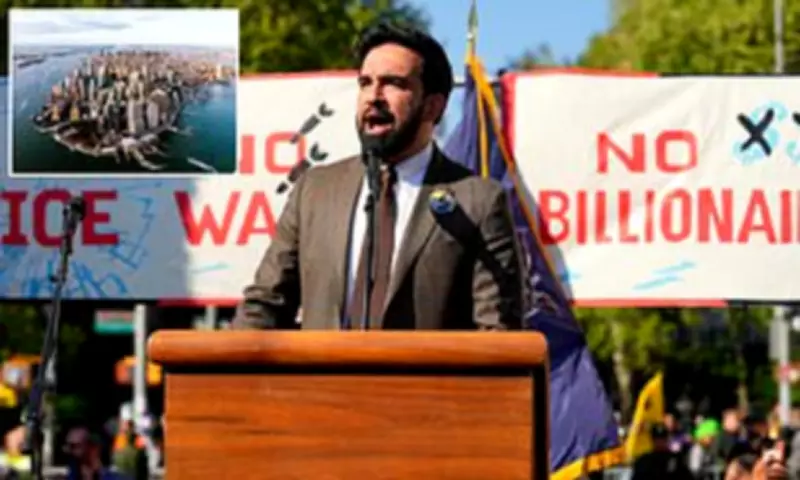
Mayor Zohran Mamdani has been forced into a humiliating U-turn over his threat to hammer millions of New York City homeowners with a sweeping property tax hike. The mayor dropped the hated levy from his executive budget after weeks of backlash from homeowners, City Council leaders and business figures who warned his tax-and-spend agenda could drive wealth out of the city.
Executive Budget Revealed
Mamdani revealed the executive budget for this fiscal year on Tuesday, confirming that his team has balanced New York City's budget by closing a gap of more than $12 billion he says he inherited. Governor Kathy Hochul and Mamdani announced that the state secured an additional $4 billion to help with the deficit, bringing the total new state assistance to nearly $8 billion over two years.
Major Setback for Mayor
The reversal marks a major setback for the Democratic Socialist mayor less than five months into his term, after he had promoted the measure as a way to help close the city's $5.4 billion deficit, which he claimed Tuesday had now been resolved. Mamdani presented his preliminary budget proposal 12 weeks ago, describing it as 'a straightforward reality' after dealing with a 'historic budget gap'.

He explained that the closing of the budget gap came from seeking more money from Albany by threatening to raise property taxes in NYC, one of the few hikes under the city's jurisdiction. 'We scoured for savings and demanded greater efficiency from every part of city government. We partnered with Albany, securing billions in new funding, and reversing many of the cost burdens that Andrew Cuomo shifted to the city over his decade as governor,' Mamdani explained. 'And we taxed the rich, asking those with the most to contribute a little bit more to support those with the least. We pulled New York City back from an existential fiscal break.'
The mayor also clarified that raising property taxes will no longer be necessary.
Proposed Tax Hike Draws Criticism
The measure, which was met with ire, was floated by the mayor in February when he stated his intention to raise property taxes by 9.5 percent to generate $3.7 billion in revenue. At the time, Mamdani insisted his plan was the only way to balance the budget if Albany wouldn't budge on raising state taxes on corporations and the wealthy. Mamdani has gone quiet on his plan in recent weeks, partly due to opposition from City Council Speaker Julie Menin.
After drawing criticism, Mamdani distanced himself from his own plan, describing it as a 'last resort' - although he stopped short of totally abandoning it. Property taxes are the only major levy the city can adjust within limits set by state law, and any increase would require approval by the City Council. That means Mamdani can't raise taxes unilaterally, and right now it looks unlikely that his proposal stands a chance.
Earlier, the mayor insisted there were two paths out of the budget crisis: Raise personal income taxes and corporate taxes, or raise property taxes. Now he appears to have found another way, involving additional savings or squeezing more revenue out of Albany - or a bit of both.
Alternative Revenue Sources
While New York Governor Kathy Hochul has opposed taxing the wealthy, she has supported a pied-à-terre tax that could generate about $500 million a year. The plan targets second homes valued at $5 million or more with ultra-wealthy owners who live outside the city. In an April interview, realtor Gea Elika told the Daily Mail that the tax would be easily skirted and possibly trigger a flood of expensive home sales. 'People forget these are second homes,' Elika said. 'A pied-a-terre is a want, not a need. It's a choice between owning a piece of the city or just booking a hotel when you're in town. Tilt the math enough, and that choice flips overnight.'
He also argued that the estimated revenue for New York City would be just a fraction of more optimistic projections. Instead, Elika argued the city would bleed out 'the transfer taxes, mansion taxes and the building jobs that disappear when ownership stops being active.'

Another tactic Mamdani is floating to overcome the budget disparity is allowing the city to delay billions in pension payments, which would push back retirement contributions into its vast municipal pension system - freeing up at least $1 billion in the next fiscal year. For now, the city remains on track to meet its long-term pension funding obligations by its 2032 deadline. Mamdani's team said in a statement to the New York Times that it has not started ironing out the details of the proposal and that any changes would likely push the deadline beyond 2032, with the approval of Hochul.