Iranian Football Stars' Dramatic Asylum Bid Nearly Derailed by Early Flight Attempt
Five Iranian women footballers who were granted asylum in Australia after a dramatic escape from their team handlers almost had their freedom plan ruined when the national squad attempted to fly home unexpectedly early. The players staged their escape on Monday night, only to discover that the Iranian team had tried to depart Australia that same day, which would have prevented their asylum bid.
Secret Police Operation and Humanitarian Visas
The women – captain Zahra Ghanbari, Fatemeh Pasandideh, Zahra Sarbali, Atefeh Ramazanzadeh and Mona Hamoudi – fled their team accommodation fearing persecution after refusing to sing Iran's national anthem during the Women's Asian Cup tournament. The Australian Federal Police secretly moved them to a secure location before they were granted humanitarian visas by the Federal Government.
Home Affairs Minister Tony Burke confirmed the group had been placed into protection before their visa applications were formally approved. "Once that happened... it was made clear that there were five women who wanted to be able to stay in Australia," he stated. "They were moved to a safe location by the Australian Federal Police, and last night, I met with them at that location."

Minister Burke personally signed off on their humanitarian visa applications late on Monday night, with processing completed by the Department of Home Affairs in the early hours of Tuesday morning.
Flight Attempt and Family Pressure Concerns
Respected sports journalist Tracey Holmes reported that the Iranian team attempted to fly out of Australia on Monday, just hours before the five players managed to escape from their hotel. "I've had it confirmed that they tried to fly out of Australia yesterday but could not find flights that would get them into Iran," Holmes revealed on social media platform X.
The remaining squad members are reportedly wrestling with difficult decisions about whether to accept Australia's offer of humanitarian visas or return home due to pressure being exerted on their family members in Iran. "They have been warned by an official spokesperson that the pressure on those family members will be sustained until the rest of the team flies home," Holmes added.
Minister Burke emphasized that Australia would assist any other players seeking protection, stating: "I say to the other members of the team, the same opportunity is there."
Distress Signals and International Intervention
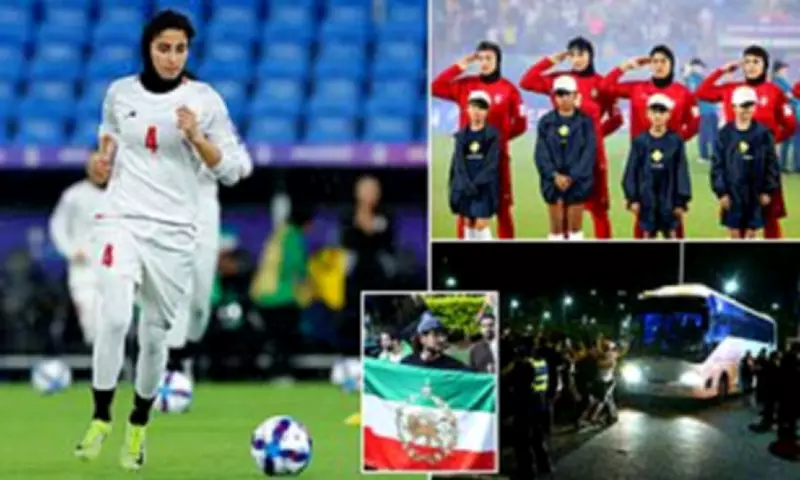
The crisis escalated after one player made an international SOS hand signal from the team bus following their final Asian Cup match on Sunday night. The footballer raised an open palm, crossed her thumb over it, and folded her fingers over the top – a recognized distress signal that triggered alarm among activists and supporters.
Chaotic scenes unfolded outside the stadium when protesters surrounded the team bus, chanting for the players to be allowed to stay in Australia. Footage showed demonstrators banging on the vehicle while some footballers inside filmed the crowd through the windows.
The situation became an international diplomatic issue when US President Donald Trump publicly intervened, urging Australia to provide asylum to the players. "He's on it! Five have already been taken care of, and the rest are on their way," Trump wrote on his Truth Social platform. Prime Minister Anthony Albanese later confirmed he had spoken with Trump about the issue, describing their conversation as constructive.
Background of Political Protest
The controversy began when Iran's players refused to sing the national anthem before one of their Asian Cup matches, an act widely interpreted as a protest against the Islamic Republic. Iranian state media figures had branded the team 'wartime traitors' following the anthem boycott.
This isn't the first time Iranian athletes have staged protests against the regime. At the 2022 men's World Cup, players did not sing the national anthem or celebrate goals during their opening match against England. The team's actions coincided with a women's protest movement in Iran that was met by a brutal crackdown by the country's Revolutionary Guard.

Last month, it was reported that two Iranian women's players had withdrawn from the team shortly before the Asian Cup as another protest movement was being suppressed in their country. Defender Kousar Kamali wrote on social media: "When the heart is wounded and the soul is tired, football is no longer a refuge. I can't pretend everything is normal."
Australian authorities have not confirmed whether three additional Iranian players reportedly missing are seeking asylum or whether they have been located. The asylum saga continues as Iran remains engaged in regional conflicts across the Middle East.