Italian Bagpipers Honour Scottish Heritage at Milan Cortina Olympic Curling
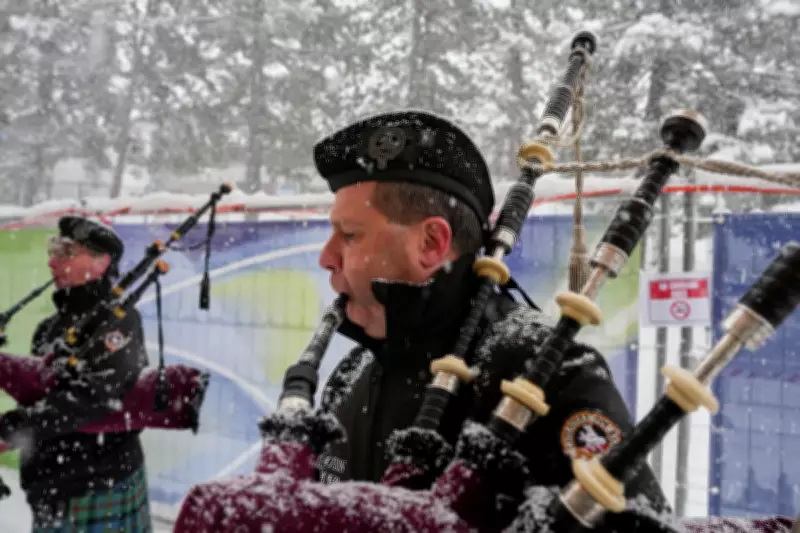
Spectators braving heavy snow to reach the Cortina Olympic curling stadium were greeted by a surprising and delightful sight: a traditional Scottish bagpipe performance. The musicians, dressed in kilts, high socks, glengarry caps, and carrying snare drums, were not from Scotland but from Italy. The Milan Cortina Winter Games have introduced a unique twist to the long-standing tradition of having a pipe band play at Olympic curling medal ceremonies, a homage intended to honour the sport's deep Scottish roots.
A Band from Veneto Takes the Olympic Stage
For these Games, the bagpipers hail from northeastern Italy, more than 2,000 miles (approximately 3,200 kilometres) from Scotland. Known as the Cateaters Pipe Band, they are one of only two pipe bands in the Veneto region. Until recently, their performances were confined to local concerts, ballet events, and ceremonies around Veneto. Playing at the Olympic medal ceremony marks their most significant gig to date.
"It's so emotional for us to play here for the world," said Marianna Spadarotto, the sole woman in the band, who plays the bass drum. "For me, yes, it is exciting, but also I'm shy, so it makes me nervous." When asked if they incorporate Italian flair into the Scottish tunes, the band members emphatically shake their heads, insisting they do not tamper with tradition—though such adaptations are not unheard of in Italy.

Musical Journeys and Cultural Connections
Luca Eze, a bagpiper in the band, began his musical career on the zampogna, an instrument common in central and southern Italy. In the Veneto region, it is sometimes called a "piva" and is typically played during Christmas and other festivities. "I played the electric guitar and then a friend passed along this instrument to me," says Mauro Fortuna, a Venetian who started playing Scottish music in 2008.
Cristian Negro, who plays the snare drum, notes that as an Italian pursuing Scottish music, he has found frequent opportunities for gigs. "I focus more on high tension snare drums because there are so few people who play it here," he explains. "I get to play more music—and it's necessary for someone to do." He admits it is also pretty cool because it has brought him to the Olympics.
The Scottish Origins of Curling
Curling is believed to have originated in Scotland, with the first written evidence of the sport documented in Latin by a notary living in Paisley, Scotland, in the sixteenth century, according to World Curling. The notary recounted a stiff contest between a monk, John Sclater, and a representative of the Abbot, Gavin Hamilton, involving sliding stones across ice. It was in Scotland where organized curling clubs first emerged, with players sliding stones across frozen lochs.
Olympic Atmosphere and Fan Reactions
On a snowy day outside the Cortina curling centre, Olympic fans paused to take in the scene, some marvelling at how the musicians' ungloved hands could withstand the cold. The tufts of Luca Eze's hair, peeking out from beneath his glengarry cap, were dusted with snowflakes that fell down his face with every puff of the bagpipe. He appeared bright red and smiling, fully immersed in the performance.
Some fans proudly waved Scottish flags, there to support the four players representing Britain on the ice, all of whom are from Scotland. Italian tourists looked animated during breaks between tunes, realising they could understand the chatter between bandmates, adding a layer of local connection to the international event.
This blending of cultures at the Milan Cortina Games highlights how traditions can travel and evolve, bringing together heritage and innovation on the world stage.