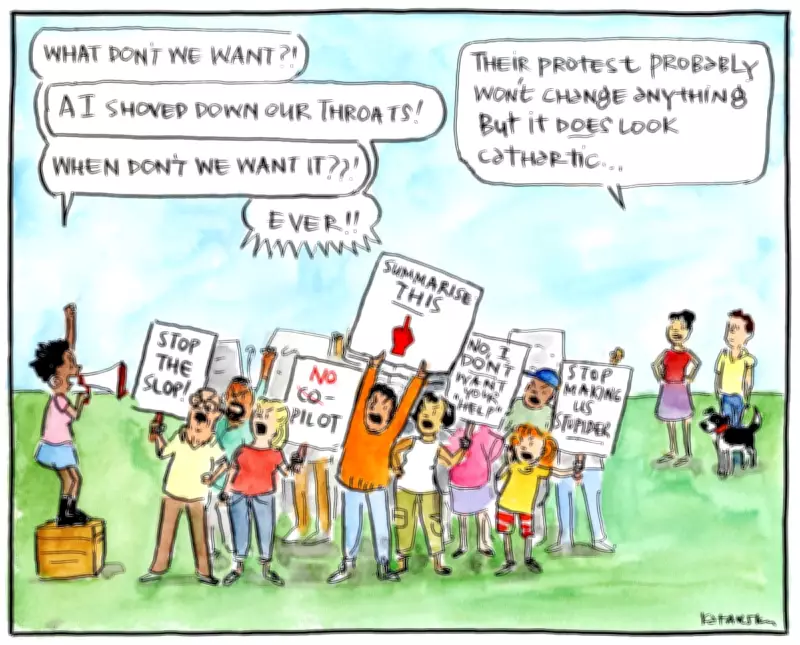
The promise of artificial intelligence has long been painted in utopian hues: a future where machines handle the mundane, unlock scientific breakthroughs, and elevate human productivity to unprecedented heights. Yet, as AI systems become more pervasive, a counter-narrative is gaining momentum. From artists protesting the use of generative AI to replace creative work, to regulators scrambling to contain the spread of deepfakes and algorithmic bias, the question arises: has the great AI backlash begun?
The Seeds of Discontent
Several high-profile incidents have fueled public unease. In the creative industries, writers, illustrators, and musicians have voiced alarm over AI models trained on their work without consent or compensation. Lawsuits against companies like OpenAI and Stability AI have become emblematic of a broader struggle over intellectual property and the value of human creativity. Meanwhile, in the realm of news and information, the proliferation of AI-generated content has blurred the lines between fact and fiction, eroding trust in media and democratic discourse.
Beyond the cultural sphere, concerns about job displacement have resurfaced with a new urgency. While previous waves of automation primarily affected manufacturing, generative AI now threatens white-collar professions, including law, accounting, and software development. A recent study from Goldman Sachs estimated that two-thirds of current jobs are exposed to some degree of AI automation, with many roles facing partial or full replacement.

Regulatory Responses
Governments worldwide are beginning to take notice. The European Union's AI Act, the first comprehensive legal framework for AI, imposes strict requirements on high-risk systems, including transparency, human oversight, and accountability. In the United States, the Biden administration has issued an executive order on AI safety, while the United Kingdom has hosted an AI Safety Summit to foster international cooperation. These moves signal a shift from laissez-faire innovation toward a more cautious, rights-based approach.
Yet, critics argue that regulation alone may not be sufficient. They point to the inherent opacity of large language models and the difficulty of auditing systems that are effectively black boxes. Moreover, the pace of technological change outstrips legislative action, leaving gaps that can be exploited by malicious actors or corporations prioritizing profit over public good.
The Industry's Defense
Tech advocates counter that the backlash is overblown and stems from a misunderstanding of AI's capabilities and limitations. They emphasize the potential benefits: improved healthcare diagnostics, more efficient energy grids, and personalized education. They also argue that AI will create new jobs and industries, just as previous technological revolutions have done. However, this optimistic outlook is increasingly being met with skepticism, especially as the timeline for such benefits remains uncertain.
Public Opinion
Surveys indicate a growing wariness. A 2025 Pew Research Center poll found that 52% of Americans are more concerned than excited about AI, up from 37% in 2022. Similar trends are evident in Europe and Asia. This shift is not merely a Luddite reaction but reflects genuine anxieties about privacy, surveillance, and the concentration of power in a few tech giants.
The backlash is also manifesting in grassroots movements. Campaigns to ban facial recognition in public spaces, boycotts of AI-generated art competitions, and calls for a moratorium on the development of advanced AI systems have gained traction. These actions suggest a public that is increasingly unwilling to accept AI as an inevitable force and is demanding a say in how it shapes society.
What Lies Ahead?
Whether the backlash will lead to a fundamental reorientation of the AI industry remains to be seen. The economic incentives for continued development are immense, and the geopolitical competition for AI supremacy adds another layer of complexity. However, the growing chorus of voices calling for caution, accountability, and democratic control indicates that the era of unchecked AI expansion may be drawing to a close.

In the end, the question is not whether AI will continue to advance, but under what conditions and with whose interests in mind. The backlash, if sustained and organized, could be the catalyst for a more equitable and human-centered technological future. Or it could be a temporary disturbance in the relentless march of progress. The answer will depend on the choices made by policymakers, industry leaders, and citizens in the coming years.