Apollo vs Artemis: NASA's New Moon Mission Compared to Historic Landings
NASA's Apollo moonshots remain a legendary achievement, setting a high bar that is challenging to surpass even after all these years. As four astronauts prepare to launch on humanity's first journey to the moon in over half a century, comparisons between the iconic Apollo program and the new Artemis initiative are inevitable and insightful.
Run-up to the Moon: A Tale of Two Eras
It took NASA just eight years to progress from its first astronaut in space to landing Apollo 11's Neil Armstrong and Buzz Aldrin on the moon in 1969, beating President John Kennedy's end-of-decade deadline. In stark contrast, Artemis has advanced much more slowly, hindered by decades of indecision and shifting priorities between the moon and Mars as the next grand destination. NASA's new moon rocket, the Space Launch System (SLS), has flown only once in an uncrewed test flight more than three years ago.
This slower pace prompted NASA's new administrator, Jared Isaacman, to overhaul the Artemis program in February. Eager to emulate Apollo's momentum, he inserted an additional mission between the upcoming Artemis II flight and the moon landing, now rescheduled for Artemis IV in 2028. During next year's revamped Artemis III, astronauts will practice docking their Orion capsule in Earth orbit with lunar landers from SpaceX and Blue Origin, mirroring Apollo 9's preparatory steps.

Political Rivalries: From Soviets to Chinese
During the Apollo era, the Soviets were America's fierce competitors, but their moon rockets repeatedly failed at liftoff, leading to their eventual withdrawal. Today, China has emerged as the primary rival, having already landed robotic spacecraft on the moon's far side and aiming to send astronauts near the lunar south pole by 2030. NASA is targeting the same polar region, where shadowed craters may contain ice for water and fuel. Isaacman, like his predecessor Bill Nelson, is determined to win this second space race against China.
Moon Rocket: Saturn V vs SLS
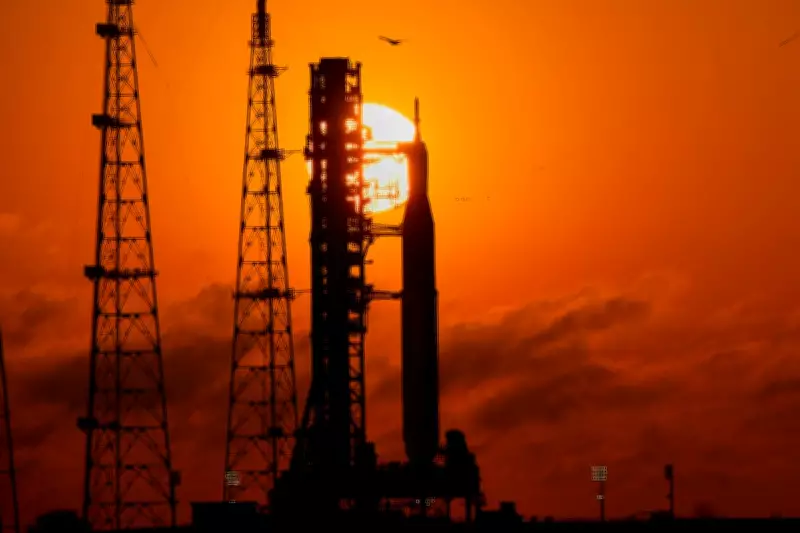
Apollo's Saturn V rockets stood 363 feet tall with five first-stage engines, while the Artemis SLS rocket measures 322 feet but delivers more liftoff thrust with four main engines and two strap-on boosters. Most Saturn V launches occurred from Kennedy Space Center's Launch Complex 39-A, now leased by SpaceX, whereas NASA will use pad 39-B for all SLS flights. The SLS has faced delays due to hydrogen fuel leaks and helium issues, with NASA now targeting an April liftoff for Artemis II. Notably, Artemis launch director Charlie Blackwell-Thompson leads the launch control, highlighting increased gender diversity compared to Apollo's era.
First Lunar Crews: Risk and Hope
Apollo 8's 1968 mission, with Frank Borman, Jim Lovell, and Bill Anders, is remembered as one of the gutsiest spaceflights, involving 10 lunar orbits as a precursor to the moonwalk. NASA deemed orbiting the moon too risky for Artemis II's crew debut, focusing instead on testing the Orion capsule's life-support systems. Both missions occurred during troubled times, with Artemis II pilot Victor Glover emphasizing the hope such endeavors can bring to humanity.
Shades of Apollo 13: Trajectories and Safety
Artemis II will orbit Earth for a day before heading to the moon, taking three to four days to reach it and travel 5,000 miles beyond, surpassing Apollo 13's distance record. Like Apollo 13, it will use a free-return trajectory, leveraging gravity for a fuel-efficient return. Astronauts will parachute into the Pacific Ocean upon mission completion, similar to Apollo crews.
Suiting Up: Evolution of Spacesuits
For Apollo, bulky white spacesuits served dual purposes for launch and moonwalks due to storage constraints. Artemis benefits from larger Orion capsules, allowing for separate suits: custom-fitted orange suits for launch and reentry, capable of sustaining astronauts for up to six days with built-in hydration and waste systems, and white moonwalking suits from Axiom Space for future surface missions.

Long-term Goals: From Flags to Bases
Apollo focused on beating the Soviets and planting the U.S. flag, with six landings from 1969 to 1972 and surface stays up to 75 hours. Artemis aims for sustained lunar living, with the first landing potentially lasting nearly a week. The plan involves astronauts transferring from Orion to SpaceX's Starship or Blue Origin's Blue Moon lander in lunar orbit. NASA envisions a moon base with habitats, rovers, and power stations, investing $20 billion over seven years to support this vision, with Mars as the ultimate goal.
While Artemis builds on Apollo's legacy and pays homage to it, NASA astronaut Christina Koch notes it represents a new chapter, reflecting broader societal diversity and advanced ambitions in space exploration.