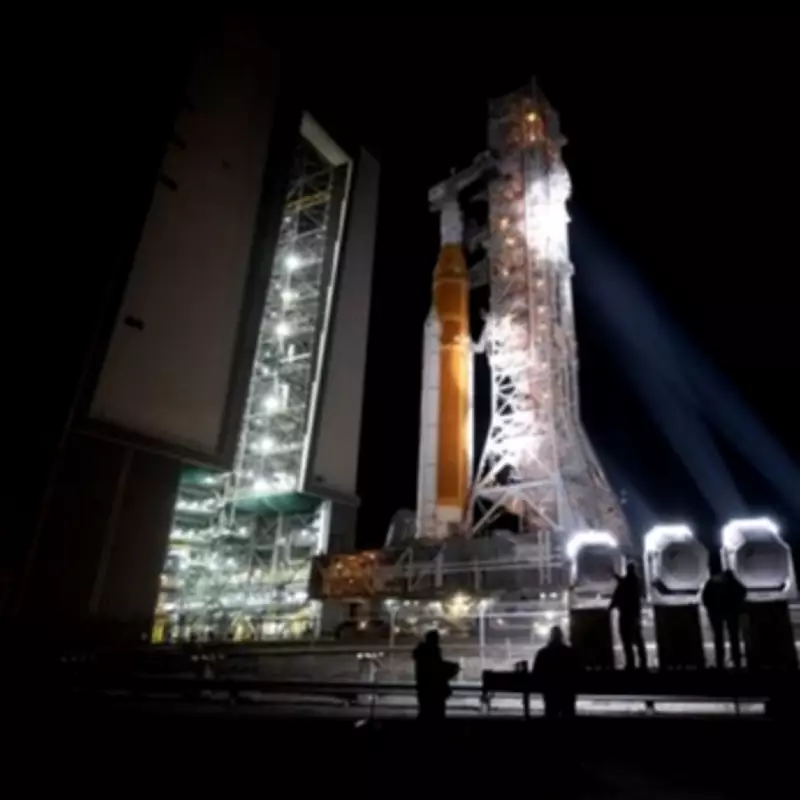
NASA Artemis 2 Countdown Set to Commence for Historic Moon Mission
With NASA's colossal 98-meter tall Artemis 2 rocket positioned on the launchpad at the Kennedy Space Centre in Cape Canaveral, Florida, the countdown to lift-off is poised to start imminently. The first launch window opens on April 1, marking a pivotal moment in the space agency's ambitious plans to establish a sustained human presence on the moon.
Final Preparations Underway as Launch Nears
As the scheduled launch date approaches, final checks and procedures are being conducted at Cape Canaveral. This mission represents the first human visit to the lunar surface in more than five decades, with the countdown process set to initiate just hours from now. The launch team at NASA's Kennedy Space Center, along with other mission teams across the United States, will begin the detailed countdown approximately two days prior to lift-off. This allows the four-astronaut crew to complete their final preparations for the journey into space.
For the initial launch opportunity on April 1, the countdown could commence as early as Monday night, March 30. The countdown incorporates both "L Minus" and "T Minus" timers, where "L minus" tracks the time remaining until lift-off in hours and minutes, and "T minus" sequences specific events built into the launch schedule. NASA strategically includes pauses or "holds" in the countdown to ensure critical tasks are completed without disrupting the overall timeline. During these holds, the T-minus clock halts, but the L-minus timer continues to advance.

Key Events in the Artemis 2 Countdown Timeline
Below is a comprehensive overview of the major milestones scheduled during the countdown to the Artemis 2 launch, with approximate timings for each phase.

- L-49 hours 50 minutes and counting: Launch team arrives at their stations, and the countdown clock begins.
- L-49H40M – L-42H30M: Preparations for loading liquid oxygen and liquid hydrogen systems.
- L-45H30M – L-44H: Orion spacecraft is powered up.
- L-42H20M – L-41H: Core stage is powered up.
- L-42H10M – L-40H30M: Interim cryogenic propulsion stage (ICPS) is powered up.
- L-39H45M – L-35H30M: Final preparations of the four RS-25 engines.
- L-35 hours and counting: ICPS is powered down, and flight batteries for Orion and the core stage are charged.
- L-20H15M – L-18H45M: ICPS is powered up for launch.
- L-16 hours and counting: Non-essential personnel depart Launch Complex 39B.
- L-14H15M – L-12H05M: Air-to-gaseous nitrogen changeover and rocket cavity inerting.
- L-13H15M – L-11H45M: Ground launch sequencer (GLS) activation.
- L-13 hours and counting: A built-in countdown hold begins, and the launch team decides whether to proceed with tanking.
- L-10 hours and counting: Core stage and ICPS chilldown and filling processes for liquid oxygen and liquid hydrogen.
- L-6 hours and counting: Orion communications system activated, flight crew weather brief conducted, and closeout crew assembles.
- L-5H10M – L-4H55M: Closeout crew moves to the white room, and flight crew deploys to the pad.
- L-4H: Flight crew boards the Orion spacecraft.
- L-3H40M – L-3H10M: Crew module hatch preparations and closure.
- L-2H20M – L-1H40M: Crew module hatch service panel installation and closeouts.
- L-1H40M – L1H30M: Launch abort system hatch closure for flight.
- L-50M – L-40M: Closeout crew departs Launch Complex 39B, and final briefings are held.
- L-40 minutes and holding: Built-in 30-minute countdown hold begins.
- L-25 minutes and holding: Transition to Orion-to-Earth communication loop.
- L-17M: Launch director polls the team for a "go" decision.
- L-15M: Flight crew visors are lowered.
- T-10 minutes and counting: GLS initiates terminal count, crew access arm retracts, and systems are armed.
- T-6M: Orion ascent pyros are armed, and Orion switches to internal power.
- T-5M57S: Core stage liquid hydrogen replenishment terminates.
- T-5M20S: Launch abort system capability is confirmed available.
- T-4M30S: Flight termination system is armed.
- T-4M: Core stage auxiliary power unit starts.
- T-4M: Core stage liquid oxygen replenishment terminates.
- T-3M30S: ICPS liquid oxygen replenishment terminates.
- T-2M02S: ICPS switches to internal battery power.
- T-2M: Booster switches to internal battery power.
- T-1M30S: Core stage switches to internal power.
- T-1M20S: ICPS enters terminal countdown mode.
- T-50S: ICPS liquid hydrogen replenishment terminates.
- T-33S: GLS sends "go for automated launch sequencer" command.
- T-30S: Core stage flight computer transitions to automated launching sequencer.
- T-12S: Hydrogen burn off igniters are initiated.
- T-10S: GLS commands core stage engine start.
- T-6.36S: RS-25 engines startup.
- T-0: Booster ignition, umbilical separation, and liftoff.
This meticulous sequence underscores the complexity and precision required for a successful launch, as NASA advances toward its goal of lunar exploration and beyond.