Artemis II Mission Seeks to Reignite Public Interest in Lunar Exploration
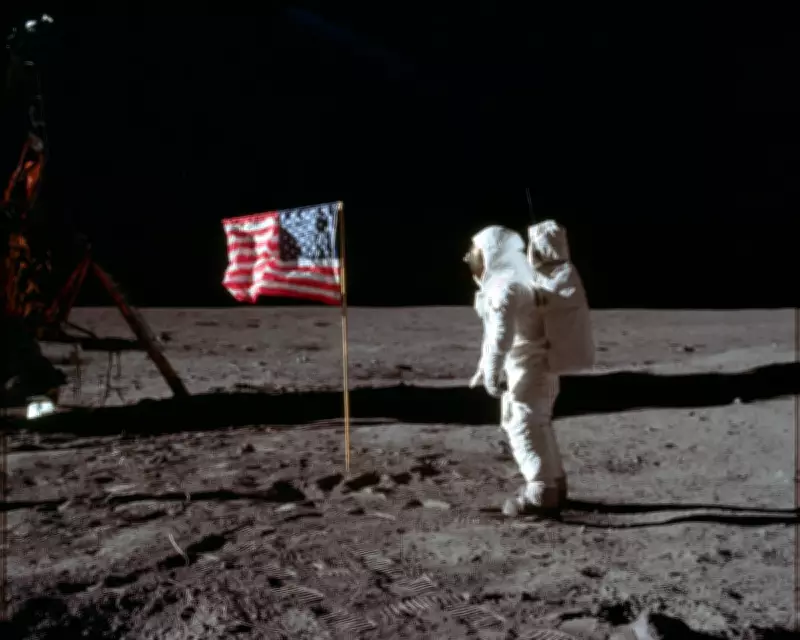
On July 21, 1969, Neil Armstrong descended from the Apollo 11 spacecraft to utter his iconic words: "That's one small step for man, one giant leap for mankind." This moment, nearly 57 years ago, marked humanity's first lunar landing, a feat that captivated global audiences and symbolized rapid technological progress, coming just 66 years after the Wright brothers' inaugural flight.
Since the Apollo 17 mission in 1972, no humans have returned to the moon. However, change may be imminent as early as this week with NASA's Artemis II mission. This 10-day lunar flyby will carry four astronauts around the moon, though without a landing, which is reserved for the future Artemis IV mission, still several years away.
Can Artemis Recapture the Lunar Fever of the 1960s?
During the Apollo era, hundreds of millions worldwide watched Armstrong and Buzz Aldrin land at Tranquility Base, with Mike Collins orbiting above. The astronauts' return sparked ticker-tape parades in New York and a global tour, including meetings with the Pope and Queen Elizabeth II, and visits to cities like Mumbai and Bangkok.

This enthusiasm was fueled by the Cold War context, where the space race served as a key battleground between the West and the Soviet Union. President John F. Kennedy's 1962 speech framed the mission as a challenge driven by human instinct to explore and compete, stating, "We choose to go to the moon in this decade and do the other things, not because they are easy, but because they are hard."
Modern Challenges and Political Shifts in Space Exploration
Today, the political and rhetorical urgency has diminished. NASA's focus has oscillated between the moon and Mars under successive U.S. presidents. In 2017, Donald Trump redirected attention to the moon, citing vague goals like American leadership and lunar economic development, with Mars as a distant future objective.
Initially, NASA highlighted Artemis as historic for including the first black astronaut, Victor Glover, and first female astronaut, Christina Koch, to reach the moon. However, under Trump's "anti-woke" agenda, the agency removed references to their groundbreaking roles from its website, aligning with political pressures.
The Moon's Enduring Cultural and Scientific Allure
While Artemis missions may not match the world-historical significance of Apollo 11—Artemis II replicates Apollo 8's 1968 flyby, and Artemis IV would be the seventh lunar landing—the moon retains a unique fascination. Its gravitational pull influences Earth's tides, and it has inspired art, music, and literature for millennia.
- From Romantic painters like Joseph Wright of Derby to surrealists such as Dalí, the moon symbolizes longing and mystery.
- Musicians from Beethoven to Phoebe Bridgers have drawn on lunar imagery, echoing Jorge Luis Borges' 1976 reflection: "Look at her. She is your mirror."
- Conspiracy theories about the Apollo landings emerged quickly, reflecting disbelief that humanity could conquer this celestial symbol.
Scientifically, our understanding of the moon has evolved dramatically. Galileo's 17th-century sketches revealed its cratered surface, and Soviet probes in 1959 first showed its far side. The 22kg of moon rocks from Apollo 11 provided evidence that the moon formed from a collision between Earth and a Mars-like planet called Theia billions of years ago.
Personal Reflections and Future Prospects
Armstrong, Aldrin, and Collins offered nuanced views of the moon. Aldrin described Tranquility Base as "magnificent desolation," while Armstrong noted its "stark beauty." Collins, orbiting alone, perceived it as "almost a hostile place, a scary place."
Soon, Artemis astronauts Christina Koch, Victor Glover, Reid Wiseman, and Jeremy Hansen may share similar firsthand insights. Their journey could inspire renewed public interest, or "lunacy," on Earth, even as missions to Mars or Jupiter's moons promise greater scientific breakthroughs, such as potential evidence of alien life.
Ultimately, while Artemis may not replicate Apollo's groundbreaking impact, the moon's enduring allure—as a symbol of human curiosity and achievement—ensures it remains a captivating frontier in space exploration.