Astronaut's Sudden Speech Loss Triggers Historic NASA Medical Evacuation
NASA astronaut Mike Fincke has revealed he experienced a terrifying medical episode aboard the International Space Station earlier this year, suddenly losing his ability to speak and prompting the first medical evacuation in the station's history. The incident occurred on January 7 while Fincke was eating dinner after preparing for a spacewalk, striking without warning like "a very, very fast lightning bolt."
The Terrifying Twenty-Minute Episode
The 59-year-old retired Air Force colonel described how he found himself unable to communicate verbally during the approximately twenty-minute episode. "It was completely out of the blue," Fincke said. "It was just amazingly quick." Remarkably, he reported feeling no pain during the incident, but his six crewmates immediately recognized his distress and sprang into action.
"My crewmates definitely saw that I was in distress," Fincke explained. "It was all hands on deck within just a matter of seconds." The concerned astronauts quickly contacted flight surgeons on Earth for guidance as the unprecedented situation unfolded 250 miles above our planet.

Unprecedented Medical Response in Space
The medical emergency triggered NASA's first-ever evacuation from the International Space Station, activating contingency procedures that had never before been implemented despite statistical models predicting such events might occur approximately once every three years. The space station's ultrasound equipment proved invaluable during the response, providing crucial diagnostic capabilities in the moment.
NASA's decision to evacuate followed the agency's Spaceflight Human-System Standard, which mandates contingency return procedures when onboard medical resources become insufficient. This marked the first time a crew's mission aboard the ISS had been terminated early due to medical reasons in the station's more than two decades of continuous operation.
Ongoing Medical Mystery
Despite extensive testing since his return to Earth, medical professionals remain uncertain about what caused Fincke's sudden speech loss. Doctors have ruled out a heart attack, and the astronaut confirmed he wasn't choking during the episode. However, all other possibilities remain under consideration, including potential connections to his cumulative 549 days of weightlessness across four space missions.
"I've been very lucky to be super healthy, so this was very surprising for everyone," Fincke noted. NASA is currently examining other astronauts' medical records to identify any similar incidents that might have occurred during space missions, hoping to uncover patterns or risk factors.
Mission Impact and Recovery
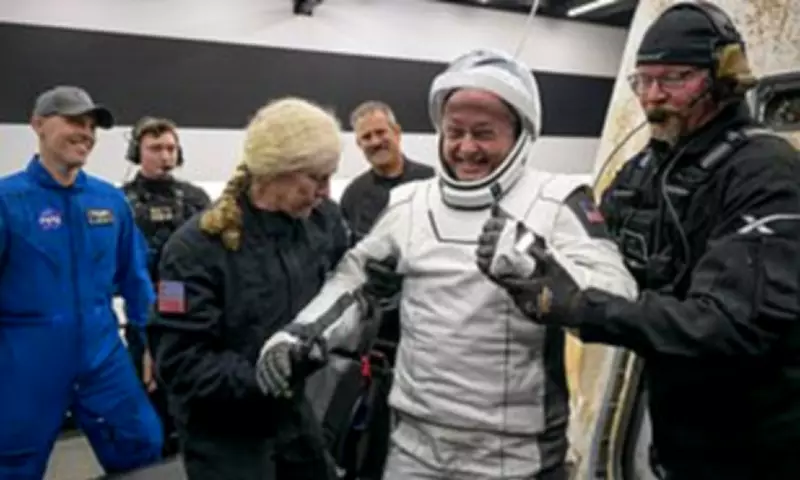
The evacuation affected the entire Crew-11 mission, bringing NASA astronauts Zena Cardman and Mike Fincke, Japanese astronaut Kimiya Yui, and Russian cosmonaut Oleg Platonov back to Earth approximately one month ahead of schedule. Following a middle-of-the-night splashdown near San Diego, California on January 15, the crew was transported directly to medical facilities for evaluation.
Fincke expressed regret about the mission's premature conclusion, particularly the cancellation of what would have been his tenth spacewalk and Zena Cardman's first. However, he has stopped apologizing after NASA's new administrator Jared Isaacman instructed him to cease. "This wasn't you - this was space, right?" his colleagues reassured him. "You didn't let anybody down."
Privacy Considerations and Future Implications
The astronaut explained that NASA has been cautious about releasing detailed information regarding his medical episode to protect future astronauts' privacy. "The space agency wants to make sure that other astronauts do not feel that their medical privacy will be compromised if something happens to them," Fincke stated, acknowledging the delicate balance between transparency and confidentiality.
This historic evacuation occurred as the International Space Station continues to serve as a critical testbed for research supporting deeper space exploration, including planned missions to return humans to the moon and eventually reach Mars. With the ISS scheduled for decommissioning after 2030, such medical incidents provide valuable data for planning longer-duration missions farther from Earth.

Despite the frightening experience, Fincke maintains his passion for space exploration and hopes to return to space someday. The episode serves as a stark reminder of the unique health challenges posed by spaceflight, including potential issues like blood clots, bone and muscle atrophy, vision loss, radiation damage, circadian rhythm disruption, and accelerated aging that astronauts may encounter during extended missions.