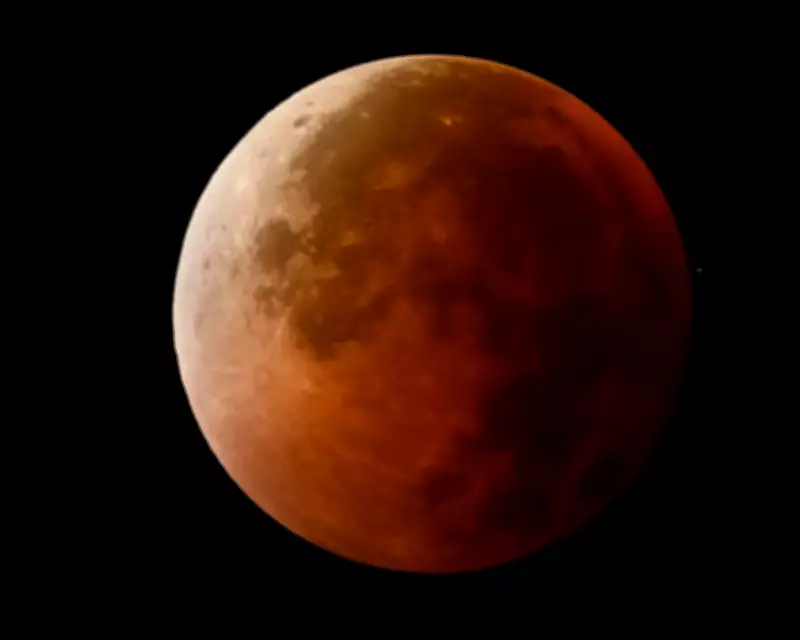
A spectacular total lunar eclipse, commonly referred to as a Blood Moon, is set to captivate skywatchers around the globe on March 3, 2026. This astronomical phenomenon will see the Earth's shadow completely envelop the moon, casting it in a striking reddish hue for an extended period.
Timing and Visibility of the 2026 Lunar Eclipse
The eclipse will unfold over several hours, with the total phase lasting approximately 1 hour and 5 minutes. Observers in Australia will have prime viewing opportunities, as the event will be visible in its entirety during the evening hours. In America, particularly on the West Coast, the eclipse will be partially visible, with the best views expected in the early morning before sunrise.
Global Reach and Astronomical Significance
Beyond Australia and America, the eclipse will also be observable from parts of Asia and Europe, weather permitting. This event marks a significant occurrence in the lunar cycle, offering a rare chance to witness the moon's transformation without the need for special equipment. The reddish color, which gives rise to the Blood Moon nickname, is caused by sunlight filtering through Earth's atmosphere and scattering blue light, leaving only red wavelengths to illuminate the lunar surface.

What to Expect During the Eclipse
The eclipse will progress through several distinct phases:
- Penumbral Phase: The moon enters Earth's outer shadow, causing a subtle dimming.
- Partial Eclipse: The moon begins to move into the umbra, Earth's inner shadow, leading to a noticeable darkening.
- Total Eclipse: The moon is fully within the umbra, turning a deep red or copper color.
- Post-Total Phases: The moon gradually exits the shadow, reversing the earlier stages.
Astronomers emphasize that lunar eclipses are safe to view with the naked eye, unlike solar eclipses, making this an accessible event for people of all ages. Enthusiasts are encouraged to find a dark location away from city lights for optimal viewing, and local astronomy groups may host public watch parties to share the experience.
Cultural and Historical Context
Lunar eclipses have long held cultural significance across various societies, often interpreted as omens or spiritual events. The 2026 Blood Moon continues this tradition, sparking interest not only among scientists but also in communities that celebrate celestial milestones. This eclipse is part of a series of lunar events in the mid-2020s, contributing to ongoing astronomical research and public engagement with space science.
As the date approaches, updates on exact timings and visibility conditions will be provided by astronomical organizations. Whether you're in Sydney, Los Angeles, or elsewhere, mark your calendars for March 3, 2026, to witness this mesmerizing display in the night sky.