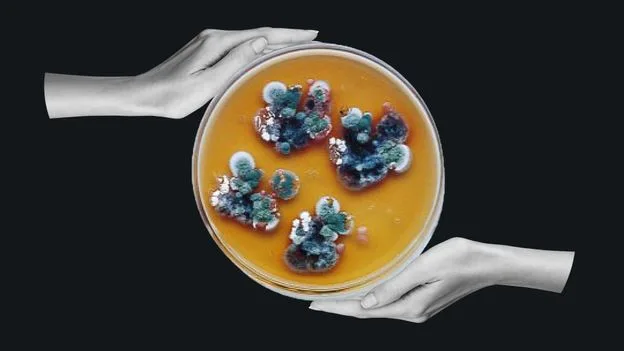
Chernobyl's Radiation-Eating Fungus Could Shield Astronauts as Bio-Armour
Chernobyl Fungus Could Shield Astronauts as Bio-Armour

Scientists have made a remarkable discovery inside one of the most radioactive environments on Earth—the shelter surrounding the Chernobyl nuclear power plant. A peculiar, pitch-black fungus has been found thriving on the interior walls, where radiation levels are typically lethal to living organisms. This hardy mould, identified as Cladosporium sphaerospermum, could hold the key to safeguarding astronauts from deadly cosmic rays during future missions to the Moon and Mars.

The Chernobyl Fungus: A Radiation-Loving Organism

The Chernobyl disaster of 1986 remains the worst nuclear accident in history, with long-term impacts that continue to this day. Clean-up efforts are projected to last until 2065. During surveys in the late 1990s, researchers identified 37 species of fungi flourishing in the exclusion zone, many of which were dark-coloured due to melanin—the same pigment found in human skin and hair. Among these, Cladosporium sphaerospermum stood out for its exceptional ability to not only survive but thrive under intense radiation that would typically destroy DNA and disrupt biochemical processes.

How the Fungus Harnesses Radiation

Laboratory experiments revealed that when exposed to higher levels of radiation, the fungus grew more vigorously rather than withering away. Scientists believe that the melanin in its cells does more than just provide shielding; it may enable the organism to convert environmental radiation into usable energy. This process is analogous to how chlorophyll allows plants to harness sunlight, suggesting a potential mechanism for radiation-based metabolism.

Wide Pickt banner — collaborative shopping lists app for Telegram, phone mockup with grocery list

From Chernobyl to Space: Testing Bio-Armour

In 2022, researchers took a bold step by launching samples of the black fungus into orbit and attaching them to the exterior of the International Space Station. Sensors placed beneath petri dishes recorded significantly less radiation passing through the fungal mat compared to control samples, indicating its potential as an effective radiation shield. This finding opens the door to developing "bio-armour"—a living, self-repairing coating that could protect astronauts and infrastructure in space.

Applications for Future Space Exploration

The implications of this discovery are profound for the future of human space exploration. If a thin, easy-to-grow fungal layer can dampen cosmic rays, it could be used to line spacecraft, lunar bases, and Mars outposts. This bio-armour would offer a sustainable and resilient solution to one of the greatest hazards of long-duration space travel: radiation exposure. Such technology could revolutionise how we approach living and working in extraterrestrial environments, making missions to the Moon and Mars safer and more feasible.

As scientists continue to study this radiation-eating fungus, its potential extends beyond space applications. Understanding how it thrives in extreme conditions could inform new approaches to radiation protection and energy conversion here on Earth. The journey from the ruins of Chernobyl to the frontiers of space highlights the unexpected ways in which nature can inspire groundbreaking innovations.

Pickt after-article banner — collaborative shopping lists app with family illustration