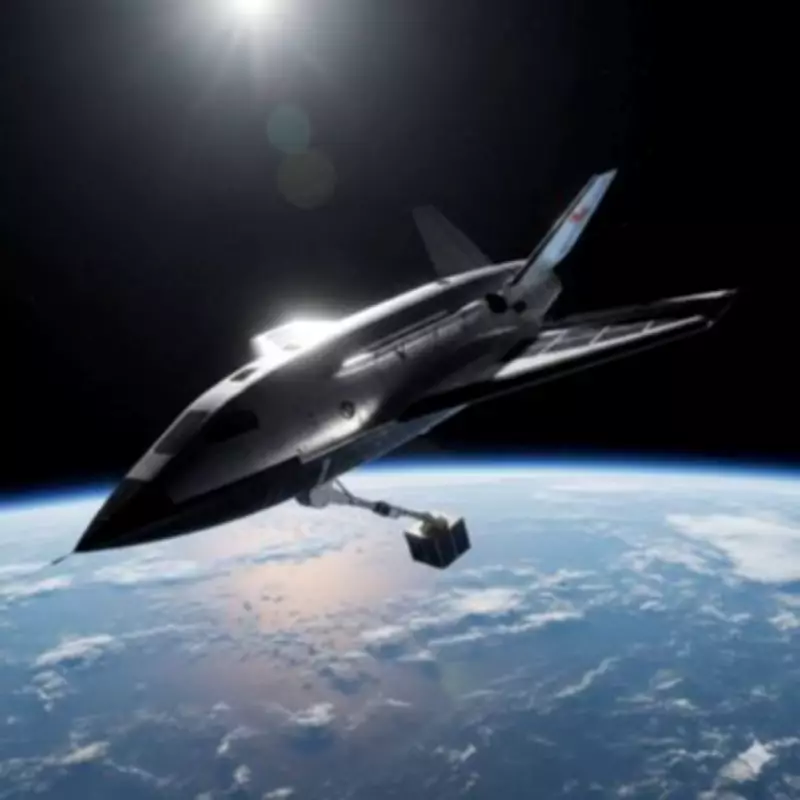
China's Mysterious 'Divine Dragon' Space Plane Launches for Fourth Secretive Mission
China has discreetly launched its highly secretive Shenlong space plane into orbit for the fourth time, with the craft's mission objectives remaining completely shrouded in mystery. The reusable vehicle, whose name translates as 'Divine Dragon', took off earlier this month from the Jiuquan Satellite Launch Centre in north-west China aboard a Long March-2F rocket.
Complete Secrecy Surrounds Mission Details
Beyond the basic launch information, Beijing has maintained remarkable secrecy about this fourth known deployment of the spacecraft. Chinese authorities have provided no details about the mission's orbital duration, specific payload, or planned experiments. The Chinese government has never released official photographs or technical specifications of the Shenlong, forcing external observers to piece together information from orbital monitoring data and enthusiast reports.
According to Chinese state media, authorities have stated only that the programme aims to test technology for developing "more convenient and affordable round-trip methods for the peaceful use of space" in future years. This vague statement has done little to satisfy international curiosity about the spacecraft's true purpose.

Similarities and Differences with American Counterpart
The Shenlong is believed to share significant similarities with the United States military's X-37B space plane - an autonomous mini-shuttle capable of altering orbits, remaining in space for extended periods, and returning equipment to Earth. However, observers have noted important differences between the two vehicles.
Unlike the American X-37B, the Shenlong has been observed deploying companion satellites into orbit before manoeuvring to rendezvous with or retrieve them. This capability suggests more complex operational possibilities than those demonstrated by its American counterpart.
Mission Duration and Capability Demonstrations
Previous Shenlong missions have demonstrated remarkable endurance and adaptability, with durations varying from just a few days to over eight months in orbit. This flexibility indicates sophisticated engineering and operational capabilities that have captured the attention of defence analysts worldwide.
While China maintains that the spacecraft is intended for "peaceful use of space," many defence analysts believe it is actually testing technologies for satellite maintenance, space debris clearance, or potential anti-satellite operations. The dual-use nature of space technology makes it difficult to definitively determine the craft's primary purpose.
Timing and Strategic Implications
The timing of this fourth mission is particularly significant, as it launched precisely as the United States Space Force prepares for its eighth X-37B mission. This parallel development highlights the growing space rivalry between the two nations and signals a new chapter in the competition for space dominance.
The ability to remain in orbit for extended periods and navigate around other space objects represents what many analysts consider the ultimate achievement in contemporary space operations. Both nations appear to be developing capabilities that could fundamentally alter the strategic balance in space.
The rivalry between these two 'shadow' spacecraft reflects broader geopolitical tensions and the increasing militarization of space. As both nations continue to develop and test these sophisticated space planes, the international community watches closely, aware that the technologies being perfected could have profound implications for future space operations and terrestrial security.