Chinese Spacecraft Reveals Mysterious Radiation 'Cavity' Near the Moon
Scientists have made a groundbreaking discovery of a previously unknown "cavity" or "shadow" in cosmic radiation located between Earth and the moon, a finding that could dramatically enhance astronaut safety on upcoming lunar missions. This revelation, based on data from China's Chang'e-4 lunar lander, was published in the journal Science Advances and challenges long-held assumptions about radiation distribution in space.
Radiation Dip During Lunar Mornings
At the core of this discovery is a mysterious pattern where levels of galactic cosmic radiation drop significantly during specific hours on the lunar surface, particularly in the local morning just after sunrise. This window of reduced exposure, which could prove crucial for crewed missions like NASA's Artemis 2, was identified through data collected over 31 lunar cycles between January 2019 and January 2022.
Researchers focused on periods of low solar activity to more accurately measure cosmic radiation from outside our solar system. Instruments on Chang'e-4 tracked incoming protons across various energy levels, revealing that lower-energy protons (between 9.18 and 34.14 mega-electron-volts) decreased by approximately 20% during lunar mornings in the waxing gibbous phase.

Earth's Magnetic Field Extends Further Than Expected
This discovery fundamentally alters scientific understanding of radiation in space. Previously, it was believed that once cosmic rays passed Earth's protective magnetic shield, they spread evenly toward the moon. However, this new research indicates that Earth's magnetic field continues to influence space much farther than anticipated, creating protected zones where radiation levels are lower.
Robert Wimmer-Schweingruber, a professor at Kiel University's Institute of Experimental and Applied Physics in Germany, expressed initial skepticism about the findings. "I had not expected to see this 'shadow' or cavity," he told Live Science. "It makes absolute sense in retrospect, but I was very sceptical when I first saw this result."
Computer models mapping particle travel through space have confirmed the radiation dip is genuine. The research team theorizes that Earth's magnetic field blocks some high-energy protons, forming this protective zone. "Basically this result means that the Earth's magnetosphere influences space even beyond its extension," Professor Wimmer-Schweingruber explained.
Implications for Future Lunar Missions
Cosmic rays represent one of the most significant radiation threats to astronauts venturing beyond low Earth orbit. These particles can penetrate spacecraft hulls and human tissue, damaging DNA and increasing cancer risks. The discovery of this radiation cavity could therefore be transformative for lunar exploration.
Professor Wimmer-Schweingruber noted that upcoming lunar landings will likely target polar regions with constant sunlight. By scheduling excursions during morning hours, astronauts could reduce their radiation exposure by around 20%. "It's best for astronauts to venture out onto the lunar surface in the local morning hours," he emphasized. "Just like for humans on Earth!"
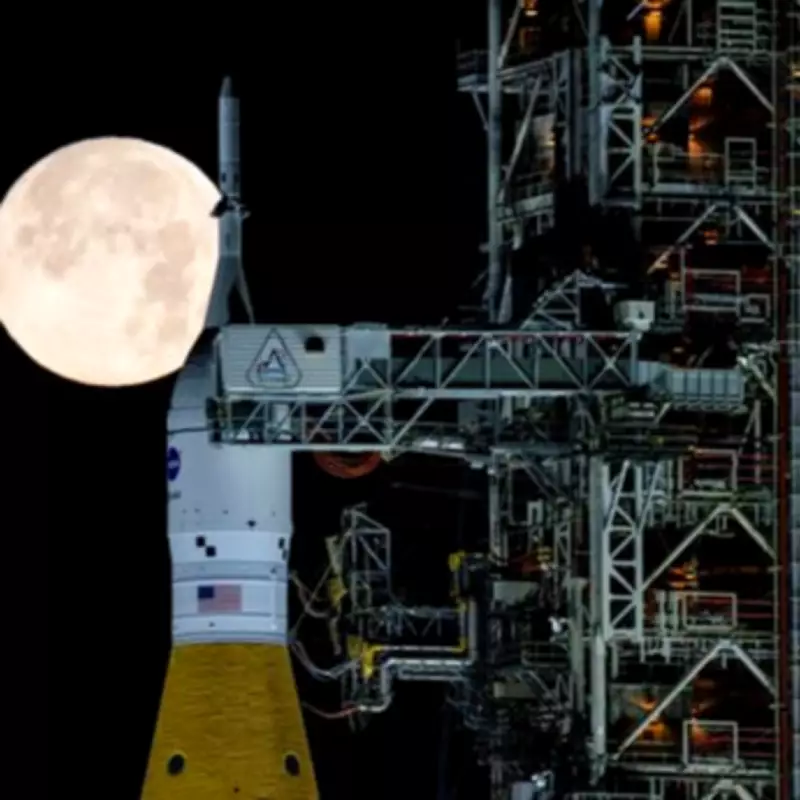
This finding comes at a critical time as NASA's Artemis 2 mission, which may launch as early as April 1, prepares to return humans to the moon. The ability to plan activities during periods of reduced radiation could significantly enhance mission safety and crew health protection strategies.
The research represents a major advancement in our understanding of space radiation dynamics and demonstrates how international scientific collaboration, utilizing data from China's Chang'e-4 mission, can yield discoveries with practical applications for human space exploration.