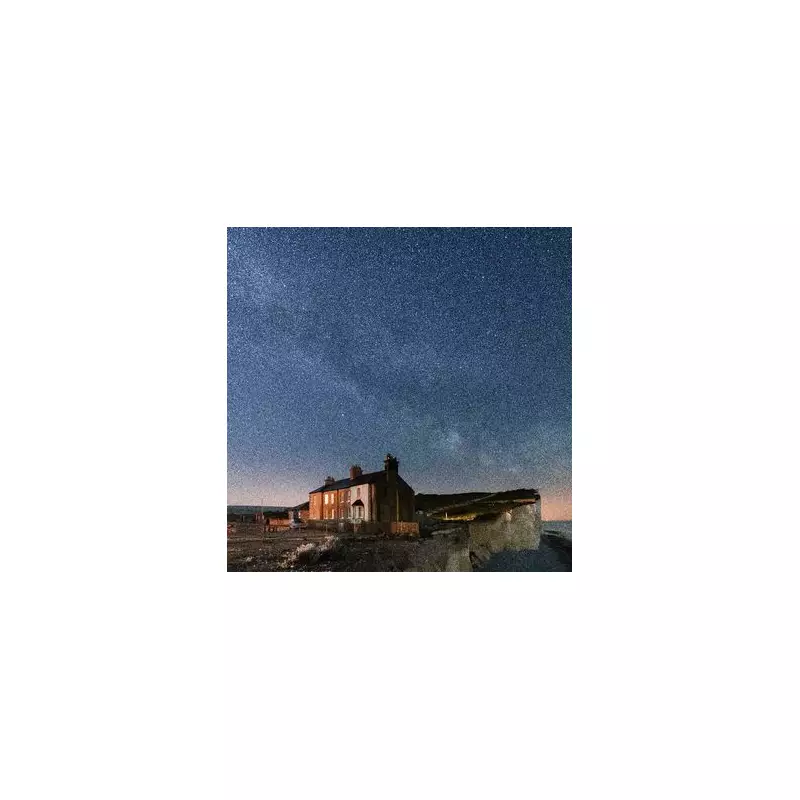
As Christmas approaches, many envision the Star of Bethlehem, but the winter heavens above Britain are currently adorned with their own spectacular festive displays. An astronomy expert has pinpointed the seasonal celestial sights that stargazers can seek out during the long, cold nights.
Seasonal Sights in the Heavens
Alan Jones, an expert from 365Astronomy astronomical telescopes, encourages people to look up this December. He notes that while stars are a common decorative motif, actual stargazing is often overlooked. "Following our guidance, however, you'll find that the night sky is full of seasonal delights to enjoy," Jones advises, reminding enthusiasts to wrap up warm.
The Christmas Tree Cluster
One of the most visually appropriate formations is the Christmas Tree Cluster. This stunning collection of stars resembles a festive fir tree, complete with a bright star at its base and the 'Cone' nebula at its tip. It resides within the constellation of Monoceros, the Unicorn.

To find it, Jones instructs: "First, locate the bright star Betelgeuse, one of Orion's shoulder stars. The cluster is just a little east (to the left when facing south) of Orion's belt and shoulder region." The optimal viewing window is between 10pm and 3am, using binoculars or a modest telescope for the best effect.
The Manger and The Reindeer
Another festive sight is Praesepe, also known as The Manger or the Beehive Cluster. Nestled in the constellation of Cancer, the Crab, it contains roughly 1,000 stars and is one of the closest open clusters to Earth, located about 577 light-years away. While visible to the naked eye, binoculars or a small telescope will reveal more stars in a single view.
For those seeking a more obscure reference, there is Rangifer (The Reindeer). This is technically an extinct and no longer officially recognised constellation. It once occupied a faint patch of the northern sky between Camelopardalis (the Giraffe), Cepheus, Cassiopeia, and Polaris (the North Star). Its far northern position means it never sets below the horizon for UK observers.
"If you still want to find where Rangifer used to be," says Jones, "locate Cassiopeia's distinctive 'W' shape high in the north. Move your view northward toward Polaris, and a bit east toward Camelopardalis. The dim patch between those two constellations is where Rangifer once stood."
The Three Kings in Orion's Belt
Perhaps the most iconic festive asterism is part of the mighty constellation Orion. The three bright stars forming Orion's belt were historically known as The Three Kings by 19th-century astronomers like Nicolas Camille Flammarion.
Alan Jones explains how to identify them: "Look for three bright stars in a short, straight line sloping upward from left to right as you face south in the evening sky." He adds that a telescope view reveals large, bright blue stars, with the rightmost star resolving into a double star under closer magnification.
This weekend offers a perfect opportunity to exchange some screen time for starlight, exploring the cosmic decorations that have illuminated the December sky for millennia.