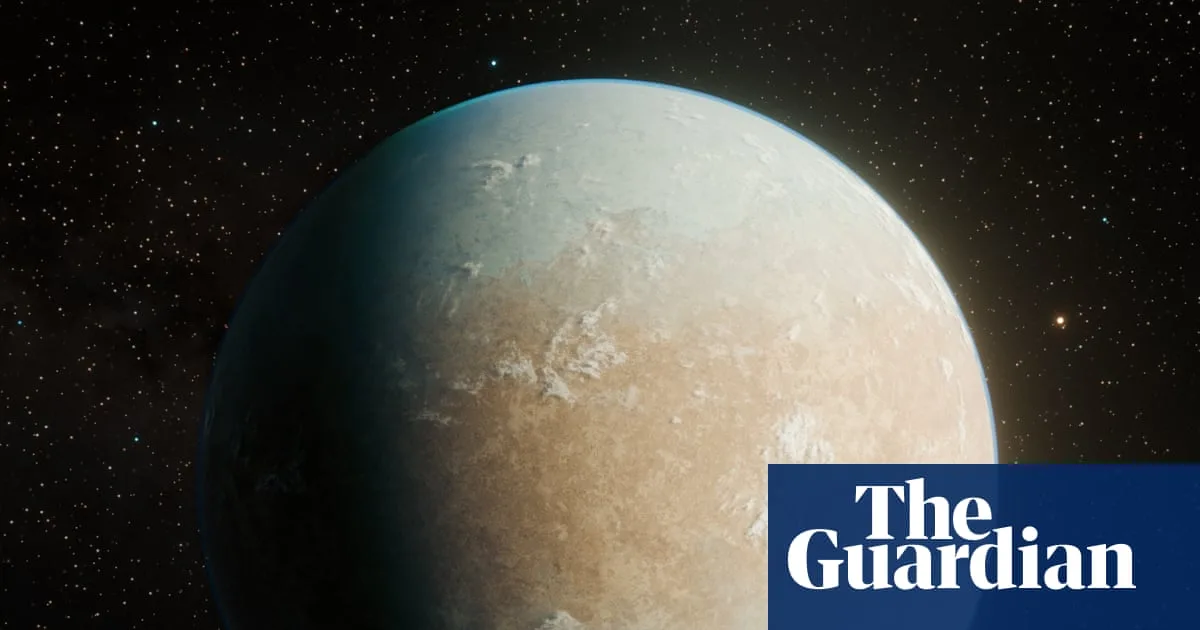
Astronomers have discovered a potentially habitable Earth-sized planet, HD 137010 b, located 146 light-years away. The planet orbits a sun-like star and is estimated to be 6% larger than Earth, with a surface temperature similar to Mars, potentially below -70°C.
An international team of scientists from Australia, the UK, the US and Denmark identified the planet using data from NASA's Kepler space telescope's extended mission, K2, captured in 2017. The planet has an orbit of about 355 days, similar to Earth's, and researchers believe it has a 50% chance of residing in the habitable zone of its star.
Dr Chelsea Huang from the University of Southern Queensland said the star's proximity makes it an excellent target for future telescopes. The planet was detected when it briefly crossed in front of its star, causing a minute dimming. The faint signal was initially spotted by citizen scientists, including lead author Dr Alexander Venner, who was a high school student at the time.

Dr Sara Webb from Swinburne University noted that while the discovery is exciting, only one transit has been detected, so more observations are needed to confirm it as an exoplanet. She suggested the planet could be a 'super snowball' with frozen water. The research was published in Astrophysical Journal Letters.