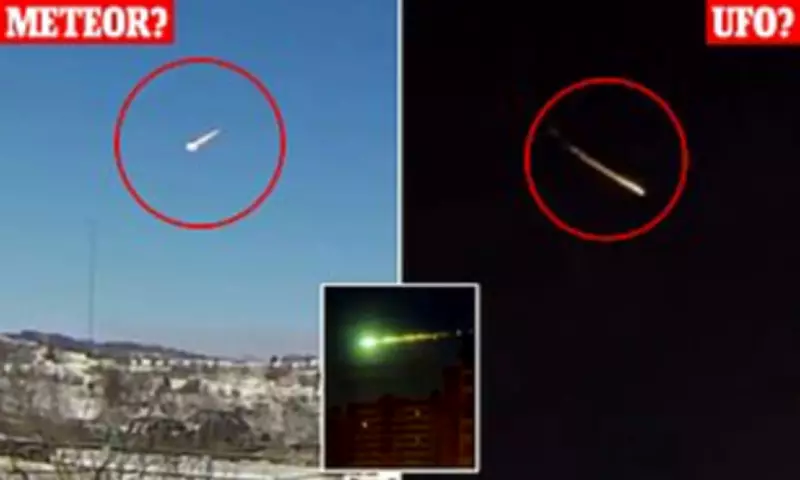
Unexplained Surge in Fireballs Ignites Global Concerns Over Asteroids and UFOs
The Earth has witnessed a mysterious and dramatic surge in massive fireballs illuminating skies worldwide during the first quarter of 2026, sparking widespread fears about a potentially city-killing asteroid strike and fueling speculation that these objects could be unidentified flying phenomena. The American Meteor Society (AMS), a nonprofit organization with over a century of experience tracking meteor sightings, has revealed that reports of fireballs in early 2026 have surpassed those from the first three months of any year since records began in 2011.
Data Points to a Significant Increase in Large Fireball Events
The AMS stated emphatically: 'The first quarter of 2026 has produced what appears to be a significant surge in large fireball events. The data, drawn from the AMS database going back to 2011, shows a pattern that warrants serious investigation.' Notably, the society has tracked 2,046 fireballs since the start of 2026, a figure that includes 38 major events reported by more than 50 people each—more than the combined total of such incidents over the previous two years. This uptick cannot be definitively explained by local meteor showers or other natural celestial occurrences, according to AMS analysts.
Addressing UFO Speculations and Natural Origins
As many eyewitnesses have suspected that these sightings might involve extraterrestrial spacecraft visiting Earth, researchers have directly addressed the possibility that the fireballs could be UFOs or some type of artificial craft. The AMS has firmly dismissed these claims, asserting that the fireballs are not of alien origin. Their analysis indicates a strange increase in the number of natural meteors intersecting Earth's path recently. 'These are rocks from the inner solar system. There is no evidence of anomalous trajectory behavior, controlled flight, or non-natural composition,' the team claimed, emphasizing the natural geological origins of these objects.

Notable Incidents and Witness Accounts from Around the Globe
March 2026 has been particularly remarkable, with far more events witnessed by over 50 and even 100 people, fireballs lasting longer than four seconds, and meteors producing loud sonic booms as they tear through the atmosphere at speeds exceeding 25,000 mph. For instance, a fireball over Germany on March 8 was reported by an astonishing 3,229 people, while other widely visible events this month have attracted hundreds of witnesses each. Recent reported fireballs include widespread sightings across the United States in states such as Pennsylvania, Ohio, Texas, and California, as well as in other countries like Australia and Turkey.
Skepticism and Theories of Unidentified Phenomena
Despite the AMS's assurances, skeptics have challenged the society's analysis that all these events are natural phenomena occurring during a random increase in space traffic. Most notably, a fireball over Texas on March 17 has been widely theorized to be a genuine UFO after witnesses observed it defying the normal trajectory of a shooting star. In Red Oak, Texas, an orange fireball streaking through the night sky suddenly turned back upward instead of crashing to Earth, prompting online discussions with posts like, 'Not your typical burn-up trajectory. UFO or space rock? You decide.'
Scientific Analysis and Meteorite Recoveries
The AMS has pushed back on claims of anything besides harmless asteroid fragments entering Earth's atmosphere this year, noting that every recovered meteorite piece has been a common rock type seen falling from space for years. Researchers revealed in a statement: 'The recovered specimens from Ohio and Germany are achondritic HEDs with mineral compositions formed over billions of years on differentiated asteroids.' Achondritic HEDs refer to a special group of stony meteorites without chondrules, formed from melted and cooled rock, and originating from the asteroid Vesta in the belt between Mars and Jupiter.

Potential Dangers and Localized Impacts
While bright streaks of light from space rocks burning up in Earth's atmosphere can pose dangers if large pieces reach the ground, such events are considered extremely rare. The AMS added that there is no current threat from this surge in meteorite impacts and no risk of a massive space rock colliding with the planet to devastate humanity. 'The objects involved range from pebble-sized to a few feet across and are part of the normal continuum of material that Earth encounters. None posed a danger beyond localized effects,' they stated. However, AMS did acknowledge one significant impact: a meteorite severely damaged the roof of a woman's home in Houston on March 21. NASA reported that the three-foot-long rock, weighing over a ton before atmospheric burn-up, traveled at 35,000 mph, with a tiny chunk surviving to strike the house with enough force to rip through a bedroom ceiling.
Role of AI in Reporting and Future Implications
Part of the reason for the massive surge in fireball reports to the AMS may be attributed to AI chatbots. In 2025, only 15 fireballs were witnessed by more than 50 people in the first three months, compared to 38 in 2026. When people see a bright fireball, witnesses often ask AI assistants like ChatGPT, Siri, Grok, or Google's AI, 'I just saw a fireball - where do I report it?' and are directed straight to the AMS website. This can cause each major event to receive more reports than in the past. However, the report noted that AI likely only explains the higher number of witnesses per event, not the actual increase in loud sonic booms or meteorites striking Earth. The last time more than 2,000 fireballs were seen before April was in 2021, underscoring the unusual nature of the current surge.