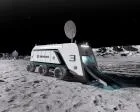
In the silent vacuum of space, five autonomous robots churn through the lunar surface, digging up rock and dust to extract a rare type of helium. This vision, once science fiction, is now being pursued by several companies racing to be first in the nascent lunar economy.
Helium-3, a gas made in the sun and deposited on the moon over billions of years, is extremely rare on Earth. A palm-sized container is estimated to be worth millions. It is used in medical imaging and could become vital in quantum computers and nuclear fusion.
Rob Meyerson, founder of Seattle-based Interlune, has raised $18m from investors. He says, 'My view is that it’s not a question of if, it’s a matter of when.' The company plans to send a multispectral camera to the lunar south pole later this year to assess Helium-3 concentrations.

Other firms include ispace, a Japanese robotic spacecraft company, partnering with US start-up Magna Petra, which is developing AI-based recovery of Helium-3 from lunar regolith.
The renewed interest in the moon comes as Nasa leads an astronaut fly-by mission this week, the first since 1972, aiming for a permanent human presence. China also targets a crewed lunar landing this decade.
However, experts caution that feasibility depends on concentration levels. Angel Abbud-Madrid of the Colorado School of Mines compares it to 'gold in the ocean' – present but in extremely low concentrations, making extraction uneconomical.