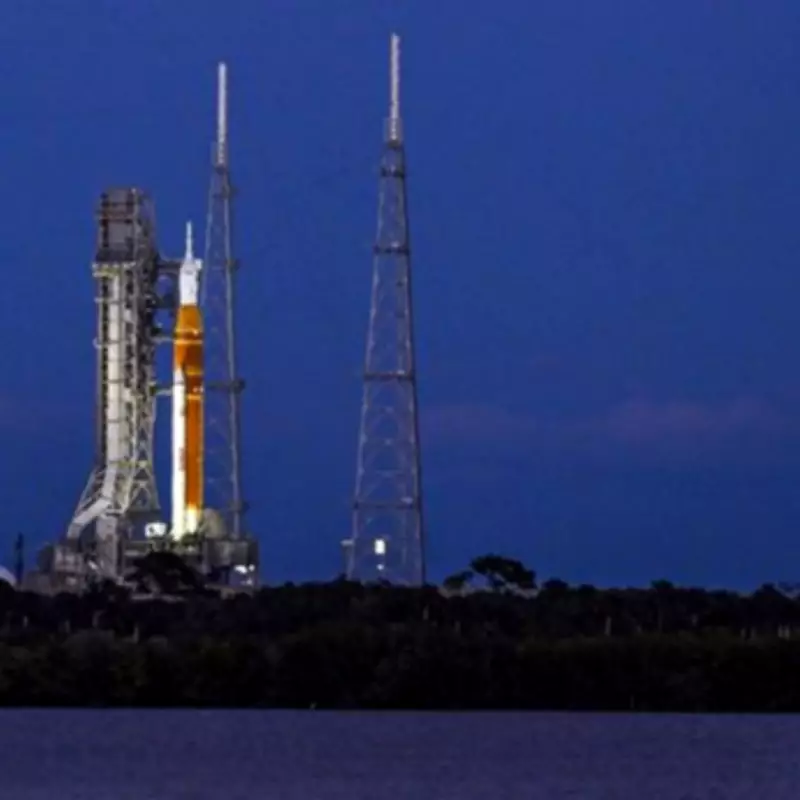
NASA Artemis 2 Launch Set for April as Leaders Highlight Mission Risks
The Artemis 2 mission will be the first crewed moon mission in over 50 years, and NASA has announced it is on track to launch in early April 2026. This follows the successful resolution of a helium leak that had previously grounded the rocket, delaying the highly anticipated spaceflight.
Launch Timeline and Technical Fixes
Originally scheduled for earlier this month, the launch was postponed after engineers detected a critical helium leak. This issue forced the rocket's return to the Vehicle Assembly Building at Cape Canaveral in Florida for urgent remedial work. NASA has now confirmed that the problem has been fully resolved, with the Artemis 2 spacecraft set to roll back to the launch pad on March 19th in preparation for lift-off.
If the rocket launches as planned on April 1st, it will carry astronauts on a historic journey around the Moon, reviving human lunar exploration after decades of hiatus. The mission represents a significant milestone in NASA's broader Artemis program, which aims to establish a sustainable human presence on the lunar surface.

Crew and Mission Details
The crew for this groundbreaking mission comprises four astronauts: Reid Wiseman, Victor Glover, Christina Koch, and Jeremy Hansen. They will become the first humans to fly aboard the Space Launch System (SLS) and the Orion spacecraft, testing new technologies and systems critical for future deep-space missions.
Their 10-day mission will involve travelling around the far side of the Moon—the hemisphere permanently hidden from Earth—before returning home. This trajectory will provide valuable data and experience for subsequent Artemis missions, including planned lunar landings.
Risk Assessment and Leadership Insights
John Honeycutt, chair of the Artemis 2 Mission Management Team, has openly acknowledged the inherent dangers of such an ambitious undertaking. While commending the engineering and support teams for their "outstanding job" in addressing the helium leak and other challenges, he emphasised the importance of rigorous risk management.
Honeycutt stated, "We want to be sure that we're thinking about everything that can possibly go wrong, and have we assessed and adjudicated all the risks to put us in the best posture to be successful." He added, "If you look at the data over time, over the lifespan of building new rockets, the data would show you that one out of two is successful. You're only successful 50% of the time. I think we're in a much better position than that," highlighting confidence in the mission's preparedness despite historical statistics.
The Artemis 2 launch is not only a technical achievement but also a symbolic step forward in space exploration, rekindling global interest in lunar and beyond-Earth endeavours. As the countdown to April progresses, NASA continues to monitor all systems closely, ensuring that every precaution is taken to safeguard the crew and mission success.