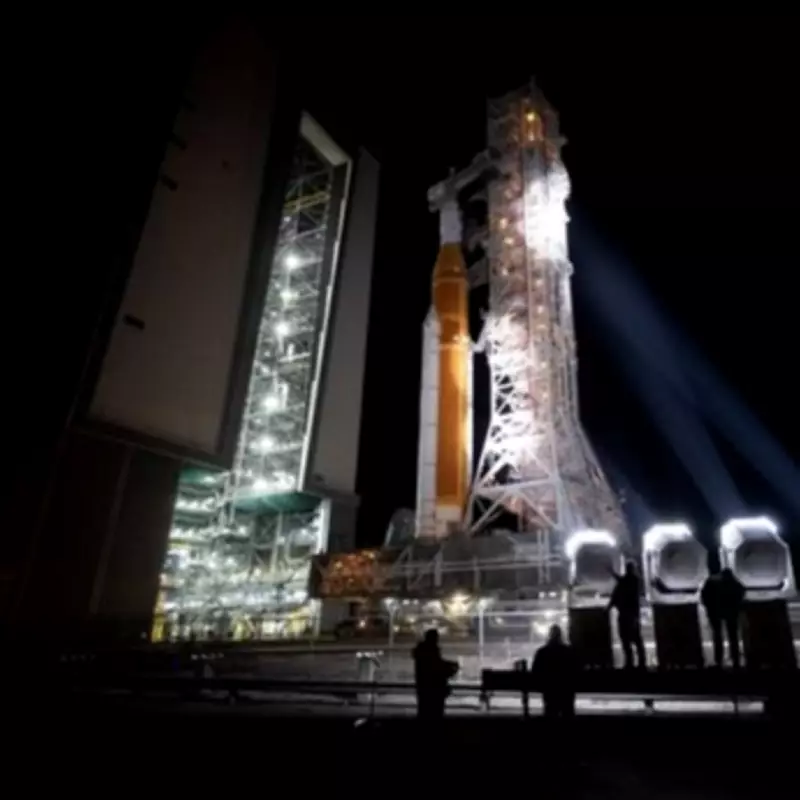
NASA's Artemis II Mission: Final Countdown Underway with 80% Favorable Weather Forecast
As the historic Artemis II mission approaches its scheduled launch date of Wednesday, April 1, NASA teams at the Kennedy Space Center in Florida are intensifying their final preparations. The focus has sharply turned to meteorological conditions, with officials providing a crucial update during a countdown status news conference on Sunday, March 29.
Weather Conditions: The Critical Factor for Launch Success
The latest forecast indicates an 80% probability of favorable weather conditions for the planned afternoon liftoff. However, mission controllers remain vigilant about two primary atmospheric concerns: cumulus cloud coverage and the potential for high winds in the launch area. Continuous monitoring will be essential over the coming days.
Shawn Quinn, Program Manager for Exploration Ground Systems, elaborated on the specific weather challenges. "The one thing we are watching is the weather," Quinn stated, referencing the latest analysis from the Space Launch Delta 45 weather officer. "The thing we're watching is cumulus clouds, the Thick Cloud Rule, and also winds. So right now we're forecast to be 80% go on Wednesday afternoon, which is very encouraging."

Understanding the 'Thick Cloud Rule' Safety Protocol
The Thick Cloud Rule represents a critical launch safety criterion designed to prevent catastrophic events. This regulation prohibits rocket launches through cloud layers exceeding 4,500 feet (approximately 1.4 kilometers) in thickness that extend into freezing temperature zones (between 0°C and -20°C). The rule exists to avoid triggering lightning strikes from highly electrified, non-stormy clouds, which could necessitate a launch scrub to protect the vehicle and crew.
Mission Readiness and Team Excitement at Peak Levels
Preparations have progressed exceptionally smoothly, according to NASA leadership. A launch countdown pre-test briefing held on Saturday, March 28, marked the final procedural step before the official countdown commenced on Monday afternoon. "It was one of the cleanest launch countdown pretest briefings we've ever had," Quinn remarked, highlighting the team's precision.
Dr. Lori Glaze, Acting Associate Administrator for the Exploration Systems Development Mission Directorate, expressed confident readiness. "We are getting very, very close and we are ready," she said. "Our flight systems are ready, the ground systems are ready, our launch and operations team are ready, and our flight operations teams are also ready. The crew arrived yesterday, and I know they are more than ready—they can't wait to get off the ground."
Historical Significance and Technical Preparedness
The Artemis II mission carries profound historical weight, as emphasized by Chris Cianciola, Deputy Manager of the SLS Program. "This is our first opportunity to launch humans into deep space in more than 53 years," Cianciola noted, underscoring the milestone. "The energy and dedication as a team is truly electric. Everybody's excited—we all recognize the historical significance of this mission."
Howard Hu, Manager of the Orion Program, confirmed the spacecraft's operational readiness. "From our perspective, our spaceship is ready to go and fly Reid, Victor, Jeremy, and Christina to the moon and back," Hu declared, referencing the four astronauts of the Artemis II crew. He added that recent checks revealed no significant technical issues, with only routine battery top-offs required.
The arrival of the flight crew earlier in the week added to the mounting anticipation. Quinn recalled the moment vividly: "As they were pulling up in their airplanes, we could actually see the moon in the daylight, and it was really, really cool." With all systems reporting optimal status and weather forecasts leaning positive, NASA stands on the brink of a new era in lunar exploration.