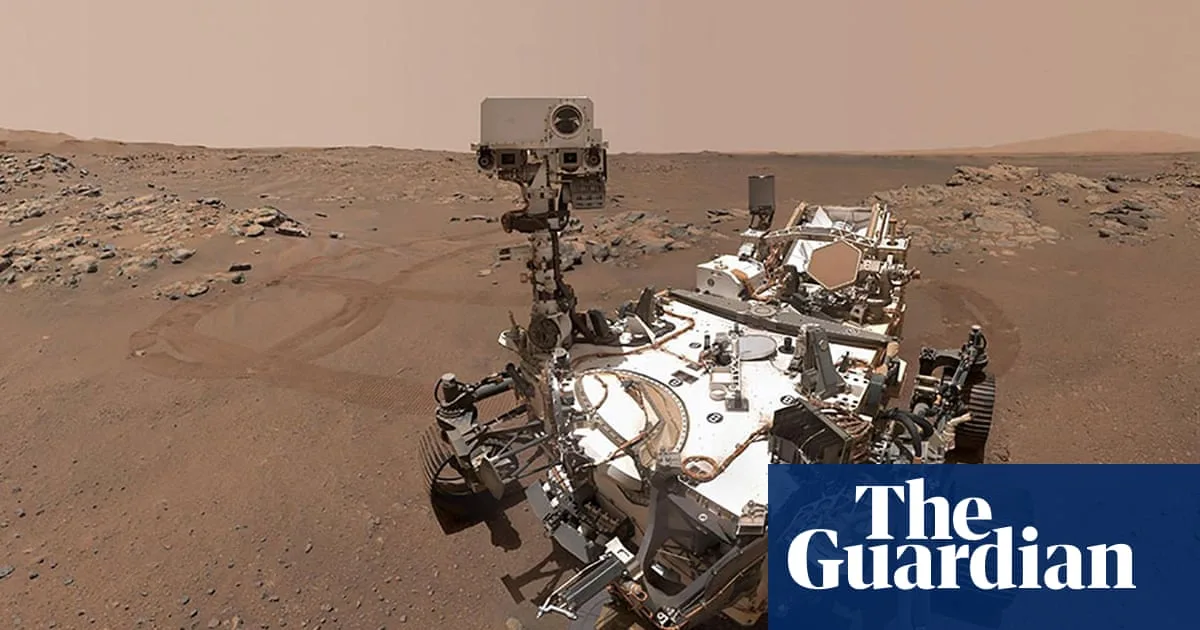
Nasa's Perseverance rover has identified complex carbon molecules in Martian rocks that are already under scrutiny for potential signs of ancient microbial life. The discovery was made using the rover's Sherloc instrument, which analysed mudstones from the Bright Angel outcrop along Neretva Vallis, a dried-up river that once flowed into Jezero crater billions of years ago.
The carbon detected, known as macromolecular carbon (MMC), can originate from living organisms but also from geological processes, meaning it does not confirm past life. Dr Ashley Murphy of the Planetary Science Institute in Arizona noted that MMC may come from biological sources such as fossilised organic matter in microbial mats, but could also form through rock-water reactions or meteorite impacts.
The Bright Angel mudstones first attracted attention in 2024 when Perseverance found surface spots and nodules resembling features produced by fossilised microbes on Earth. Sean Duffy, former acting head of Nasa, described them as possibly the clearest sign of life yet found on Mars.

In the latest study, Murphy and colleagues used Sherloc's ultraviolet laser to analyse the Cheyava Falls mudstone, revealing MMC on its surface. This suggests the carbon was recently exposed or resistant to radiation and oxidation that typically destroy organics on Mars. The discovery means Nasa rovers have now found organic-bearing mudstones more than 2,000 miles apart, indicating widespread habitability billions of years ago.
Professor John Bridges of the University of Leicester called the findings tantalising, noting that Jezero was a habitable environment with textures and carbon building blocks hinting at possible life. However, Perseverance's instruments cannot determine whether the carbon is biological. Co-author Dr Kyle Uckert of Nasa's Jet Propulsion Lab emphasised that returning samples to Earth for rigorous testing is essential. Nasa's sample return mission was cancelled in January, but a revised plan is expected for the 2030s, while China aims to return Martian samples in 2031.