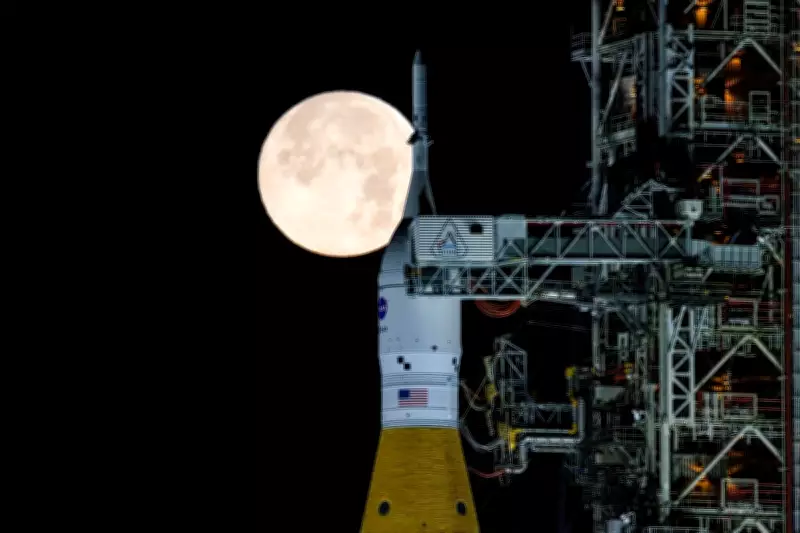
NASA is undertaking a pivotal all-day test on Monday, fueling its new moon rocket in a high-stakes operation that will decide the launch schedule for the first crewed lunar voyage in over fifty years. The space agency hopes this critical dress rehearsal will pave the way for sending astronauts on a lunar fly-around mission as early as this coming weekend.
Fueling the Future of Lunar Exploration
The launch team at Kennedy Space Center began loading the massive 322-foot (98-meter) rocket with super-cold hydrogen and oxygen at midday. This process involves pumping more than 700,000 gallons (2.6 million litres) of propellant into the tanks, where it must remain for several hours to simulate the final stages of an actual countdown. The only element missing from this crucial practice run was the crew itself.
Crew Monitoring from Afar
The three American astronauts and one Canadian crew member are monitoring the operation from nearly 1,000 miles (1,600 kilometres) away at Johnson Space Center in Houston. They have been in quarantine for the past week and a half, awaiting the outcome of this practice countdown that will determine their launch window.

Countdown Clocks and Technical Challenges
Running two days behind schedule due to a bitter cold snap, NASA has set its countdown clocks to stop just half a minute before reaching zero, simulating the moment just before engine ignition. The clocks began ticking on Saturday night, giving launch controllers valuable time to work through all procedures and address any lingering technical issues with the Space Launch System rocket.
NASA launch managers have expressed confidence that previous problems with hydrogen leaks, which kept the first SLS rocket grounded for months in 2022, have been resolved. This fueling demonstration represents a crucial milestone in proving the rocket's readiness for human spaceflight.
The Launch Window Pressure
If the fueling test proves successful, NASA could launch commander Reid Wiseman and his crew toward the moon as soon as Sunday. However, the space agency faces a tight deadline - the rocket must be flying by February 11th, or the entire mission will be postponed until March. NASA only has a limited number of days each month when launch conditions are favourable, and the recent extreme cold has already shortened February's launch window by two days.
Mission Objectives and Historical Context
The planned nearly ten-day mission will send the astronauts past the moon, around its mysterious far side, and then directly back to Earth. The primary goal is to test the Orion capsule's life support systems and other vital components under actual spaceflight conditions. Notably, the crew will not enter lunar orbit or attempt a landing during this initial mission.
This Artemis program mission represents a significant milestone in NASA's return to lunar exploration. The space agency last sent astronauts to the moon during the Apollo program of the 1960s and 1970s. The new Artemis initiative aims to establish a more sustained human presence on and around the moon, with Wiseman's crew laying the groundwork for future lunar landings by subsequent astronaut teams.
The successful completion of Monday's test could see NASA making space history on Super Bowl Sunday, marking the beginning of a new era in human space exploration and lunar discovery.