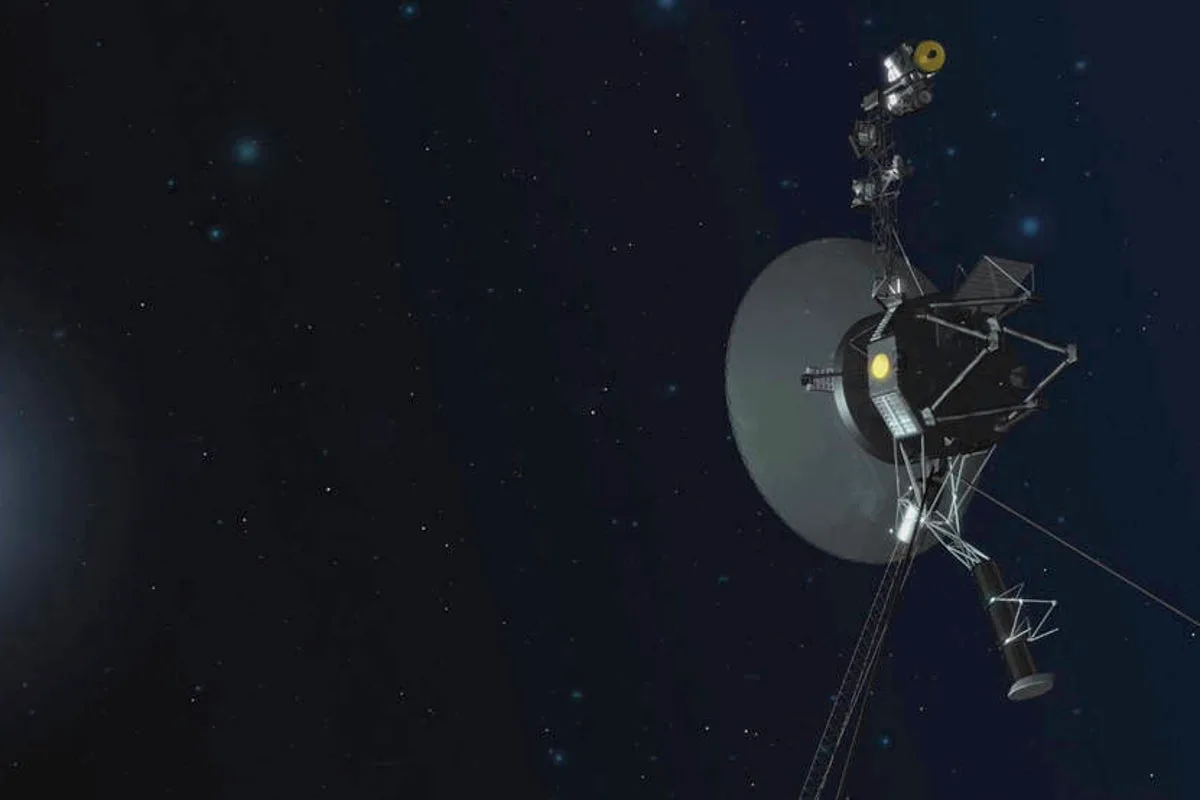
Nasa is racing to find a solution to prevent Voyager 1, the most distant human-made object, from running out of power. The spacecraft, launched in 1977, experienced a drop in power levels that forced mission operators to shut down one of its instruments as a temporary fix.
The US space agency said it is now working on a “far-out plan” to extend the craft’s lifespan and restore it to full operation. Voyager 1 became the first probe to leave the Solar System in 2012 and is powered by a radioisotope thermoelectric generator, which loses 4 watts of power every year.
An unexpected low power issue was first detected during a planned roll manoeuvre on 27 February. Mission engineers warned that any additional drop in power would trigger a protection system that would shut down components on the probe.

Nasa shut down an instrument aboard Voyager 1, which is currently more than 25 billion kilometres from Earth, to prevent further issues while it works on a more permanent solution. The instrument, called the Low-energy Charged Particles experiment (LECP), has been operating almost continuously for 49 years, measuring low-energy charged particles like cosmic rays.
“While shutting down a science instrument is not anybody’s preference, it is the best option available,” said Voyager mission manager Kareem Badaruddin. “Voyager 1 still has two remaining operating science instruments – one that listens to plasma waves and one that measures magnetic fields. They are still working great, sending back data from a region of space no other human-made craft has ever explored.”
Nasa said the LECP instrument has provided critical data about the structure of the interstellar medium, detecting pressure fronts and regions of varying particle density beyond our heliosphere. The twin Voyagers are the only spacecraft far enough from Earth to provide this information.