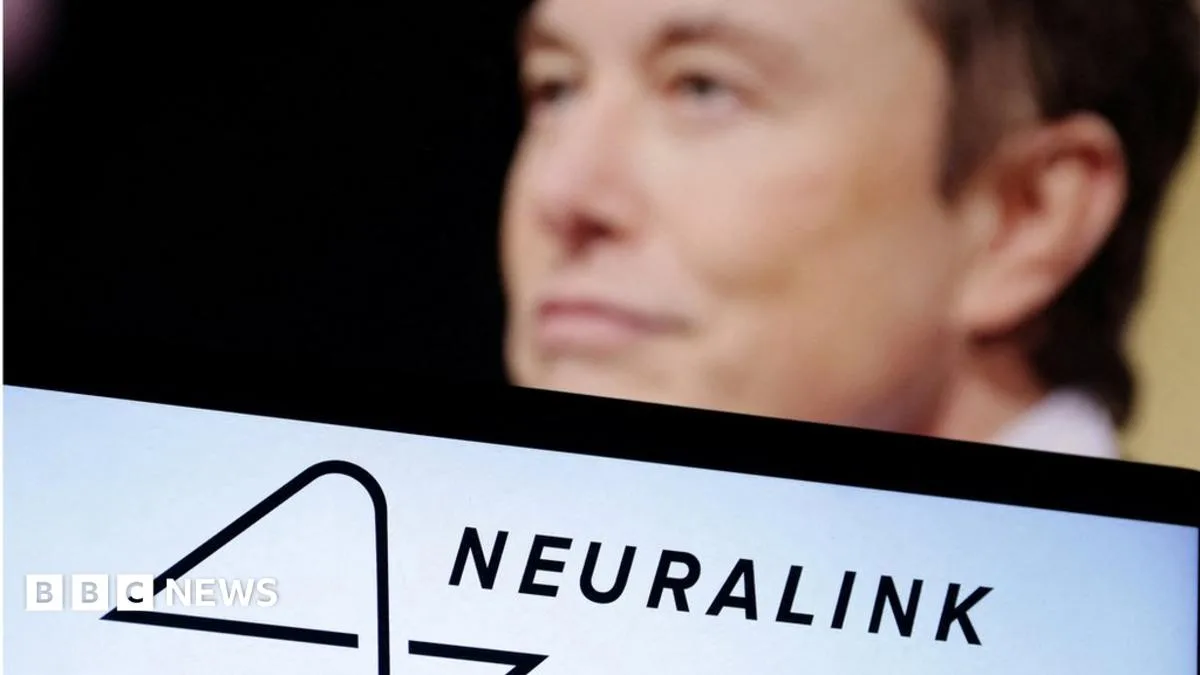
Elon Musk's brain-computer interface start-up, Neuralink, has begun recruiting participants for its first human trial, with plans to extend the search to the UK. The company aims to connect human brains to computers, focusing on individuals with paralysis.
The trial will use a robot to implant a device that allows participants to control a computer cursor or type using thoughts alone. Neuralink received FDA approval for the trial in May, after earlier struggles. The study will last six years and involves implanting 64 flexible threads into the brain region controlling movement intention.
However, Neuralink faces competition from established rivals. Blackrock Neurotech has been implanting BCIs since 2004, and Precision Neuroscience, founded by a former Neuralink co-founder, offers a simpler implant procedure. Recent US studies have also shown success in using implants to decode speech from brain activity.

Dr Adrien Rapeaux of Imperial College London noted Neuralink's advantage in robotic implantation but questioned whether its signal conversion method would outperform existing technologies in accuracy and reliability over time.