Rare Planetary Parade to Grace the Night Sky This Weekend
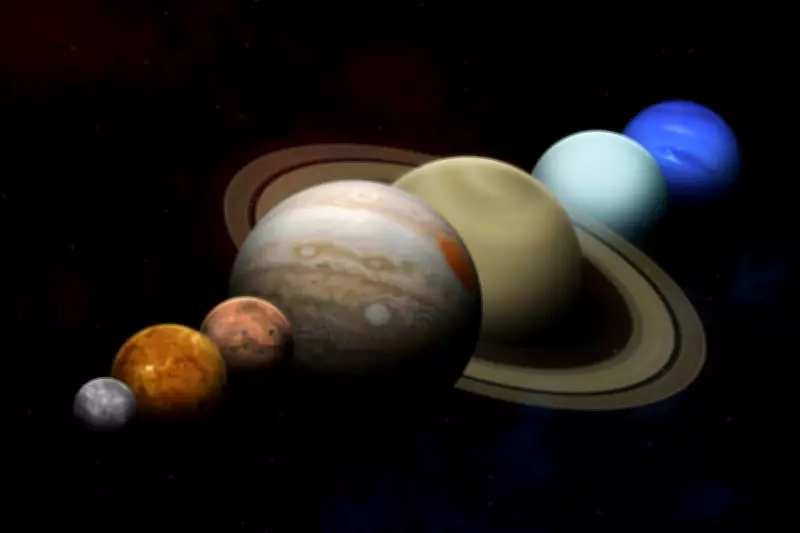
A spectacular celestial event known as a planetary parade is set to occur this weekend, offering stargazers a rare opportunity to witness six planets appearing to line up in the sky. This phenomenon, where multiple planets seem to align on one side of the sun, will be visible from Friday 27 February 2026 onwards, with optimal viewing conditions expected over the weekend and into the following days.
What Is a Planetary Parade?
A planetary parade occurs when several planets appear to line up in the sky simultaneously. Although they are not in a perfect straight line, they cluster closely together on one side of the sun. According to NASA, it is common to spot two or three planets after sunset on most nights, but gatherings of four or five visible to the naked eye are less frequent, happening only every few years. Last year featured even rarer lineups of six and all seven planets.
Which Planets Will Be Visible?
During this weekend's event, skywatchers will have the chance to see six planets. Mercury, Venus, Jupiter, and Saturn will be visible to the naked eye, provided clear skies prevail. However, Uranus and Neptune will require binoculars or telescopes to be spotted, as they are too faint for unaided viewing.

Optimal Viewing Times and Tips
For the best experience, venture outside about an hour after sunset. It is crucial to find a location away from tall buildings and trees that could obstruct the view. Look towards the western sky, where Mercury, Venus, and Saturn will be positioned close to the horizon. Jupiter will appear higher up, accompanied by Uranus and Neptune for those with optical aids.
To distinguish planets from stars, planetary scientist Sara Mazrouei from Humber Polytechnic in Canada offers a simple tip: "If it’s twinkling, it’s a star. If it is not twinkling, it’s a planet." This parade should remain visible over the weekend and into the subsequent days, though Mercury will eventually dip below the horizon as the event progresses.
Connecting with Astronomical History
Witnessing multiple planets in the sky at once is not only a visual treat but also a way to connect with astronomers from centuries past. Planetary scientist Emily Elizondo from Michigan State University notes that ancient astronomers made sense of the universe "just by looking up at the stars and the planets," a practice that remains accessible today. This event serves as a reminder of the enduring fascination with the cosmos and the shared human experience of stargazing.
While at least one bright planet is visible on most nights, according to NASA, such alignments offer a unique and memorable opportunity for both amateur and seasoned observers to engage with the wonders of our solar system.