Sir Francis Graham-Smith, a pioneering radio astronomer whose work helped transform our understanding of the universe, has died at the age of 102. He was the last surviving member of the generation that created modern radio astronomy in the 1940s and 1950s.
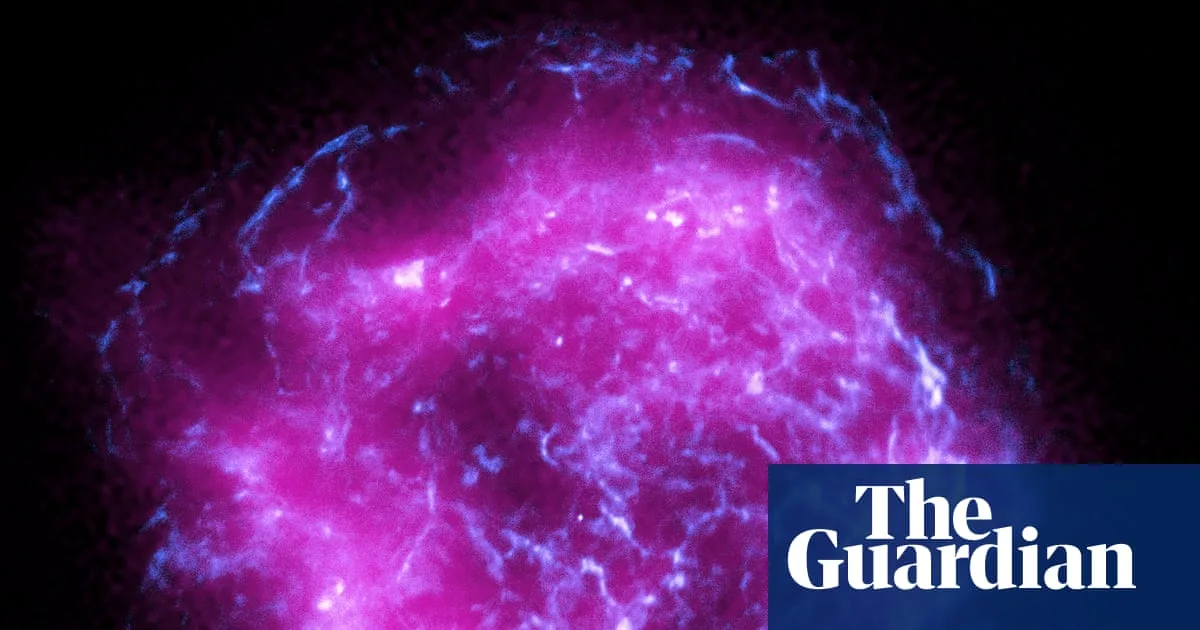
His PhD thesis, based on the first Cambridge radio survey conducted between 1948 and 1950, provided accurate positions for the brightest celestial radio sources. This work paved the way for demonstrating that most such sources are distant galaxies with massive black holes at their centres. In 1951, he published the first accurate positions of four bright sources—Cassiopeia A, Taurus A, Cygnus A and Virgo A—in the journal Nature, a breakthrough that launched his career.
After the discovery of pulsars in 1967, Graham-Smith used the Jodrell Bank Mark I telescope to study them in detail. Together with Andrew Lyne, he wrote the definitive book Pulsar Astronomy (1990). The team became world-leading experts on pulsars, working on the relativistic beam model and monitoring the slowing rotation of neutron stars.

Graham-Smith also played a key role in tracking the first satellite, Sputnik, in 1957. While Jodrell Bank tracked the rocket casing, he used the Cambridge interferometer to track the satellite itself and demonstrated the precession of its orbit due to Earth's equatorial bulge.
In 1964, he moved to a professorship at Jodrell Bank, where he later oversaw the upgrading of the Mark I telescope. He procured a laser device to map its shape, enabling engineers to adjust hundreds of nuts to perfect its surface—a feat described as the radio-astronomer's equivalent of polishing an optical telescope mirror.
Born in London to Claud Smith and Cicely Kingston, he was originally known as F. G. Smith and hyphenated his name later. His contributions to radio astronomy, from accurate source positions to pulsar research, have left an enduring legacy.