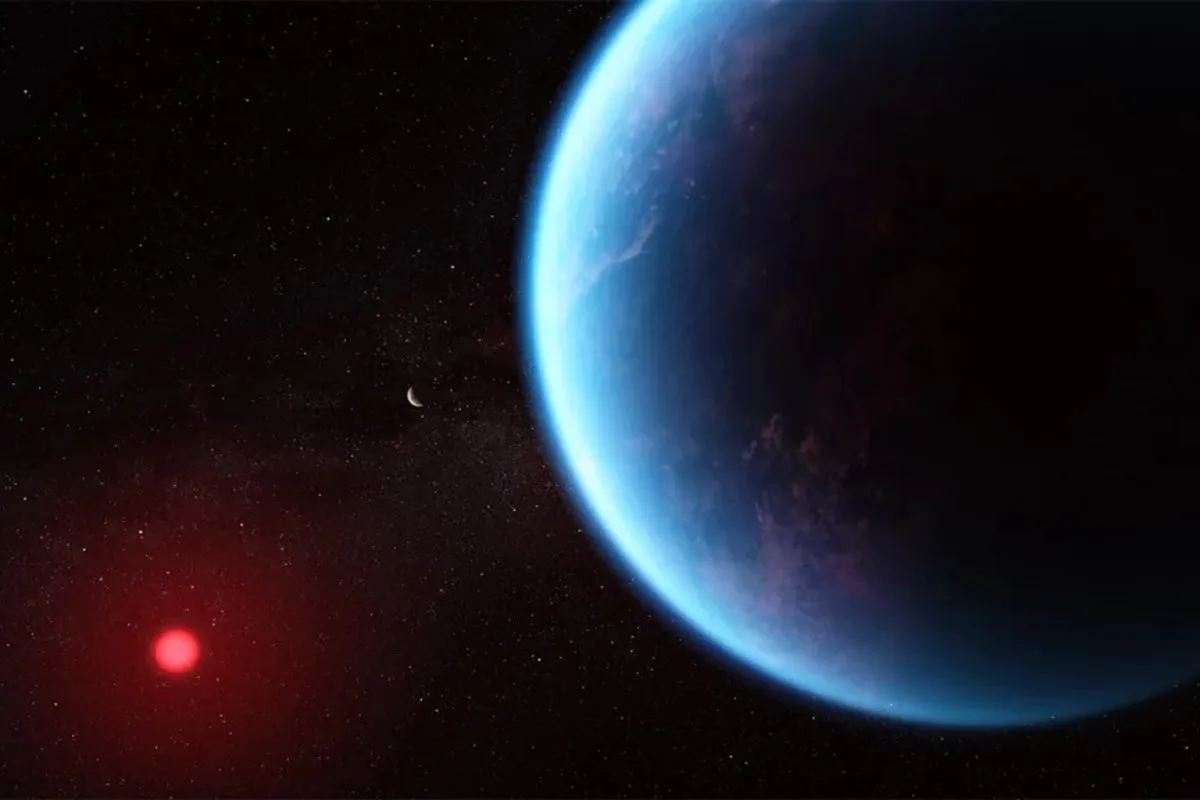
Astronomers using NASA's James Webb Space Telescope have reported detecting chemical fingerprints of dimethyl sulfide and dimethyl disulfide in the atmosphere of exoplanet K2-18b, which they described as the 'strongest evidence yet' of life beyond our solar system. On Earth, these compounds are produced by microbial life, such as phytoplankton in oceans. The findings suggest the possibility of a 'hycean' world—a planet with a hydrogen-rich atmosphere and a water ocean that could be 'teeming with life.'
However, the scientific community has responded with significant skepticism. Dr. Ryan MacDonald, an astrophysicist at the University of Michigan, told The Independent that the new observations 'do not provide any real evidence' for the presence of these biosignature gases. He noted that the statistical significance is very low and that a previous claim of dimethyl sulfide in K2-18b's atmosphere in 2023 was not reproduced when independent researchers re-analyzed the data.
Dr. Sara Seager, a professor at MIT and former graduate adviser to the lead researcher, cautioned that 'enthusiasm is outpacing evidence.' She pointed out that independent teams have 'completely different interpretations' of the planet, ranging from a hycean world to a hot magma ocean or a mini-Neptune. The SETI Institute stated that while the claim is intriguing, the signal is 'modest, ambiguous, and potentially explainable as noise or systematic error.'

Researchers also highlighted the possibility of abiotic sources for these compounds. Edward Schwieterman, an astrobiologist at the University of California, Riverside, told Nature that 'the planetary context is what matters' and that alternative non-biological production mechanisms must be ruled out. Laura Kreidberg, an astronomer at the Max Planck Institute for Astronomy, echoed the sentiment, saying, 'Extraordinary claims require extraordinary evidence. I'm not sure we're at the extraordinary evidence level yet.'
Lead researcher Professor Nikku Madhusudhan of the University of Cambridge acknowledged the need for caution, stating, 'It's important that we're deeply skeptical of our own results, because it's only by testing and testing again that we will be able to reach the point where we're confident in them.' NASA has noted that the detection of a single potential biosignature would not constitute the discovery of life and that follow-up observations are necessary.