British Thermal Imaging Satellite Set for Launch to Monitor Global Security Threats
A groundbreaking British satellite, engineered to peer through thick walls and smoke to capture detailed thermal images of sensitive locations like Iran's nuclear facilities, is scheduled for launch into orbit this weekend. The advanced device, developed by London-based company SatVu, represents a significant leap in surveillance technology, offering intelligence agencies unprecedented visibility into strategically important sites worldwide.
Unprecedented Surveillance Capabilities
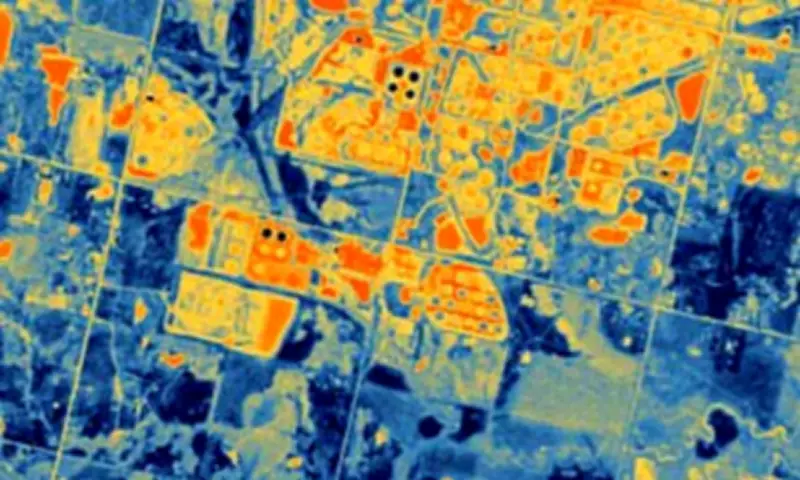
The satellite's sophisticated cameras can detect high-resolution thermal imagery and video footage regardless of daylight conditions, enabling continuous monitoring of activities inside heavily fortified structures. This capability allows security services to "see inside" critical installations such as nuclear reactors and munitions factories, providing vital intelligence during periods of escalating international tension.
According to Anthony Baker, SatVu's chief executive, "High-resolution thermal data is no longer a 'nice-to-have'; it is a fundamental requirement to complete geographical intelligence assessments." He emphasized that unlike data collected from aircraft or drones, SatVu's technology can uniformly capture information from any point on Earth's surface, including inaccessible or restricted areas.

Launch Details and Operational Plans
The satellite will be carried into space aboard SpaceX's Falcon 9 rocket, with liftoff planned from California on Sunday. Backed by £30 million in NATO funding, SatVu plans to eventually deploy a constellation of eight satellites in orbit. This network will enable the company to revisit any location on the planet every two hours, creating a near-continuous surveillance capability.
Currently, SatVu has secured agreements with the United States government, Japan, and several European nations including Poland. Notably, despite receiving government support, the company has not yet established a formal contract with the United Kingdom.
Proven Monitoring of Nuclear Activities
SatVu has already demonstrated its effectiveness through previous monitoring of North Korea's Yongbyon Scientific Research Centre. Over a three-month period, the company captured thermal signatures indicating increased activity at reactor sites and warmer water discharges from pumping stations. These observations suggested the Experimental Light Water Reactor might be undergoing pre-operational testing or early-stage operation, potentially expanding North Korea's fissile material stockpile.
While the United States is believed to possess similar thermal imaging capabilities from space, such intelligence is typically highly classified and rarely shared with allies due to security concerns. As a commercial provider, SatVu could facilitate broader intelligence sharing with Middle Eastern partners without the same security restrictions.
Economic and Environmental Applications
Beyond national security applications, the satellite's thermal imaging technology offers significant benefits for economic monitoring and climate resilience. The system can provide energy providers with detailed assessments of infrastructure damage in conflict zones, potentially stabilizing volatile fuel markets. Recent attacks on oil facilities in Kuwait and Saudi Arabia, along with strikes at Qatar's Ras Laffan Industrial City—the world's largest liquefied natural gas export facility—highlight the technology's practical utility.
"If you see a big explosion at Ras Laffan in Qatar, you don't know how much of it has gone up in flames," explained Mr. Baker. "Our imagery lets you know with much more certainty what part has been hit and has gone offline."
The satellite constellation can also monitor urban heat patterns and environmental changes, providing valuable data for understanding extreme heat events and climate impacts. UK Space Minister Liz Lloyd praised the innovation, stating: "SatVu is a shining example of British innovation at its best—and proof that government investment in our space sector pays dividends. The ability to monitor thermal activity from orbit, around the clock, opens up remarkable possibilities for national security, climate resilience and market intelligence."

Technical Specifications and Future Outlook
The HotSat-2 device is specifically designed to distinguish between operational and idle facilities while tracking patterns of activity over time, regardless of day or night conditions. The satellite can reveal precise details such as airfield capacities, ship loading activities, and even the activation status of individual pumps within nuclear reactors.
As the satellite prepares for launch, Mr. Baker emphasized the growing need for such capabilities: "With the satellite now integrated for launch, we are moving closer to delivering a dependable new intelligence layer from orbit. We need that capability in the UK." The successful deployment of this technology marks a significant advancement in both surveillance capabilities and international security cooperation.