A rare 'cannibal' solar storm is on a collision course with Earth, promising a breathtaking display of the Northern Lights across the United Kingdom. This phenomenon, known as the aurora borealis, could be visible much further south than usual, offering a rare treat for stargazers in regions that seldom witness such celestial events.
What Is a Cannibal Solar Storm?
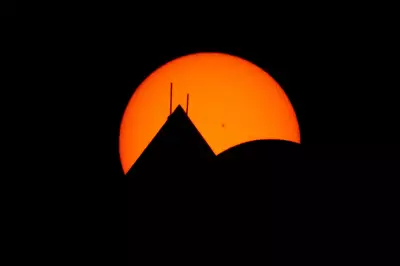
The event began on 2 June when sunspot 4455, an unstable region on the sun's surface, became increasingly volatile. This triggered a series of intense X-class solar flares, among the most powerful types of solar explosions ever recorded. Simultaneously, the sun ejected multiple coronal mass ejections (CMEs) into space. These enormous clouds of magnetised plasma can weigh billions of tonnes and travel at speeds up to 1,200 miles per second.
One of these eruptions accelerated rapidly and caught up with an earlier, slower-moving CME. The faster cloud merged with the first, creating what experts describe as a cannibal CME. NASA scientists report that such collisions can generate 'complex ejecta'—twisted magnetic structures capable of carrying considerably more energy than a standard solar blast. When these supercharged plasma clouds collide with Earth's magnetic field, they can trigger more powerful and long-lasting geomagnetic storms.

Sunspot 4455: The Source of the Activity
Experts have identified sunspot 4455 as the source of the activity. This region is classified as an 'anti-Hale' sunspot, a relatively uncommon type with magnetic polarity contrary to what is typically observed. Scientists estimate that fewer than one in 10 sunspots exhibit this reversed configuration. This unusual magnetic structure can make such regions particularly unstable, increasing the likelihood of frequent and powerful eruptions.
When Will the Storm Hit Earth?
Weather forecasters expect the combined solar storm to reach Earth late on the night of 4 June or in the early hours of 5 June. The US National Oceanic and Atmospheric Administration has issued a warning for a strong G3 geomagnetic storm and cautioned that conditions could intensify to a severe G4 event. The heightened solar activity could produce extraordinarily vivid auroras as electrically charged particles interact with gases in Earth's upper atmosphere. Oxygen and nitrogen become energised during this process, creating the dazzling light displays associated with the aurora borealis.
Where Can You See the Northern Lights?
Given the strength of the incoming storm, forecasters believe the Northern Lights could be visible considerably further south than normal, giving far greater numbers of people the chance to witness this breathtaking phenomenon. There is also a possibility of sightings in Scotland, as well as across central England and Wales, where skies are forecast to be clearer. The Northern Lights could also be visible on Friday night, though increasing cloud cover and rain sweeping in from the southwest may hamper any chances of catching the aurora tomorrow.
The Met Office said the storm is effective from 1pm on Thursday, 4 June, until 9am on Saturday, 6 June. Those hoping to catch a glimpse should seek out dark locations well away from city light pollution and keep a close eye on local aurora forecasts for the latest viewing updates.
Potential Impacts and Safety
While the storm could produce stunning displays across the night sky, experts caution that it may also trigger minor technological disruptions. Potential knock-on effects include brief radio interference and increased atmospheric drag on orbiting satellites. However, researchers stress that the geomagnetic storm is not expected to pose any danger to people on Earth or to infrastructure on the ground.