

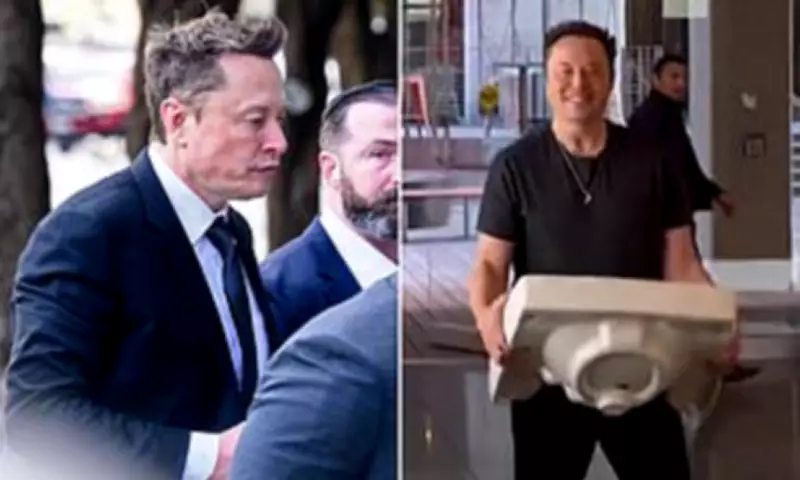
A California jury has delivered a significant verdict against Elon Musk, finding the world's richest man liable for misleading Twitter investors through public statements that cast doubt on his eventual $44 billion acquisition of the social media platform. This ruling stems from a class-action lawsuit filed in federal court in 2022, just before Musk fully took control of Twitter, which has since been renamed X.
The Core Allegations and Jury Decision
The plaintiffs argued that Musk's statements, particularly a May 13, 2022 tweet declaring the Twitter deal was 'temporarily on hold,' duped countless investors into selling their shares at depressed prices. They claimed Musk was concerned about spam and fake accounts on the platform, believing approximately five percent were bots, and used this to intentionally drive down share values to negotiate a lower purchase price.
After nearly four days of deliberation, a nine-person jury in San Francisco federal court concluded that Musk's 'temporarily on hold' tweet indeed misled investors. However, jurors did not agree with the plaintiffs' assertion that Musk orchestrated a deliberate fraud scheme, creating a nuanced verdict that both sides have interpreted differently.

Financial Implications and Legal Response
The jury awarded damages expected to total around $2.5 billion, though the final amount will depend entirely on how many investors join the class action. Musk, whose net worth is approximately $814 billion primarily tied to Tesla shares, plans to appeal the verdict. His legal team at Quinn Emanuel Urquhart & Sullivan stated they view the verdict as 'a bump in the road' and look forward to vindication on appeal, citing separate unrelated cases in Texas and Delaware where Musk previously won appeals.
'It's an important victory, not just for investors of Twitter, but for the public markets,' said Mark Molumphy, an attorney for the plaintiffs. 'I think the jury's verdict sends a strong message that just because you're a rich and powerful person, you still have to obey the law, and no man is above the law.'
Trial Proceedings and Testimony
The nearly three-week trial in San Francisco federal court for the Northern District of California began on March 2 and featured testimony from key figures including former Twitter CEO Parag Agrawal and former CFO Ned Segal. Musk himself testified for more than a day, maintaining that Twitter's leadership lied about the number of bots on the platform, which he believed should have allowed him to walk away from the deal.
During his testimony, Musk acknowledged that his tweet about bot numbers wasn't his 'wisest' move, stating, 'I am not sure I would call it incredibly stupid, but if it led to this trial, it probably qualifies as such.' He also claimed that his eventual decision to follow through with the acquisition in October 2022 provided a huge windfall for investors who held onto their shares, saying, 'I can’t control whether people sell their stock, but everyone who held the stock fared extremely well.'
Background of the Chaotic Acquisition
The plaintiffs argued that Musk engineered the chaotic six-month period leading to the deal's completion. It began in April 2022 when Musk signed a binding merger agreement to buy Twitter at roughly $54.20 per share. By July 2022, he officially sought to terminate the deal, prompting Twitter to sue him for breach of contract. On July 11, the stock sank to $32.65, approximately 40 percent lower than the offer price.
A trial for that breach of contract case was scheduled for October 2022, but Musk testified that his lawyers advised him 'there was no choice' but to purchase Twitter at the original price. The deal closed on October 27, 2022, just before the court-ordered deadline. Since then, Musk has overhauled the company, laying off thousands of employees and merging it with his AI startup xAI.
Despite the verdict, Musk maintains that inflated user numbers on Twitter should have given him grounds to abandon the acquisition, highlighting the ongoing tension between his public statements and legal obligations during this high-stakes corporate takeover.






