

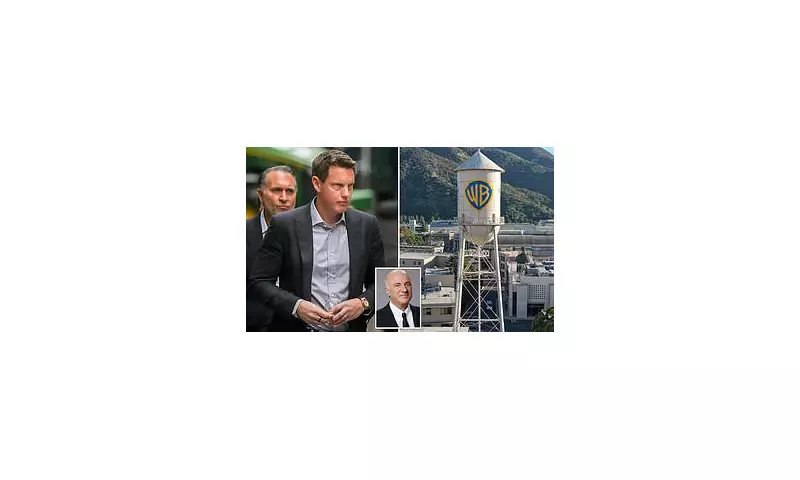
The corporate landscape is witnessing one of the most significant business confrontations in recent memory: the intense struggle to acquire the media behemoth Warner Bros Discovery. This monumental clash pits two industry giants against each other in a contest that could reshape the future of entertainment.
The Contenders and Their Opening Moves
In one corner stands Paramount, steered by David Ellison, whose lineage includes Oracle founder Larry Ellison. In the opposing corner is Netflix, championed by co-CEO Ted Sarandos. The initial phases of this corporate duel have seen Netflix gain early momentum through strategic financial manoeuvres.
After securing a 'definitive agreement' in December to purchase Warner Bros for approximately $83 billion through a combination of cash and stock, Netflix enhanced its proposition this Tuesday. The streaming colossus has now declared its readiness to fund the transaction entirely with cash and debt—comprising $72 billion in liquid assets and around $11 billion in borrowed capital. This shift represents a substantially improved offer, as cash provides certainty while stock valuations remain vulnerable to market fluctuations.

Paramount's Counterattack and Shareholder Response
On Wednesday, Paramount launched its counteroffensive as the deadline passed for Warner Bros shareholders to accept its $108 billion hostile takeover bid. This all-cash proposal, initiated in December, was crafted to bypass Warner Bros management by appealing directly to the public company's stockholders. However, according to Warner Bros, a decisive 93 percent of shareholders rejected Paramount's overture.
By Thursday morning, Paramount announced an extension of its deadline without modifying the terms of its proposed deal. While some might perceive Paramount as struggling in this contest, industry observers caution that this corporate battle is far from concluded. The stakes are simply too immense for either party to retreat easily.
The Brutal Reality of Corporate Takeovers
Drawing from personal experience building the children's education software firm SoftKey during the 1980s, I recall the harsh mechanics of hostile acquisitions. Our strategy involved purchasing competitors, implementing workforce reductions with fair severance, and absorbing their brands to expand our content library for educational devices across North America.
Takeovers are inherently ruthless endeavours. Business operates as a form of warfare, whether in software development or the film and streaming sector. The fundamental equation remains consistent: if you control distribution channels—in my case, educational hardware—consolidating content and reducing operational costs through mergers typically proves advantageous.
I anticipate that whichever entity ultimately acquires Warner Bros will implement immediate layoffs to eliminate redundant positions, ensuring the newly formed operation achieves profitability from its inception.
Financial Mechanics and Strategic Considerations
A critical question emerges: why has Warner Bros not embraced Paramount's $108 billion proposal over Netflix's $83 billion arrangement? The answer lies in financial pragmatism over nominal value. In hostile takeover scenarios, success hinges not on political manoeuvring or emotional appeals, but on tangible financial certainty.
Currently, Warner Bros management and a majority of shareholders appear convinced that Netflix possesses greater capacity to deliver on its financial commitments. Netflix further strengthens its position by offering Warner Bros a substantial $5.8 billion break-up fee should regulatory obstacles from federal or international authorities derail the transaction. This represents one of history's most significant guaranteed payouts for such circumstances.
Paramount, conversely, has proposed a $5 billion break-up fee—a noticeable differential. Paramount's bid receives financial backing from David Ellison's father, Larry Ellison, who has personally guaranteed $40.4 billion, alongside support from three Gulf sovereign wealth funds based in Saudi Arabia, Abu Dhabi, and Qatar.

Financing Structures and Risk Assessment
While Larry Ellison's involvement as one of America's foremost entrepreneurs and wealthiest individuals lends credibility, this financing approach evokes traditional, family-owned studio models. Some might view this as an advantage, suggesting deep personal investment in the merged entity's success. Yet the financing structure introduces elements of uncertainty that may explain repeated rejections.
Consider a property analogy: if selling your home, would you prefer an all-cash buyer or another offering 20 percent more but requiring mortgage approval? Risk-tolerant individuals might gamble on the higher bid, while pragmatists would likely secure the immediate cash. In high-stakes corporate acquisitions, similar principles apply.
Despite current setbacks, David Ellison shows no signs of surrender. Warner Bros Discovery represents one of the last immensely valuable studio properties available, ensuring continued fierce competition.
The Road Ahead and Regulatory Hurdles
Shareholders will deliver their final verdicts in April. Subsequently, any proposed agreement with Netflix must undergo rigorous scrutiny from the Department of Justice's Antitrust Division and the European Commission. In corporate acquisitions of this magnitude, the contest persists until every regulatory and financial hurdle is conclusively cleared.
This epic corporate confrontation continues to unfold, with billions in capital, strategic positioning in the streaming wars, and the future trajectory of global entertainment hanging in the balance.





