

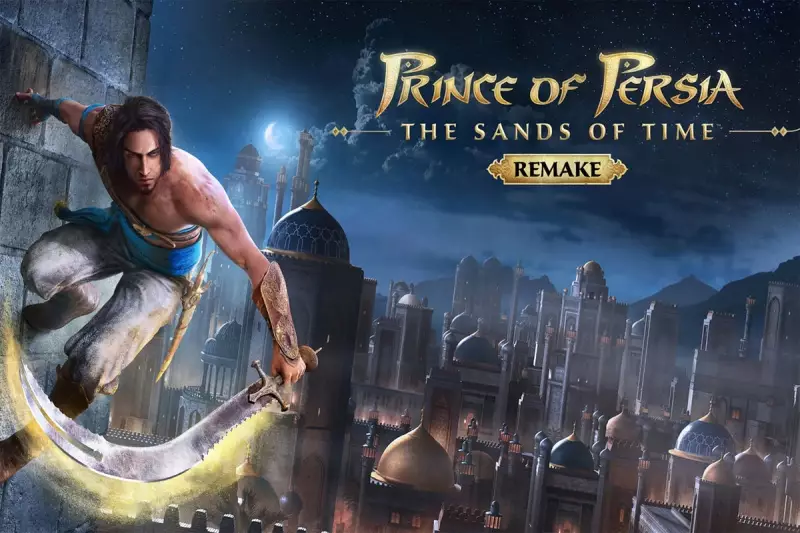
Shares in French video game publisher Ubisoft experienced a dramatic collapse on Thursday, plunging by a staggering 33 percent in delayed trading. This precipitous drop followed the company's announcement of a comprehensive corporate restructuring and the cancellation of six highly anticipated game titles, including a long-awaited remake of the classic Prince of Persia franchise.
Market Turmoil and Historic Decline
The Paris-based creator of the globally successful Assassin's Creed series saw its stock value tumble to €4.6 in early Thursday trading, giving the company a market valuation of approximately €616 million ($720 million). This dramatic sell-off positioned Ubisoft as the worst performer on Paris' SBF 120 index and put the firm on course for its most severe single-day decline since its initial public listing in 1996, should these losses be sustained throughout the trading session.
Analysts expressed significant concern about the company's financial trajectory. "The prospect of a return to positive cash generation appears distant, and the financial structure is likely to be weakened again in the near term," noted Corentin Marty, an analyst at brokerage firm TP ICAP Midcap, in a client advisory. This downturn continues a troubling trend for Ubisoft, whose shares have nearly halved in value over the past year, falling below €1 billion in market capitalisation—a stark contrast to its peak valuation of €11 billion achieved in 2018, according to LSEG market data.

Strategic Restructuring into Creative Divisions
Concurrent with the game cancellations, Ubisoft unveiled plans for a fundamental organisational transformation. The company will restructure its operations into five distinct creative divisions, each organised around specific game genres and responsible for their entire portfolio from initial brand development through to final sales. Each division will operate with separate management teams whose compensation will be directly linked to performance metrics including player engagement and value creation.
The Five New Creative Houses
The newly established structure comprises:
- Vantage Studios: Formed in November with a substantial €1.16 billion investment from Chinese technology giant Tencent, this unit will oversee Ubisoft's most valuable franchises including the flagship Assassin's Creed series.
- Multiplayer Shooter Division: Dedicated to developing and managing competitive shooting games.
- Live Services Unit: Focused on games with ongoing content updates and service models.
- Narrative-Driven Games Division: Concentrating on story-rich, single-player experiences.
- Casual and Family Games Unit: Developing accessible titles for broader audiences.
Revised Financial Forecasts and Cost-Cutting Measures
The cancellation of six game projects has forced Ubisoft to substantially revise its financial expectations for the coming years. For 2026, the company now forecasts net bookings of approximately €1.5 billion alongside an operating loss of roughly €1 billion—a significant deterioration from previous projections of €1.9 billion in net bookings and break-even operating performance. The company attributes €650 million of this financial impact directly to game cancellations and development delays.
Ubisoft anticipates net debt of between €150 million and €250 million by the conclusion of 2026, while maintaining cash reserves estimated at €1.25 billion to €1.35 billion. Free cash flow is projected to remain negative at €400-500 million. In response to these challenges, the company has accelerated its cost reduction programme, expecting to achieve €100 million in savings by March—one year ahead of its original target. Furthermore, Ubisoft has established an additional cost savings target of €200 million over the next two years and continues to evaluate potential asset sales to strengthen its financial position.
The video game publisher has formally withdrawn its previous guidance for the 2026/27 fiscal year and plans to outline its medium-term strategic projections in May 2026, providing investors with a clearer picture of its recovery roadmap following this period of significant corporate upheaval.






