

SEC's New Crypto Framework Could Favour Trump Family Projects
The United States Securities and Exchange Commission (SEC) has unveiled new regulatory guidelines for the cryptocurrency industry, a move that legal experts and industry insiders believe will substantially benefit the Trump family's crypto ventures. Published jointly with the Commodity Futures Trading Commission (CFTC), these rules establish a "token taxonomy" that reclassifies most crypto assets, potentially exempting them from stringent SEC oversight.
Redefining Securities in the Digital Age
SEC Chair Paul Atkins announced the framework at the Blockchain Summit in Washington DC, stating the regulator was "not the 'securities and everything commission' any more." The guidelines aim to clarify which digital assets qualify as securities—a classification that demands strict disclosure and regulatory compliance. Under the new taxonomy, most cryptocurrencies are categorised as commodities, collectibles, payment tokens, or "digital tools," leaving only blockchain-based representations of traditional securities like stocks and bonds under the SEC's purview.
This shift is expected to reduce regulatory burdens across the crypto sector. Todd Baker, a senior fellow at Columbia Business School and Columbia Law School, noted, "This latest interpretation aligns with other Trump administration actions to facilitate crypto expansion free from most federal regulation." The change marks a departure from the enforcement-heavy approach seen during Joe Biden's administration and even Trump's first term.

Direct Implications for Trump-Linked Initiatives
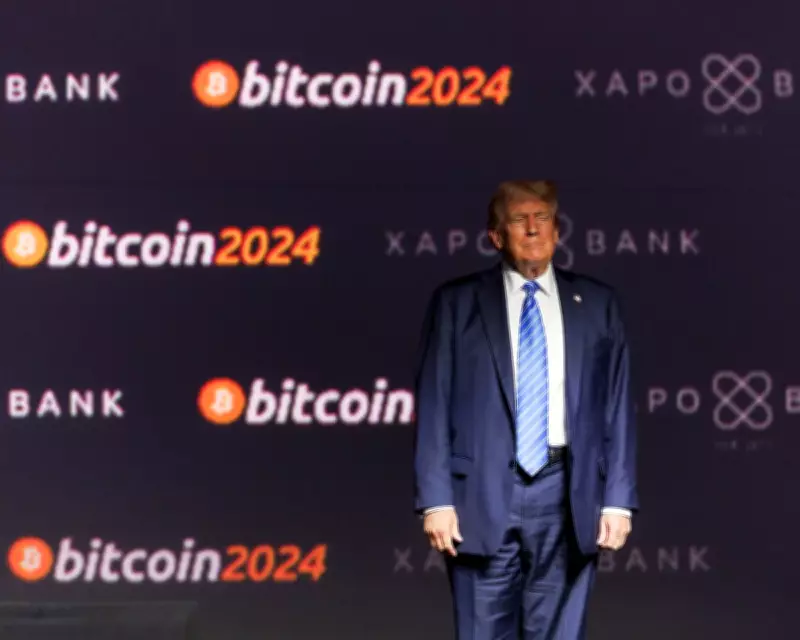
The Trump family's crypto projects, which span meme coins and other digital assets, stand to gain significantly from these reclassifications. Prior to his second inauguration in January 2025, Donald Trump launched his own meme coin, $Trump, hosting exclusive events for major buyers. First Lady Melania Trump also released a meme coin called $Melania. Under the new guidelines, such meme coins would likely be classified as "digital collectibles," exempting them from SEC oversight.
Stephen Aschettino, a partner at law firm Fox Rothschild specialising in crypto, explained, "That means there's no mandatory disclosure, no anti-fraud protections under securities laws. That gap deserves serious public attention." Additionally, tokens like the USD1 stablecoin and $WLFI governance token issued by World Liberty Financial—a company co-founded by Trump family members—would not be considered securities, potentially boosting institutional investor interest.
Market Reactions and Legislative Context
The announcement was met with applause from industry representatives. Cody Carbone, CEO of The Digital Chamber, called it a step toward solidifying "the US's role as the crypto capital of the world." However, the guidelines are intended as a temporary "bridge" while Congress deliberates on the Clarity Act, which faces delays due to debates between crypto firms and banks over stablecoin interest provisions.
Despite the interim nature of the rules, their impact could be lasting. Aschettino pointed out that while future administrations could theoretically overturn the guidelines, the expansion of crypto markets might irrevocably alter financial landscapes. The Trump family's net worth has reportedly increased by $5 billion following the launch of the $WLFI token, with recent revelations about a secret $500 million stake purchase by Abu Dhabi royal associates adding complexity to the narrative.
World Liberty Financial stated, "Compliance has always been our top priority," emphasising they did not correspond with regulators prior to the announcement. As the crypto industry adapts to these new parameters, the balance between innovation and consumer protection remains a critical point of discussion among policymakers and market participants alike.






