Asda Boss Issues Warning Over UK Fuel Supply Disruptions
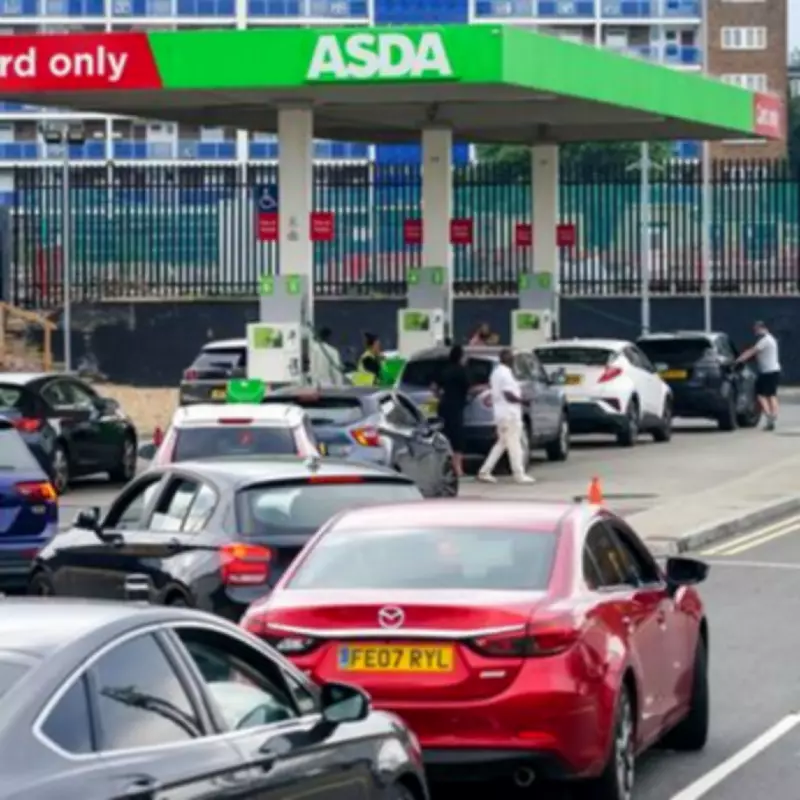
Allan Leighton, the executive chairman of supermarket giant Asda, has disclosed that some petrol stations across the United Kingdom are experiencing temporary shortages at the pumps. This situation arises as the ongoing conflict in Iran continues to impact global fuel supplies, coinciding with a significant surge in demand from British motorists.
Supply Chain Strains and Spiking Demand
"Our fuel volumes are up quite significantly and clearly demand has been outstripping supply," Mr Leighton explained. He emphasised that the supply is currently tight, describing the issue as temporary but persistent. "Some could see issues when we are waiting for delivery, and we can expect to see that continue. The spikiness at the moment makes this tricky for us, as spikes can lead to temporary shortages. These are temporary and are addressed very quickly."
As the UK's second-largest fuel retailer, with 320 forecourts nationwide, Asda has reported that only "the odd pump" at a small number of its locations has been affected. However, the timing is critical, with tens of millions of Britons anticipated to take to the roads for the Easter holidays. As schools break up, families embarking on days out and staycations will be filling their tanks, placing additional pressure on already strained supplies.

Government Accused of "Pathetic" Profiteering Warnings
In a scathing critique, Mr Leighton branded the government's approach as "pathetic" regarding accusations of profiteering by petrol sellers. He firmly rejected claims that retailers are exploiting higher prices, stating, "no, we are not" when asked if Asda was profiteering. He directed criticism at the Treasury, highlighting that fuel duty is fixed at 52.95p per litre, with an additional 20% VAT rate, meaning the government's tax revenue increases as pump prices rise.
"What are they doing about that - how about sharing that back with either the consumer, or farmers, or producers?" Mr Leighton questioned. "It's a windfall profit. You don't have to be Einstein to work out you can't gouge with the market the way it is today. What a waste of time when we should be getting on with doing the best we can for the country."
Easter Pressure and Broader Supply Concerns
The pressure on fuel supplies is expected to peak over the Easter weekend, with roads and forecourts forecast to be extremely busy. The AA reported that 19 million people travelled on Good Friday last year, indicating similar high volumes this year. While reduced commuting due to time off work may alleviate some strain, the overall demand spike remains a significant challenge.
Amid these developments, government ministers have urged drivers not to panic-buy fuel, despite some forecourts displaying signs of running out. There are also warnings that diesel supplies could begin to be impacted from mid-April as pre-war stockpiles diminish. Sources indicate that while the UK would not "run out" of diesel, supplies could drop by more than 10% by the middle of next month.
International Context and Price Surges
The UK is not alone in facing fuel supply pressures. Australian Prime Minister Anthony Albanese has had to reassure drivers that the country's fuel supplies remain "secure" following reports of panic buying and petrol stations running dry since the onset of the Iran war. The conflict, which began with missile attacks by the US and Israel at the end of March, has driven oil prices sharply higher.
Motoring group the RAC revealed that the nationwide average for unleaded petrol has hit the 150p per litre mark, the highest since May 2024. Meanwhile, diesel prices are approaching 180p, currently averaging 177.68p per litre. Simon Williams, the RAC's head of policy, cautioned that the cost of car travel this Easter will be noticeably higher, urging drivers to plan refuelling stops carefully, especially with motorway service stations charging up to 166p for unleaded and 182p for diesel.

Food Price Inflation and Economic Ripples
Mr Leighton further warned that certain food prices are likely to rise the longer the Middle East conflict persists. The war and the blockade of the Strait of Hormuz have caused fertilizer costs for farmers to jump, creating inflationary pressures. "Our job is to mitigate that," he said. "We need to keep prices as low as we can. Is there going to be some inflationary pressure on food? Yes. Will there be some price increases? Yes. To what degree and what time I think is still undetermined."
These comments came as Asda announced that its profits tumbled by a third to £764 million last year, as the chain invested heavily in price cuts to compete in a challenging market. Despite struggles with competition and heavy debts, the supermarket reported a return to sales growth, underscoring the broader economic context of these fuel and food supply issues.