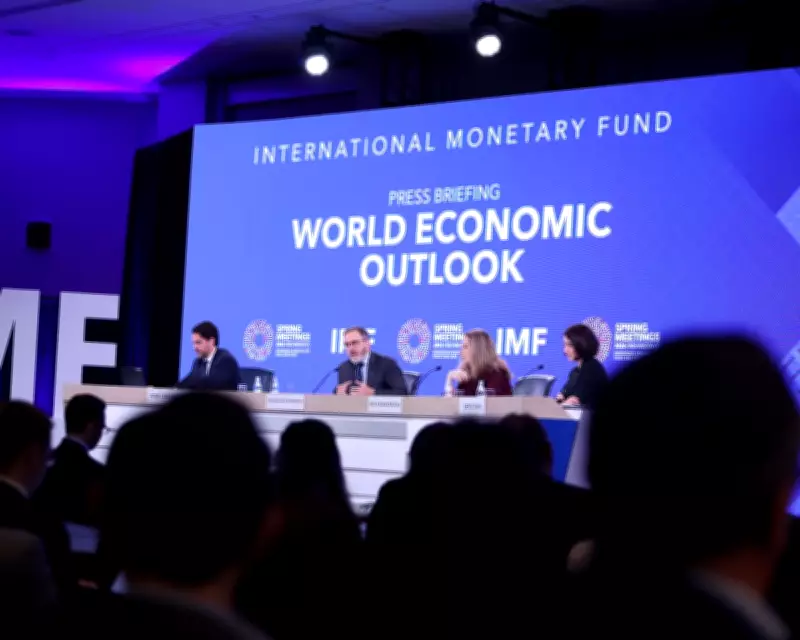
IMF's Economic Outlook Darkens Amid Global Conflict
The International Monetary Fund has released its latest World Economic Outlook, painting a grim picture of the global economy. Titled Global Economy in the Shadow of War, the report starkly contrasts with its January update, which was optimistically named Steady amid Divergent Forces. The IMF now acknowledges that the outbreak of war in the Middle East on February 28, 2026, has abruptly darkened the global outlook, leading to widespread economic uncertainty.
IMF's Reluctance to Name Key Factors
Despite the clear impact of geopolitical events, the IMF remains hesitant to directly attribute economic chaos to specific causes. While it references the lingering effects of energy price rises since Russia's invasion of Ukraine, it only vaguely mentions the Middle East conflict, avoiding explicit mention of former US President Donald Trump's role. Economist Greg Jericho criticises this approach, noting that the IMF's earlier dismissal of global instability has aged poorly in light of current events.
The report continues to focus heavily on wage pressures as a primary driver of inflation, largely ignoring the significant role of corporate profits. This is despite the IMF's own 2023 research indicating that rising corporate profits accounted for almost half of Europe's inflation increase over two years, as companies raised prices beyond spiking energy costs.

Inflation and Policy Responses
The IMF advises that central banks should typically look through energy price surges by not raising interest rates, as these do not directly affect global oil and gas prices. However, it cautions that this strategy should only apply if inflation expectations remain anchored. Should expectations rise, the IMF warns of potential wage and price spirals, yet makes no mention of profit-driven price increases.
In Australia, Deputy Governor of the Reserve Bank Andrew Hauser has noted that long-term inflation expectations have not picked up. Despite this, speculators anticipate a cash rate hike in May, reflecting ongoing economic pressures.
Economic Scenarios and Global Impact
The IMF outlines three potential scenarios for the global economy, ranging from bad to severe:
- Bad scenario: A quick agreement between Trump, Israel, and Iran leads to only a moderate slowdown in global growth.
- Adverse scenario: Conflict persists through the year, with oil prices hovering around US$100 per barrel.
- Severe scenario: No resolution, with oil prices reaching $125 by 2027, gas prices increasing by 200%, and food prices rising by 5% in 2026 and 10% in 2027.
Even under the best-case scenario, global growth is expected to slow, with the adverse and severe scenarios projecting growth of just 2.0% this year and 2.2% next year. Historically, global growth below 2.2% has only occurred during major crises like the 1992 recession, 2009 financial crisis, and 2020 Covid pandemic.
Australia's Economic Downgrade
The IMF has downgraded Australia's growth forecasts more significantly than most other nations, including all G7 countries. Even in the most optimistic scenario, growth is 0.5% worse than forecast last October, highlighting the country's vulnerability to global shocks.
Policy Warnings and Alternatives
The IMF warns against popular government measures like energy caps or subsidies, fearing they could increase inflation by boosting household spending. However, Jericho argues that the Australian government should not overlook profit-driven inflation, especially as gas companies benefit from high prices due to the conflict.
Currently, the Senate is investigating changes to gas taxation, with a proposal from the Australian Council of Trade Unions for a 25% tax on exports that could raise approximately $17 billion annually. This revenue could fund temporary relief measures for households, potentially helping to avert a recession in adverse or severe scenarios.
Greg Jericho emphasises that just because the IMF has forgotten about profit-driven inflation, the Australian government should not follow suit. He calls for proactive policies to address corporate profiteering and support economic stability amid global turmoil.