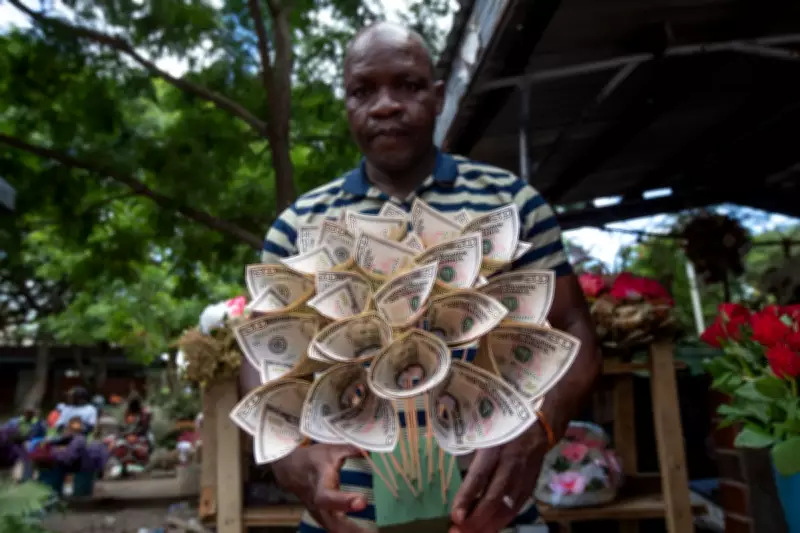
Zimbabwe's Valentine's Revolution: Cash and Scrap Metal Redefine Romantic Gestures
As Valentine's Day approaches in Zimbabwe, traditional floral arrangements are facing stiff competition from more inventive expressions of affection shaped by economic realities. From bouquets crafted from crisp dollar bills to heart-shaped gifts forged from recycled scrap metal, romance in the southern African nation is taking strikingly practical and sustainable forms that reflect life in an economy where cash reigns supreme and environmental consciousness gains social value.
Cash as Courtship: The Money Bouquet Phenomenon
Across Zimbabwe's traditional markets and social media platforms, dollar bills meticulously rolled and pinned together to resemble floral bouquets are increasingly rivaling fresh flowers as Valentine's Day's most coveted tokens of appreciation. The trend has sparked enthusiastic responses online, with TikTok users commenting prayers and hopeful wishes beneath videos showcasing glittering cash-and-flower arrangements.
At Harare's decades-old flower market, veteran florist Tongai Mufandaedza patiently assembles these "money bouquets" using adhesive and bamboo sticks, folding crisp $50 notes into decorative cone shapes and weaving them with stems of white roses. With Valentine's Day approaching, he anticipates a significant surge in business driven by this innovative trend.

Among market browsers, 23-year-old Kimberleigh Kawadza expressed clear preference for the cash bouquets, praising the trend's creator and describing it as a perfect way to appreciate her partner.
Practical Romance Across Generations
While Generation Z initially drove the money bouquet craze, demand has spread across age groups. Mufandaedza noted that some parents are even purchasing these arrangements for their daughters to help them resist peer pressure and avoid being lured by sugar daddies offering similar gifts.
Prices vary significantly, with smaller bouquets containing as little as $10 worth of notes while larger arrangements can run into thousands of dollars. Interestingly, these cash bouquets sometimes prove cheaper than traditional floral gifts—a $10 money bouquet costs $25, compared to $35-$40 for ten premium red roses.
The appeal extends beyond mere aesthetics to practical considerations in Zimbabwe's challenging economic climate, where liquidity often carries more immediate value than luxury. "People still appreciate flowers, but when they see banknotes incorporated, the gesture feels more meaningful," explained Mufandaedza. "Survival matters in difficult times, and money plays a crucial role in daily life."
The U.S. dollar has dominated transactions since hyperinflation forced authorities to abandon the local currency in 2009. Although Zimbabwe reintroduced its own currency, the dollar remains legal and dominant. The scarcity of crisp notes has spawned secondary businesses, with enterprising traders supplying clean replacement bills at commission since worn "war veteran" notes prove unsuitable for decorative arrangements.
Regional Context and Regulatory Responses
Zimbabwe isn't alone in blending cash with courtship rituals. Money bouquets have gained popularity elsewhere in Africa, including Kenya—one of the world's largest flower exporters. Before this Valentine's season, Kenya's central bank warned of severe penalties, including up to seven years imprisonment, for folding, stapling or gluing banknotes into bouquets, arguing that damaged currency disrupts cash-handling systems and violates laws against defacing money. This directive sparked lively online debate, with critics accusing regulators of overreach.

Love from Scrap: Sustainable Alternatives
Back in Zimbabwe, no such restrictions exist on creative gift-giving. For some residents, love finds expression not just through cash but through trash transformed into cherished keepsakes. At Harare's upscale shopping centers, aluminium heart-shaped key rings, necklaces, platters and wine holders crafted from reclaimed scrap metal line shelves alongside chocolates and traditional gift boxes at shops like Simpli Simbi—"simbi" meaning metal in the local Shona language.
"We're taking something previously unloved, polishing it up, and making it beautiful again as a gift someone can treasure forever," said Stephanie Charlton, founder of the decor and gift shop. Her customer base, once dominated by tourists and diaspora Zimbabweans, now includes increasing numbers of locals due to rising environmental awareness.
Nearby industrial areas house foundries stacked with discarded car radiators, rims and scrap metal collected from roadsides and landfills. These materials undergo melting in open furnaces before transformation into handmade gifts through meticulous craftsmanship.
"While women traditionally love chocolates and flowers, those are temporary pleasures," noted Charlton, a former horticulture exporter who now employs twenty people. "We're repurposing materials that would otherwise fill landfills into beautiful objects you can give your valentine to show how much you treasure them. Each piece carries meaning and tells a unique story."
This Valentine's season in Zimbabwe demonstrates how economic pressures and environmental consciousness are reshaping romantic traditions, creating new rituals that balance practical needs with emotional expression in increasingly inventive ways.