

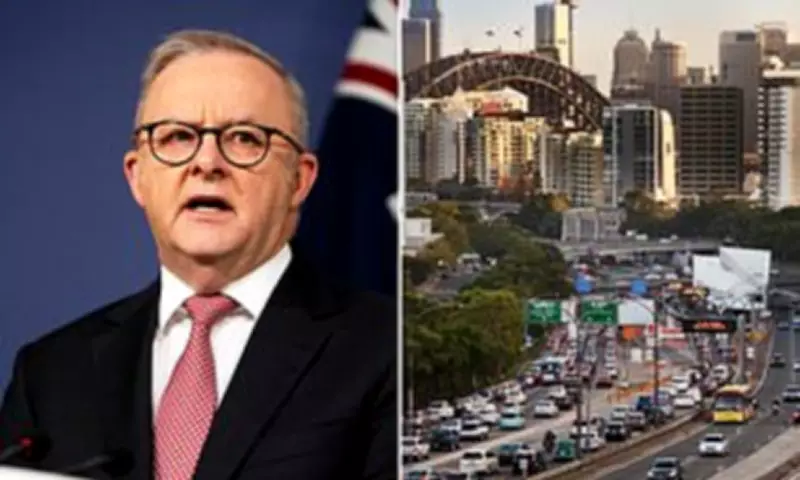
Australians Rally for Mandatory Work-From-Home Rights as Fuel Prices Skyrocket
Thousands of Australians are demanding the legal right to mandatory work-from-home arrangements as the nation confronts soaring fuel prices, exacerbated by escalating conflict in the Middle East. Explosive new research reveals that 82 percent of full-time workers want employers to be legally required to offer remote work options wherever feasible, according to data from Green.com.au.
Government Scrambles with Emergency Fuel Taskforce
Prime Minister Anthony Albanese has moved swiftly to address the growing chaos, establishing an emergency fuel supply taskforce led by former Australian Energy Regulator chief Anthea Harris. Albanese emphasised that while national fuel supplies remain secure, the government aims to be "over-prepared" for potential disruptions.
'Our fuel supply is currently secure. However, I want us to be over-prepared,' Albanese declared. He acknowledged that panic-buying has triggered shortages at some petrol stations, clarifying that 'Every ship scheduled to arrive has arrived. This is not a supply reduction - it is an issue of increased demand.'

The Prime Minister explained the paradox of local shortages despite stable national supplies: 'Both things can be true. The expected amount of fuel can be in the country, but if demand doubles, or in some areas increases even more, shortages can still occur locally.'
Fuel Prices Surge as Commuters Bear the Brunt
According to the NSW Government's FuelCheck website, fuel prices have skyrocketed by 39 percent in just the past month. With commuters facing unprecedented financial pressure, mandated work-from-home rights are emerging as a crucial pressure valve to slash daily fuel costs for workers already struggling with cost-of-living pressures and rapid interest-rate increases.
Primara Research director Peter Drennan highlighted that Albanese confirmed last year that remote workers save an average of $5,000 annually, with substantial savings coming from reduced commuting expenses. 'For workers driving to offices when they don't have to, that could mean thousands of dollars in additional costs hitting their budgets,' Drennan noted.
'If the government recognises this as a demand problem, mandating work-from-home rights where feasible offers an immediate way to reduce that demand,' Drennan argued, suggesting such mandates could provide a dual solution by easing individual financial pressures while conserving fuel for essential services like grocery transport.
Regional Austerity Measures Highlight Global Crisis
The Australian situation reflects broader regional challenges, with nearly 90 percent of oil and gas shipped through the Strait of Hormuz last year destined for Asia, leaving countries heavily reliant on this route struggling to cope. Across the region, authorities have implemented various austerity measures:
- Sri Lanka has introduced a nationwide four-day working week, giving public sector staff every Wednesday off to conserve fuel
- Thailand is urging workers to adopt lighter clothing to reduce air-conditioning usage
- Myanmar has restricted private vehicles to operating on alternate days based on licence plate numbers
- Bangladesh has brought forward Ramadan holidays for universities and implemented rolling blackouts
- The Philippines now requires some government staff to work from home at least once weekly
- Vietnam is encouraging people to stay home, cycle, car-share, and use public transport
Local Calls for Immediate Relief Measures
Closer to home, the Victorian Greens have called on the Allan Government to make public transport in Melbourne free for the next month to provide immediate relief from cost-of-living pressures as petrol prices continue to climb. Leader Ellen Sandell emphasised that many Australians are feeling severe financial strain.
'Free public transport would provide huge relief to families, young people and renters who are already being totally smashed by rising costs,' Sandell stated, echoing Drennan's argument about unnecessary commuting expenses. 'For workers driving to offices when they don't have to, that's potentially thousands of dollars in added costs hitting their budget.'

As the fuel crisis intensifies, the debate over mandatory work-from-home rights continues to gain momentum, presenting policymakers with both challenges and opportunities to address interconnected economic and energy security concerns.





