

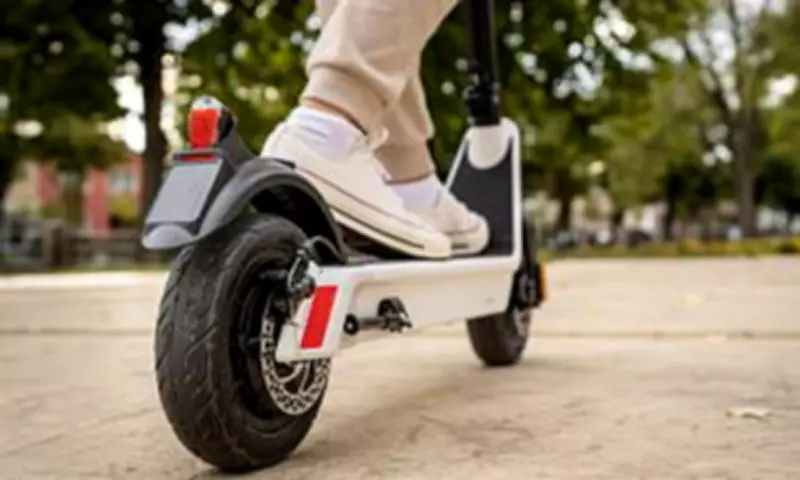
Nearly 500 people suffered serious injuries in crashes involving e-scooters last year, new statistics have revealed. A senior officer at the Royal Automobile Club said the figures released by police show that 'precious little progress' has been made in reducing harm on British roads.
Overall Road Casualties
There were an estimated 1,556 fatalities in all road collisions in 2025, representing a decline of three per cent compared to 2024. Meanwhile, 29,911 people were seriously injured or killed, an increase of four per cent on the previous year, with 127,870 casualties of all severities.
E-Scooter Collisions
Of the 1,484 people who were involved in collisions with e-scooters last year, 485 were seriously injured. The Department for Transport (DfT) said: 'Provisionally, there were an estimated 1,484 casualties in collisions involving e-scooters, compared to 1,390 in 2024. Our best estimate, after adjusting for changes in reporting by police, is that there were 485 seriously injured and 989 slightly injured in collisions involving e-scooters, this compares to 428 and 956 respectively in 2024.' The figures, based on data released on May 11, 2026, showed that 10 e-scooter riders were killed in collisions last year, up from six in 2024.

RAC Response
RAC senior policy officer Rod Dennis said the scooters are becoming an 'increasingly common sight on our streets'. He added: 'Once again, this data shows that precious little progress has been made in reducing harm caused on our roads – and firmly underlines why the Government's Road Safety Strategy is so critical. Frighteningly, on average four people still lose their lives on the roads every single day. If this number of people lost their lives on any other form of transport, serious questions would be being asked.'
Demographics
The stats also revealed that 77 per cent of people who died in all types of road collisions last year were male, while 61 per cent of casualties of all severities were also men. Some 23 per cent of fatalities and 28 per cent of casualties involved people aged 17 to 29, and 24 per cent of fatalities and 8 per cent of casualties involved those aged 70 and over.
Trends and Concerns
The DfT said the provisional figures for all types of road casualties indicated a 'broad continuation of recent trends', with the overall number of casualties and fatalities in decline over the last decade. Motorcycle users had the largest estimated percentage change in the number of fatalities, with an increase of 13 per cent to 384, while pedal cycle casualties showed the largest estimated percentage change in total casualties, up 10 per cent to 16,027.
Mr Dennis added: 'It's alarming to see cyclist casualties increasing so much in just a year, especially given the most recent changes to the Highway Code which prioritise the most vulnerable road users. Evidently, more needs to be done to ensure all road users are aware of their responsibilities when it comes to keeping everyone safe.'
Edmund King, president of the AA, said: 'While any reduction in road deaths is welcome, progress has effectively stalled. If Britain is to achieve the Government's ambitious target of cutting deaths and serious injuries by 65% by 2035, we need a renewed focus on road safety enforcement, safer roads, safer vehicles and changing dangerous driver behaviour. For too long, the number of people killed or seriously injured on our roads has remained stubbornly high. The new strategy provides the framework, but it will only succeed if there is sustained commitment and investment to turn ambition into action.'
Mr King added: 'With car ownership being made much more expensive by higher fuel costs and difficulties in getting qualified as a driver, more road travellers are having to opt for two wheels. Fines for bad road behaviour are at record levels and increased road restrictions to protect vulnerable road users have yet to reduce the death toll among those who cycle or use powered bikes.'






