

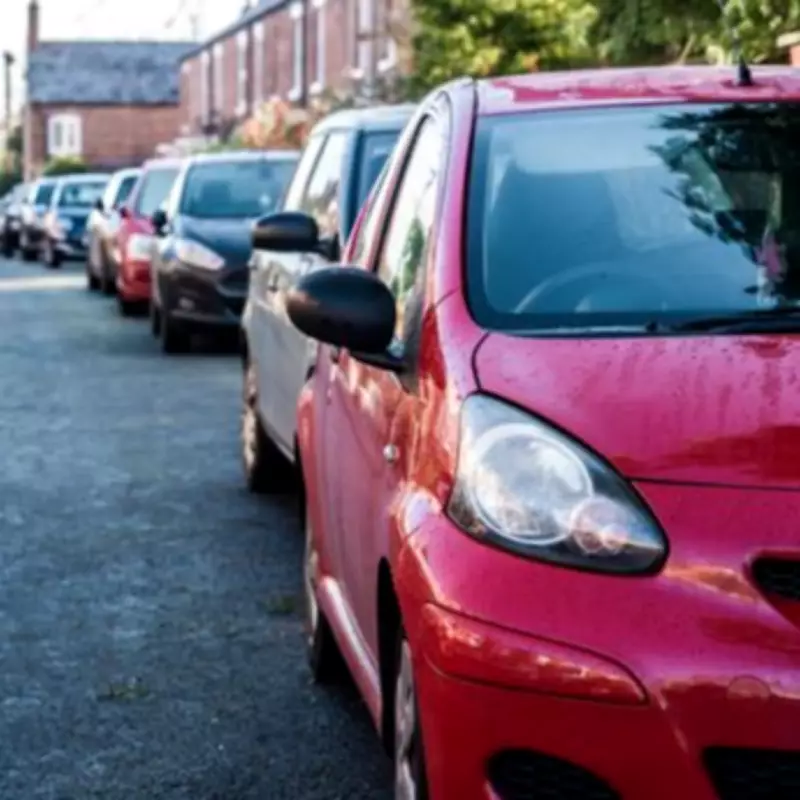
Returning home to find your usual parking spot taken by another vehicle can be a source of significant frustration and inconvenience. Whether it's an occasional occurrence or a regular nuisance, many homeowners wonder if there are legal measures to prevent this or if it warrants police involvement.
Understanding the Basic Parking Laws
According to the RAC, the legality of parking outside someone's house is generally straightforward but depends on specific circumstances. It is perfectly legal for a vehicle to park on a public road outside a residence, provided it does not block a driveway or have a wheel over a dropped kerb. In areas without parking controls, drivers do not have an automatic right to a spot outside their own homes.
If a car is parked on a public highway and blocks your access to or from your driveway, local councils have the authority to take action. However, if the vehicle is on your driveway itself, it is considered on private property, and councils typically cannot remove it, as this falls under civil law.

Common Parking Issues and How to Address Them
Lancashire Police has outlined guidelines for various parking disputes, emphasizing that many situations are not police matters initially. For instance, if a parking space is available on a public road, anyone is permitted to use it, even if it is directly in front of your house. While this can be aggravating, especially in areas with limited parking, it is generally within the law.
For designated parking spaces, such as those assigned to leased properties, the first step is to attempt a peaceful resolution. This might involve speaking directly to the driver or leaving a polite note on their windscreen. If the issue persists, contacting the responsible party, like a freeholder or managing agent, is advised, and antisocial behaviour can be reported online.
Specific Scenarios: Driveways and Blocked Access
If someone parks on your driveway without permission, this constitutes trespassing, which is a civil dispute. Police recommend initially having a polite conversation with the driver, as there may be a misunderstanding. For repeated incidents, seeking advice from Citizens Advice or a solicitor is suggested.
When a vehicle blocks your driveway entrance, preventing you from entering or exiting, this is also not typically a police matter. Local councils may assist, but policies vary by region. Again, a polite discussion with the driver is recommended first. However, if a vehicle is blocking your exit and you cannot leave, this may be reported as antisocial behaviour online.
When to Involve Authorities: Illegal Parking and Abandoned Vehicles
In cases of illegal parking, such as on zig-zag lines, in dangerous positions, or where emergency vehicle access is impeded, police should be notified online. For vehicles parked over dropped kerbs, on pedestrian crossings, in reserved spaces like those for Blue Badge holders, or in taxi bays and cycle lanes, reports should be made to the local council.
Abandoned vehicles, which are often damaged, unroadworthy, or left unattended for extended periods, can cause obstructions and be eyesores. Lancashire Police advise against taking matters into your own hands, such as making threats or moving the vehicle, as this could lead to legal issues. Instead, if the owner is known, a polite request to move it is best. Otherwise, local authorities should be contacted for removal.
Overall, while parking disputes can be irritating, understanding the legal framework and following proper channels for resolution can help manage these situations effectively and lawfully.






