

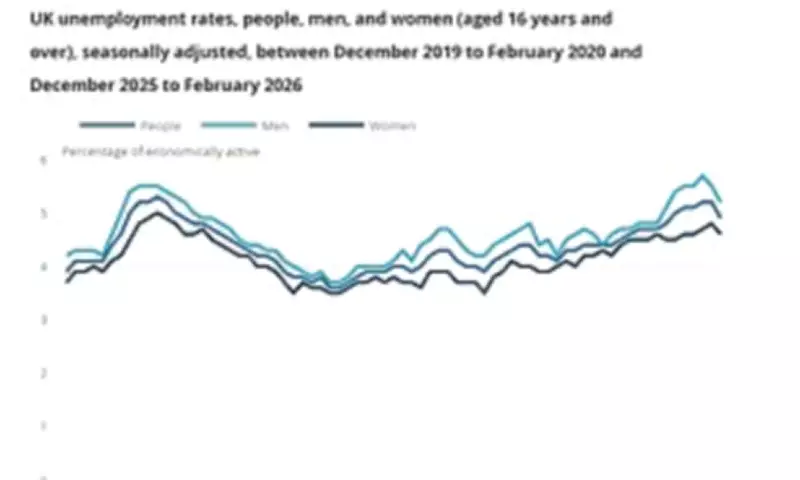
Chancellor Rachel Reeves is set to defend her economic strategy today, pointing to a surprise drop in UK unemployment as evidence her plan is delivering results. However, she will acknowledge that this positive data precedes the escalating crisis in the Middle East, which threatens to disrupt economic stability in the coming months.
Mixed Signals in Labour Market Data
The Office for National Statistics (ONS) reported that the UK unemployment rate declined to 4.9% for the three months ending in February 2024. This marks the lowest level since the summer of 2023 and represents a decrease from the 5.2% recorded in the previous quarter ending in January. Most economists had anticipated the jobless rate would remain steady, making this decline an unexpected development.
Underlying Concerns Behind the Headline Figure
Despite the falling unemployment rate, the ONS highlighted significant underlying issues. The drop was largely driven by a rise in economic inactivity, where individuals are not working and not actively seeking employment. This category increased by 70,000 during the quarter, with a notable surge among students who are not looking for work alongside their studies.

Liz McKeown, ONS Director of Economic Statistics, cautioned that the figures should be interpreted carefully due to recent methodological changes in data collection. She stated, 'Alongside falling unemployment, the number of people not actively seeking work increased, with data suggesting fewer students seeking work alongside their studies.'
Recent Trends Paint a Gloomy Picture
More recent indicators from March reveal a deteriorating labour market. The number of employees on payrolls fell by 11,000 to 30.3 million, which is 65,000 lower than the same period a year earlier. Additionally, job vacancies have plummeted to a five-year low, signalling reduced employer demand.
Wage growth has also slowed dramatically, reaching its lowest rate in over five years. Regular pay increases have decelerated, although public sector workers have fared slightly better than their private sector counterparts following Labour's recent settlement agreements.
Government Response and Future Challenges
Work and Pensions Secretary Pat McFadden acknowledged the mixed data, noting, 'These figures show that there was an improvement in the labour market at the beginning of the year with unemployment falling below 5 per cent, and 332,000 more people in work than a year ago.'
However, he warned of impending challenges, adding, 'But we cannot escape the effects of the war in the Middle East which are likely to feed through to prices and employment in the coming months.'
The government has outlined measures to mitigate these impacts, including a plan to reduce energy bills by up to 25% for approximately 10,000 manufacturers. Furthermore, a £2.5 billion investment is aimed at upskilling the workforce, providing personalised support for sick or disabled individuals, and helping young people combine earning with learning.
Chancellor Reeves is scheduled to update Parliament later today on the government's response to the Middle East turmoil, which is expected to dominate economic discussions moving forward.






